
Infinite Licensing in AI Music

For a few years now, in private conversations with various technologists, music rightsholders and fellow data nerds, I’ve been using, and trying to coin, the term “infinite licensing” to describe the concept of real-time AI-powered dynamic licensing of rights in both generative-AI and single-source derivative AI music applications.
No, I am not talking about smart contracts, which are finite preset rules hardcoded in a file that is then minted to a blockchain, but rather the convergence of AI (conceptual/subjective/ecosystem) and blockchain (context/ownership) within the permission layer of applications that can generate an infinite ♾️ combination of licensing deal terms.
Infinite licensing would behave sort of like an oracle within applications to dynamically value and clear rights in machine-to-machine, business-to-business, and consumer-to-machine applications, going beyond the scope of human objectivity, individual experience in negotiation and valuation, and workload capacity in the licensing process.
It removes limiting royalty formulas and most favored nations models and replaces them with highly customized and more commercially accurate representations of value at a given point in time.
I imagine a future where an AI system built on an LLM that has learned from previous licensing deals (and the outcomes and missed opportunities of such deals), ingested airplay and streaming stats, interpreted correlations and trends, while calculating the lost value of undervalued deals, analyzed historical sync data, quantifies hype, ingested sales data, and consumer behavior and sentiment data, etc. would dynamically determine rates and terms for gen-AI and single-source derivative AI music outputs.
Infinite licensing, unlike smart contracts, could factor in variations in types of use, the real commercial value of the source music involved, the perceived cultural value of music creators involved, the market value of the opportunity, and much more.
The blockchain aspect, which has been in development across a variety of projects and startups for over 10 years now, would provide the architecture for transparent and immutable rights management while remuneration could be supported by cryptocurrency.
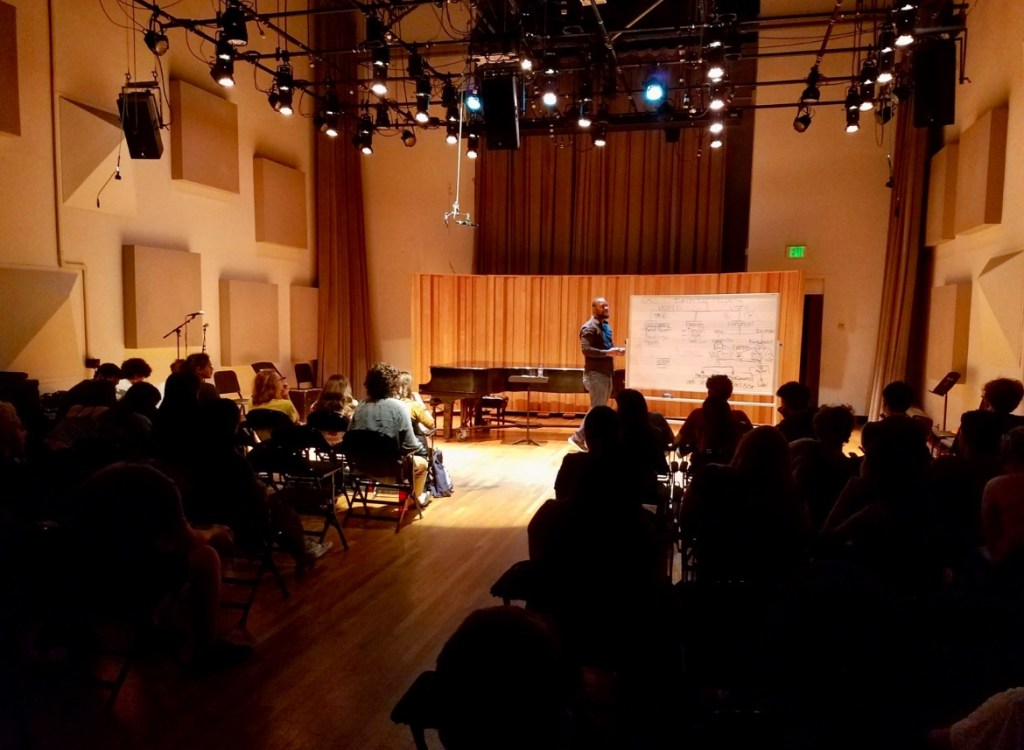
In 2019, when I presented my lecture “Music 2020: The Next Era of Innovation in the Music Industry” at the California Institute of The Arts and again at Music Biz Conference, I argued that artificial intelligence, blockchain, and cryptocurrency would be among the technologies that will transform the music industry in the 2020’s.
We’re halfway through the 2020’s and I think someone will figure out infinite licensing before 2030.
Dae Bogan Celebrates 5 Years of Service at The Mechanical Licensing Collective

It has been an honor to work with a passionate group of professionals to do the seemingly impossible in such a short period of time. In just 5 years, we’ve conceptualized, built, launched and expanded The Mechanical Licensing Collective to fulfill the mandate of the Music Modernization Act of 2018 and have paid out more than $3 Billion in royalties to music creators and rights-holders around the world.
I’ve had the honor of collaborating with some of the smartest people in the music rights sector to blend my passion for problem-solving, innovation and technology, education and advocacy to develop initiatives and industry-leading resources to empower music creators and other stakeholders to unlock black box royalties. I am grateful to be able to work fully within my passion and skillsets every day to affect change that directly impacts the livelihoods of music creators around the world.
In my role as Head of Third-Party Partnerships, I lead the Distributor Unmatched Recordings Portal (DURP) initiative connecting 114 music distributors in over 20 countries with one of the most important music rights datasets related to US digital streaming royalties, oversee a team across Latin America through the Radar initiative to locate and educate self-published songwriters and composers about their rights and entitlements in the US, and provide strategic support and guidance to the more than 500 companies around the world that access The MLC’s data through our data programs.

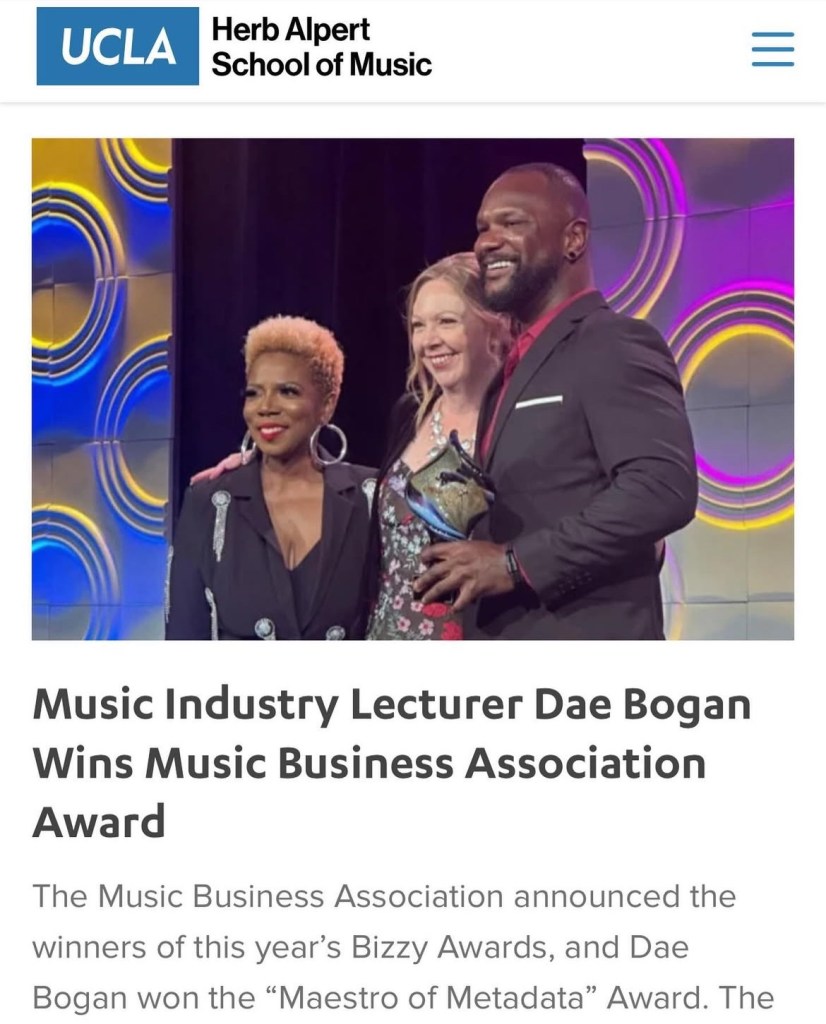
In 2020, The MLC was a developing concept. Today, we are a Music Business Association’s 2024 Impact Award for Technological Excellence recipient and a Fast Company’s 2025 Most Innovative Companies. And for my part, I was honored to be the recipient of a 2024 Bizzy Award for the Maestro of Metadata.
As I look ahead to the next 5 years of service, I’m looking forward to contributing to effect our mission to serve and pay our members the royalties they have earned.
Here’s to 5 years! 🥂
What Can The Socioeconomic Context Of The Culture From Which Hip-Hop Is Derived Tell Us About How The Biggest Genre In The World Gets The Shitty End Of The Royalty Stick?

A young Talib Kweli on a New York City block as published on this Cuepoint article.
Streaming services are a beast that needs constant feeding. Younger hip-hop artists, already accustomed to providing sites such as SoundCloud with a constant stream of mixtapes and features, have adjusted to its demands more quickly than artists from other genres, and have thrived accordingly. At the heart of rap’s streaming dominance is something more ephemeral: Some songs just stream better than others, for reasons that no one can really explain yet. Hip-hop streams better than other types of mainstream music, and trap music streams better than other types of hip-hop. – The Washington Post (April, 2018)
R&B/hip-hop music was the year’s biggest genre, accounting for 24.5 percent of all music consumed….R&B/hip-hop genre represented 24.5 percent of all music consumption in the U.S. — the largest share of any genre and the first time R&B/hip-hop has led this measurement for a calendar year. (The 24.5 percent share represents a combination of album sales, track equivalent album units and streaming equivalent album units — including both on-demand audio and video streams.) — Billboard Magazine (January, 2018)
The statistic presents the number of on-demand music streams worldwide in 2016 and 2017, by genre. According to the source, the number of urban [Hip-Hop and R&B] on-demand streams rose from 55.9 billion in 2016 to 100.34 billion in 2017 – Statista (2018)
Coexisting Music Ecosystems

ICYMI, here’s a wonderful piece by Vickie Nauman on the notion of coexisting music ecosystems. I think it offers a fresh and nuanced look at how elements and traces of overlapping music industries — what Nauman calls Music Industry 1.0, Music Industry 2.0, and Music Industry 3.0 — shape our experiences as music industry professionals and consumers.
Have a read and lets discuss in the comments.
The music industry careens fast down the highway, stacked high with cargo and shiny objects. Think of the old CD business as the flat bed, the current digital industry as its loosely tethered, bulky freight, and artist-driven initiatives as sparkly crates hitched on top. Failed startups litter the rearview mirror. Yet all are tied together in a zigzag of relationships and common building blocks.
In practical terms, we’ve got three different music industries operating simultaneously.
Continue reading here.
Free DIY eBook
CONNECT WITH ME


 Dae Bogan Music