
Infinite Licensing in AI Music

For a few years now, in private conversations with various technologists, music rightsholders and fellow data nerds, I’ve been using, and trying to coin, the term “infinite licensing” to describe the concept of real-time AI-powered dynamic licensing of rights in both generative-AI and single-source derivative AI music applications.
No, I am not talking about smart contracts, which are finite preset rules hardcoded in a file that is then minted to a blockchain, but rather the convergence of AI (conceptual/subjective/ecosystem) and blockchain (context/ownership) within the permission layer of applications that can generate an infinite ♾️ combination of licensing deal terms.
Infinite licensing would behave sort of like an oracle within applications to dynamically value and clear rights in machine-to-machine, business-to-business, and consumer-to-machine applications, going beyond the scope of human objectivity, individual experience in negotiation and valuation, and workload capacity in the licensing process.
It removes limiting royalty formulas and most favored nations models and replaces them with highly customized and more commercially accurate representations of value at a given point in time.
I imagine a future where an AI system built on an LLM that has learned from previous licensing deals (and the outcomes and missed opportunities of such deals), ingested airplay and streaming stats, interpreted correlations and trends, while calculating the lost value of undervalued deals, analyzed historical sync data, quantifies hype, ingested sales data, and consumer behavior and sentiment data, etc. would dynamically determine rates and terms for gen-AI and single-source derivative AI music outputs.
Infinite licensing, unlike smart contracts, could factor in variations in types of use, the real commercial value of the source music involved, the perceived cultural value of music creators involved, the market value of the opportunity, and much more.
The blockchain aspect, which has been in development across a variety of projects and startups for over 10 years now, would provide the architecture for transparent and immutable rights management while remuneration could be supported by cryptocurrency.
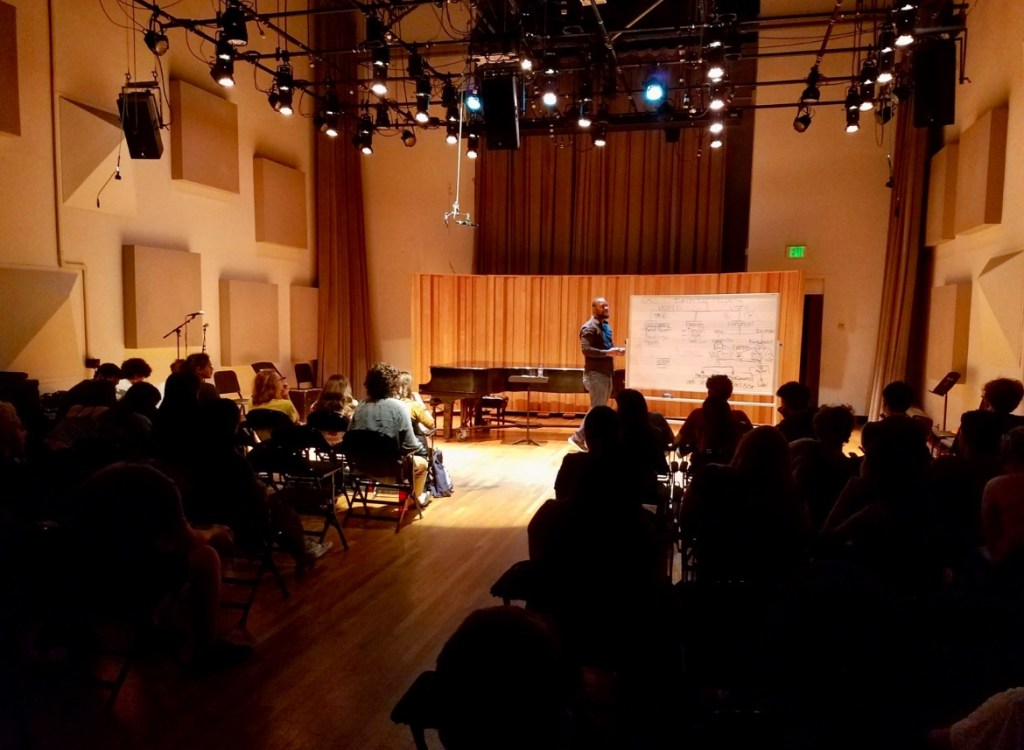
In 2019, when I presented my lecture “Music 2020: The Next Era of Innovation in the Music Industry” at the California Institute of The Arts and again at Music Biz Conference, I argued that artificial intelligence, blockchain, and cryptocurrency would be among the technologies that will transform the music industry in the 2020’s.
We’re halfway through the 2020’s and I think someone will figure out infinite licensing before 2030.

Free DIY eBook
CONNECT WITH ME


 Dae Bogan Music