
What Can The Socioeconomic Context Of The Culture From Which Hip-Hop Is Derived Tell Us About How The Biggest Genre In The World Gets The Shitty End Of The Royalty Stick?

A young Talib Kweli on a New York City block as published on this Cuepoint article.
Streaming services are a beast that needs constant feeding. Younger hip-hop artists, already accustomed to providing sites such as SoundCloud with a constant stream of mixtapes and features, have adjusted to its demands more quickly than artists from other genres, and have thrived accordingly. At the heart of rap’s streaming dominance is something more ephemeral: Some songs just stream better than others, for reasons that no one can really explain yet. Hip-hop streams better than other types of mainstream music, and trap music streams better than other types of hip-hop. – The Washington Post (April, 2018)
R&B/hip-hop music was the year’s biggest genre, accounting for 24.5 percent of all music consumed….R&B/hip-hop genre represented 24.5 percent of all music consumption in the U.S. — the largest share of any genre and the first time R&B/hip-hop has led this measurement for a calendar year. (The 24.5 percent share represents a combination of album sales, track equivalent album units and streaming equivalent album units — including both on-demand audio and video streams.) — Billboard Magazine (January, 2018)
The statistic presents the number of on-demand music streams worldwide in 2016 and 2017, by genre. According to the source, the number of urban [Hip-Hop and R&B] on-demand streams rose from 55.9 billion in 2016 to 100.34 billion in 2017 – Statista (2018)
[Podcast] Dae Bogan Gets Personal On Waldman’s Words
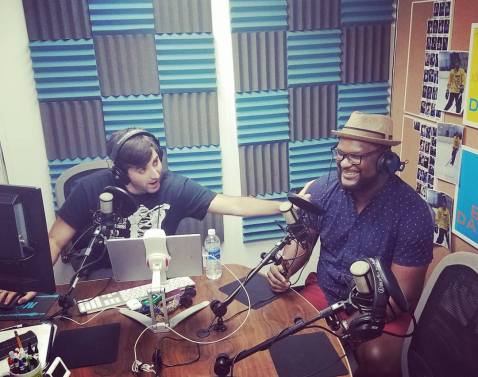
A few months ago, I set down with music manager and “dad jokes” extraordinaire, Scott Waldman, to discuss my personal journey into the music industry. I got pretty candid as I discussed going from being homeless and unemployed to founding music tech start-ups.
You can listen to the episode here.
Direct link: https://idobi.com/podcast/057-dae-bogan/
Find Your Ikigai And You’ll Never Work A Day In Your Life
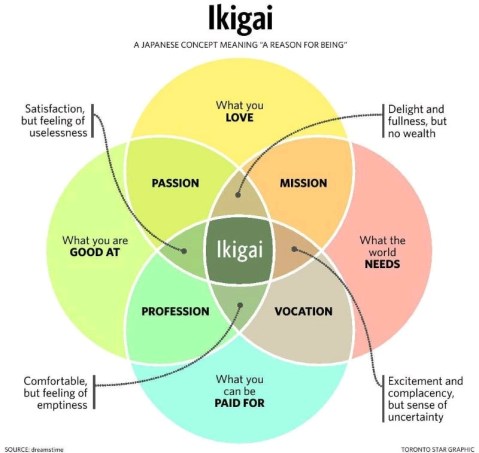
Ikigai is the Japanese concept meaning “reason for being.” I’ve just heard of this, but it speaks volumes to me as an entrepreneur, educator, and advocate focusing on DIY musicians. I absolutely love what I do and I think “Ikigai” is why.
Find your Ikigai and you’ll never “work” a day in your life. 
Read more on this concept here.
Music Industry Professionals: Never Let “Genreism” Pigeon-hole You (My Brief Reaction To Music Business Worldwide’s Sit Down With IGA’s President & COO, John Janick)
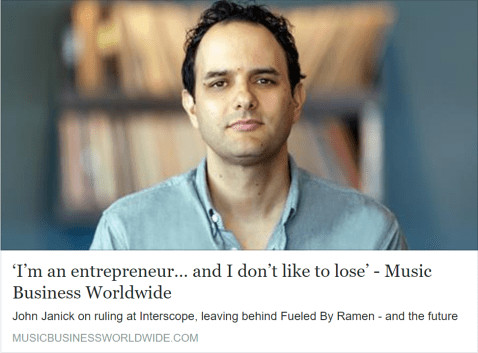
Music Business Worldwide set down with Interscope Geffen A&M President & COO, John Janick, to “ask about his five years at IGA, how building Fueled By Ramen prepared him for the job, and a host of modern industry issues.” What I like the most about this piece is the fact that it demonstrates and reinforces the idea that, against the general notion that music industry folks are narrowly focused on specific genres (or genre groups), one can achieve success across genres.
Too often do we pigeon-hole ourselves (or others) because of this limiting idea that you’re just an “emo-indie dude” or just a “hip-hop head”.
When you love music, you love music. When you’re savvy, you’re fucking savvy. Genres are labels. There are nuances between genres, of course, and obviously there are stereotypes and customs that drive “communities” around artists, but on a high-level, if you really care about what you’re doing and have the tenacity to get shit done, things will work out.
It reminds me of when I got into managing EDM DJs. I was side-eyed by a number of promoters until my DJ played Coachella the same year that my hip-hop act was in a national ad as the face of a Reebook sneaker campaign.
Don’t let “genreism” stop you!
Read the full interview here: https://www.musicbusinessworldwide.com/john-janick-im-entrepreneur-dont-like-lose/
Career Transition Tips: Moving From The Financial Industry To The Music Industry

Generally speaking, with the industry being the Big Data industry that it has become, I feel that many of you how have experience with financial data modeling, forecasting, and other “financial/number people skills” could be a viable asset to numerous music companies.
Here are a few companies who specifically exist at the intersection of music and money, which could be a good transitional outlet for the right candidates:
Good luck!
Looking Back: 10 Years Of Los Angeles…

BEFORE THE BIG MOVE, I had visited Los Angeles only twice. The first time was for orientation at California State University, Los Angeles (Cal State LA). I had applied in summer 2003 after receiving notice that I was not accepted to my dream school, University of California, Los Angeles (UCLA). I had never heard of Cal State LA until one of my best friends told me they were still accepting applicants. Immediately, I went online, applied, and was accepted. It was a desperate and hopeful attempt to go to college anywhere in Los Angeles so that I could be closer to Hollywood–the land of dreams.
Read More…
10 Years In Los Angeles: The First Big Milestone

Today is a very special day for me. Ten years ago today–December 4th, 2003–with a one-way ticket, $500, some clothes and a mission, I moved to Los Angeles to pursue a career in the entertainment industry. Although homeless and unemployed when I arrived, I hit the ground running towards the first few steps that have become an incredible journey of peaks and valleys. I’ve met some of the most amazing and douchiest people in the world, experienced some of the most awesome opportunities and depressing hardships, and have accomplished a few cool things along the way. It is far from over, far from peak, but this 10 year milestone is nothing short of awesome sauce!
#WineConversations: Positioning Your Best Interest Within The Scope Of Others’ Best Interest

Your passion is not limited by your capacity to dream; it’s only limited by your work ethic. The most amazing people don’t only dream big, they work hard…they work big. Truth be told, no one has your best interest in mind; they have only their’s. And sometimes — ultimately in consequence — your best interest falls inline with their motives. I help artists by giving advice, providing guidance and sometimes opening doors. That is in your best interest only because my best interest is proving that in some way I am a relevant music industry insider. It is no secret — when best interests align — the most amazing shit happens. The lesson here is to put yourself in the circles of those who have THEIR best interest in support of YOUR best interest. Otherwise, you’re just another talented yet ill supported aspiring artist hoping you’re the exception to the rule of success.
Six Drinks And A Moment Of Truth: My Story…Sort Of
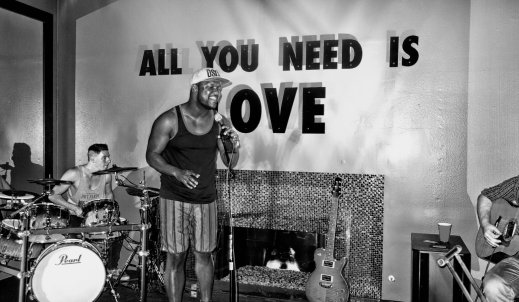
#SortOfTipsyMomentOfTruth: This is the thing indie artists. You hungry music makers who send me music to “bless”, music for “feedback”, music to “shop” to my contacts: I get it! I was once an aspiring recording artist as well! I’ve never told this “story,” but I was signed…3 times actually. Read More…
Free DIY eBook
CONNECT WITH ME


 Dae Bogan Music