10 Years Ago Dubset (And I) Wanted Rights-holders To Be Friendlier To DJs…10 Years Later Apple Music Is Making It Possible

Ten years ago, I wrote a piece for Hypebot (posted at the end) announcing the Mix Transparency Report by Dubset (acquired by Pex).
At the time, Dubset, a new startup, wanted to help DJs legally release, distribute, and monetize mixed music (i.e. remixes, mashups, mixes, etc.), and get artists, songwriters, and rights-holders paid. However, there was a ton of resistance amongst rights-holders to what I thought was a great idea. I was biased since I had once managed a roster of DJs who specialized in mash-ups.
The Mix Transparency Report set out a new standard for charting the consumption of mixed music while shinning a light on the commercial opportunities that existed for rights-holders and content creators of derivative works (e.g. DJs, producers, remixers).
(Side Note: Last year, I created the “Beats & Money: A Music Rights & Royalties Crash Course for Beatmakers” webinar for The Mechanical Licensing Collective with support by Chris McMurtry of Pex/RME which you can watch on YouTube https://youtu.be/8ZoPRmJFt-Q.)
Dubset wanted to locate the most popular mixed music in the world, thoroughly analyze it, and share its findings every month. The report would offer full transparency with regards to the “who” and “what” was being listened to (often royalty-free) by millions of music fans a day. Initially, the Dubset report included four charts: Dubset’s 25 Most Sampled Labels, Dubset’s 25 Most Streamed Mixes, Dubset’s 25 Most Sampled Artists, and Dubset’s 25 Most Sampled Tracks.
Recently, Apple announced it is opening its catalog to let users build mix sets by integrating the platform with a number of tools. These tools include Algoriddim’s djay Pro software, hardware platforms AlphaTheta, Serato, inMusic’s Engine DJ, Denon DJ, Numark, and RANE DJ.
(Fun Fact: I was once an advisor to a startup that built a software and hardware for DJs that would be installed between the controller and the sound system. If the controller experienced an outage during a live set, the device would kick in and algorithmically continue the DJ set until the controller was back up and running and the DJ could do his or her thing. Having been both a club promoter and DJ manager in Los Angeles in my early 20’s, I knew it was solution was to a real problem that I’ve witnessed many times, but of course they were “too early.”)
TechCrunch believes the integrations will possibly attract DJs to explore Apple Music’s catalog of over 100 million songs and also give aspiring DJs an opportunity to play around with some of these tools. It’s great to see DSPs engage more meaningfully with DJs. This has been a long time coming, only slowed by rights-holders inability to work with companies like Dubset to figure out the licensing splits.
That Hypebot piece: https://daeboganmusic.com/2015/11/11/hypebot-dubset-releases-inaugural-mix-transparency-report-atlantic-records-david-guetta-most-sampled/
The Socioeconomics of Globalization vs. Glocalization and Why Indie Artists in the Global South Have It Harder
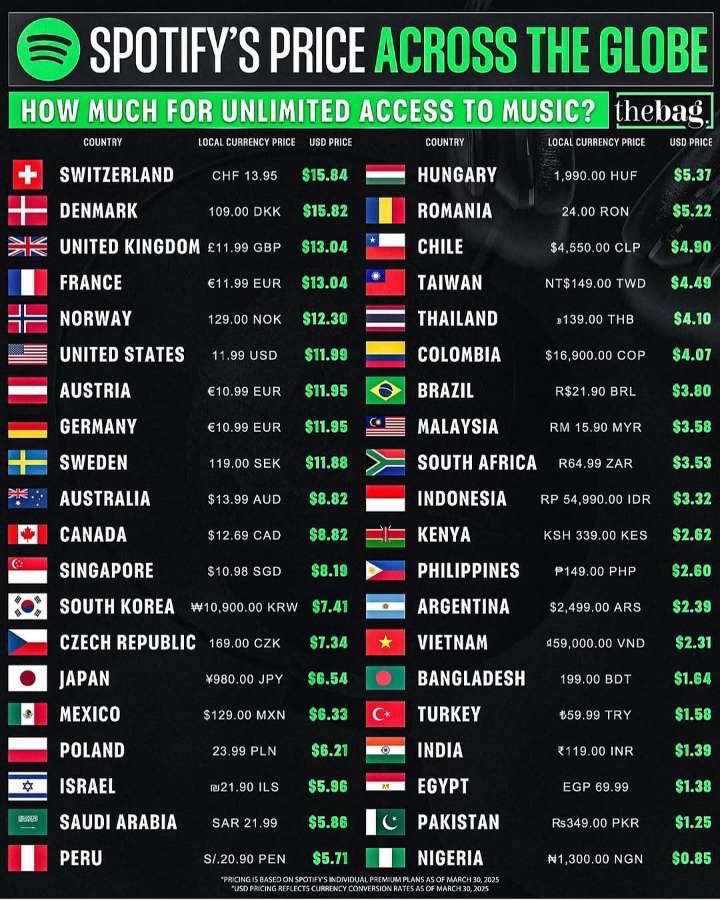
I have been having this very candid conversation about the digital music ecosystem and the socioeconomics (and sociocultural) factors at play in “globalization vs. glocalization” for years now.
Ever since I began exploring the “global south” in 2021, from South America to Southeast Asia to South Africa, and then subsequently moved to Latin America, I’ve observed challenges for local music creators and opportunities for Western music creators.
Artist earnings, in the digital space, are a factor of the socioeconomic health of the region in which artists receive most of their consumption. Two artists from two different countries with the same number of monthly listeners within their own country (glocalization) may not earn the same income due to the differences in the socioeconomic health of their respective countries.
The issue of socioeconomic health is exacerbated by poor copyright compliance and broken or insufficient licensing and royalty collection infrastructure.
Independent artists in lower socioeconomic markets could attempt to look for international collaborations with artists that can introduce them to listeners in more developed markets and they could leverage opportunities to exploit their music in ways that create discovery in new markets (e.g. synch, playlists, etc.). This will aid in exposing the music and eventually earning consumption in other foreign markets (globalization), possibly with better socioeconomic health (or at least higher royalty rates).
Additionally, indie artists should leverage communities like Vampr and BandLab Technologies and other such companies to connect and collaborate with artists, songwriters, and music producers to strive for cross-border appeal and opportunity.
Radar – Data-driven Grassroots Outreach In Latin America

I am thrilled to announce that after nearly 3 years of building relationships across Latin America, collaborating with local creator rights’ advocates, learning about some of the challenges affecting the flow of royalties in various regions, and educating songwriters, I am launching a dedicated team to support The Mechanical Licensing Collective’s mission to ensure songwriters, composers, lyricists, and music publishers in Latin America receive their mechanical royalties from streaming and download services in the U.S. accurately and on time.
RADAR is a data analytics and research platform that has already helped us identify songwriters who are self-published and potentially unaffiliated with their local CMO. Through culturally-relevant resources we are educating songwriters who may have royalties on hold at The MLC about their rights and their options for collecting their money such as joining their local CMO (an MLC member), hiring a publishing administrator (an MLC member), or, if it makes sense for their careers, to pursue direct membership. It is the songwriter’s choice within the framework of their local laws.
After a successful pilot in Colombia last year we are expanding across LATAM with team members in Argentina, Brazil, and Mexico.
Welcome Daniela Arévalo Fernández (Mexico), Maria Ramirez (Colombia), Matías Bagato (Argentina), Renato Martini Martins (Brazil), and continued support by Stephanie Santiago-Rolón (Florida/Puerto Rico, USA) who has been a great collaborator in US-based Latin music since 2021.
Latin America, which has seen Mexico and Brazil named to IFPI’s Top 10 music markets in the world in 2024, is a priority due to the explosion of consumption of Latin music in the US, primarily in the form of digital streaming. The RIAA reported that Latin recorded music earned $1.4B in 2024 (98% of is from streaming), a steady increase over the previous two years, which also boasted over $1B. More US music consumers are listening to Spanish-language music every year; and when they do, it is our mission, in accordance with the Music Modernization Act to identify and locate the copyright owners to whom these digital audio mechanical royalties are due.
The MLC already has an incredible array of solutions, initiatives and technologies enabling us to match and pay out 90% of royalties received, but engaging small, new, and emerging independent artists is a challenge that all collection societies face and ought to solve.
With RADAR, whether it is a salsa band in Cali, a raggaeton artist in Medellin, a funk rapper in São Paulo, a samba singer in Salvador, a Latin rock duo in Buenos Aires, or an urbano group in Guadalajara, The MLC aims to take all reasonable efforts, from engaging CMOs and publishers, to tapping disconnected networks of independent self-published songwriters and composers to pay out every US digital mechanical dollar!
Introducing RADAR “Putting the hardest to find songwriters on The MLC’s radar.”
Encuentro Especial de Compositores Latinoamericanos (Special Meeting of Latin American Songwriters)
Free DIY eBook
CONNECT WITH ME


 Dae Bogan Music