
#TBT Reflecting On Being Named A Billboard 2019 Digital Power Player And Looking To The Future Of Music Rights

Exactly one year ago, I was named a Billboard 2019 Digital Power Player in recognition of my work at the intersection of music rights and technology.

As the founder and CEO of two music rights software companies—TuneRegistry and RoyaltyClaim—I empowered independent music creators and rights-holders from over 40 countries with tools to protect and administer their copyrights in the United States and to uncover unclaimed royalties and music licenses around the world.
I started my career in the music industry as an independent artist and self-published songwriter, then evolved into an advocate of music creators as first an artist manager and eventually the owner/operator of an independent record label and independent music publishing company. Later, I pivoted from being hands-on the music to conceptualizing and developing technological solutions to address some of the challenges I faced while wearing the many hats that I had worn.
Today, I am writing yet another chapter in my career book as the Head of Third-Party Partnerships at The Mechanical Licensing Collective and as a Lecturer of Musicology (music industry entrepreneurship) at the UCLA Herb Alpert School of Music. At these organizations I play a new role in supporting music creators from the earliest start of their careers through the legacy of their musical works.
As I reflect on my passion and look to the future I am excited to imagine how I can contribute in some meaningful way to the careers and livelihoods of thousands of music creators; especially independent artists and self-published songwriters.
During The Coronavirus Pandemic, Dae Bogan Has Helped DIY Musicians Unlock Tens of Thousands Of Dollars In Unclaimed Music Royalties – Here’s How
For over twelve years I have helped thousands of DIY musicians administer and monetize their copyrights to be properly accounted to and paid for the use of their musical works and sound recordings in the United States and abroad. To date, I’ve helped self-published songwriters and self-released artists collect millions of dollars in royalties that would have otherwise gone unclaimed and eventually forfeited and/or redistributed due to a confusing web of regulations and company policies surrounding the fragmented music licensing ecosystem.
I’ve also helped background vocalists, session musicians, and music producers understand how their contributions, while often detached from copyright ownership, generates entitlements that yield royalties that often go unclaimed for many years. I am passionate about the issue of remuneration for music creators and have published research, built technology platforms, and have spoken at the Library of Congress on the topic.

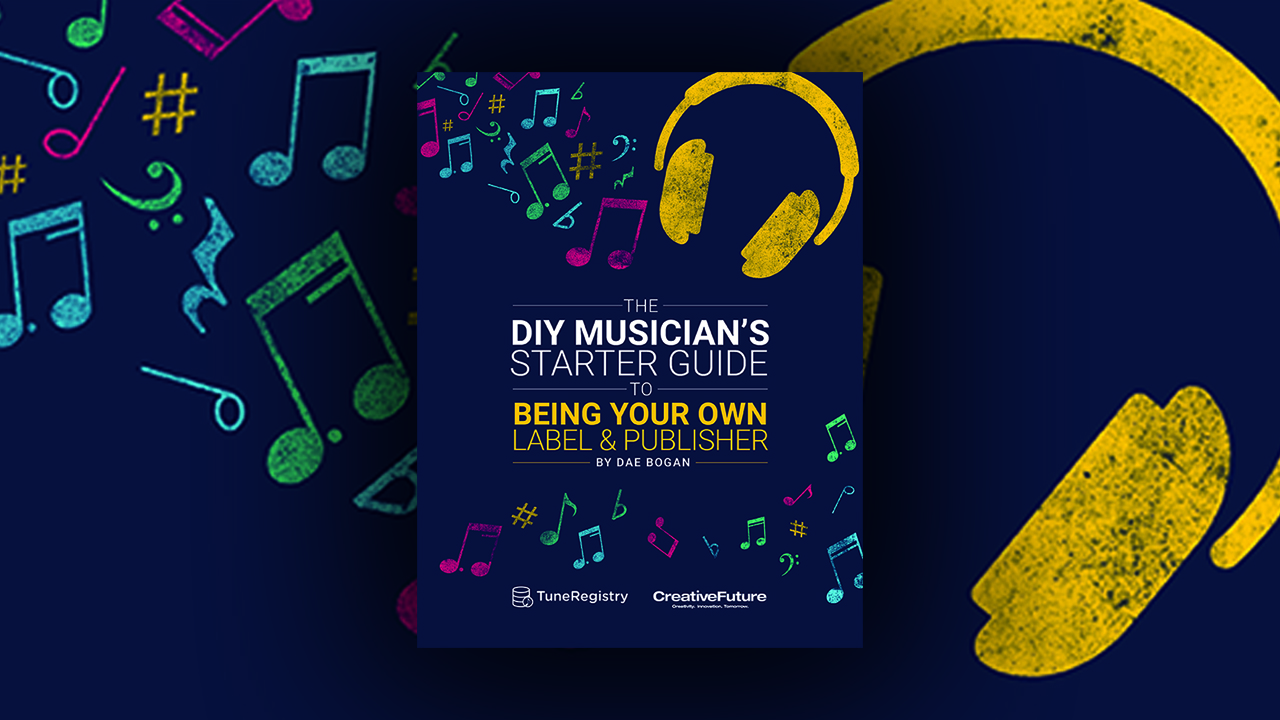
A few years ago I wrote the free ebook “The DIY Musician’s Starter Guide To Being Your Own Label And Publisher” for the non-profit creator advocacy group CreativeFuture as a checklist for DIY musicians who own their publishing and/or masters. The ebook has helped many DIY musicians to get setup with US music rights organizations to collect their royalties. I’ve also written dozens of articles on specific issues surrounding royalty collection that have been published on my blog DaeBoganMusic.com and other websites.

All of this to say that for over a decade I have been championing, educating, advocating for, and empowering DIY musicians and yet I still feel that so many of them are underserved and missing out on their own earnings.
Right now tens of thousands of artists, songwriters, composers, lyricists, session musicians, background vocalists, and music producers have been hit hard by the closure of live music venues and slow down of music production during the coronavirus pandemic. Many have struggled to get financial assistance due to the gig economy nature of much of the work in the music industry. But the sad part is many DIY musicians may have money due to them from their music and contributions over the last 5 to 7 years!
Since the pandemic began, I’ve helped several DIY musicians uncover royalties that have been sitting in unclaimed royalties databases or so-called “black boxes” (Tip: Search “black box” in my search field above to find articles I’ve written on the topic) to the tune of tens of thousands of dollars (Note: I did this work prior to joining The MLC in May 2020 and I am not currently accepting clients due to the fact that I am 100% committed to my work at The MLC, but please continue reading to learn how to do this yourself).
Searching for unclaimed royalties is part of the royalty forensics process. Understanding what entitlements a musician has based on their contribution(s) to any given work, what royalties are due based on type of use and territory, and where the royalties flow to be accounted to and paid out can be a challenge. I did this work for my clients, but I also have a workshop on the topic (Tweet me @daeboganmusic to request FREE access to the workshop).
For example, my cousin, independent singer-songwriter Durand Bernarr had around $8k in unclaimed royalties for his contribution as a background vocalist on the song “Girl” by The Internet sitting unclaimed at just one organization in the United States. Although these royalties were due to him in 2018, the AFM & SAG-AFTRA Intellectual Property Rights Distribution Fund did not know who Durand Bernarr was or how to reach him. I helped Durand uncover these royalties during the coronavirus pandemic and the payment couldn’t have come at a more needed time.

Unclaimed royalties is a common problem for new and up-and-coming music creators (but it also affects emerging and established music creators) and it stems from poor metadata and production credits creation and distribution (this is why I founded TuneRegistry and RoyaltyClaim (I no longer own these companies)). It also stems from DIY musicians not being properly setup and registered everywhere (I cover this in my free ebook).
I now work at The Mechanical Licensing Collective (The MLC) as its Head of Third-Party Partnerships where I am building relationships between The MLC and a variety of organizations and companies to help self-administered songwriters and music publishers interface with us to unlock and collect digital audio mechanical royalties from the use to their songs in the United States by digital service providers such as Spotify, Apple, Amazon, Google, Pandora, Deezer, Tidal, SoundCloud and more.
Now is the time for DIY musicians to take the time to hunt down unclaimed royalties that may go back as far as 7 years. Check out my free ebook as a starting point!
Pro Tip: If you find unclaimed royalties in one place, there may be more and other places. Check with the organization where you find your royalties if those royalties are for the US only or the world. If for the US only, you may have counterpart unclaimed royalties for the same set of rights and types of usage in other countries!
HAAWK Expands Offerings; Acquires TuneRegistry And RoyaltyClaim

I am thrilled to continue the journey of empowering DIY musicians and independent rights-holders as part of the HAAWK family.
HAAWK has acquired TuneRegistry and RoyaltyClaim. Read the story on Billboard this morning.
Eron Bucciarelli (Soundstr), Dae Bogan (TuneRegistry & Royalty Claim), Benji Rogers (DotblockchainMedia & Pledge Music), and Jason Trikakis (HelloSugoi) Submit ‘How Tech Can Save the Music Industry’ Panel for SXSW 2018 – How To Vote Details

I’m excited to join fellow music tech founders Eron Bucciarelli (Soundstr), Benji Rogers (DotblockchainMedia), and Jason Trikakis (HelloSugoi) for a panel submission to SXSW 2018. Please vote and share the submission for “How Tech Can Save the Music Industry” #MusicTransparency
How Tech Can Save the Music Industry
The music industry is in dire need of change not only to thrive, but survive. Streaming, pirating and the secondary ticket market have dealt serious blows to our industry’s major revenue streams, but technology can be our savior. Join experts from the royalty, rights, ticketing and metadata blockchain sectors to learn not only how tech can provide short-term solutions, but also build a more sustainable industry. Join us to learn how tech can save the music industry. #MusicTransparency
QUESTIONS
- What are the current and near-future major issues of the industry that could be disrupted by technology?
- What solutions can tech offer and how can they be practically applied to our everyday lives?
- What is the long-term impact of these tech solutions? What happens without these solutions based on the current landscape of our industry?
SPEAKERS
- Eron Bucciarelli, CEO, Soundstr
- Dae Bogan, CEO, TuneRegistry & Royalty Claim
- Benji Rogers, CEO, Plege Music & dotBlockchain
- Jason Trikakis, CEO, HelloSugoi
CLICK HERE TO VOTE
I’m Working On A Side Project Addressing ‘Black Box’ Royalties

As of this writing, there are currently 116,133 verifiable* payments owed to music creators and rights-holders that are sitting in unclaimed/undistributed royalties escrow accounts (referred to as “Black Box” funds**) in the United States.
The actual number of individual payments owed is likely closer to or exceeds 1 Million, however the actual number is unknown because the administrator(s) of some of the biggest Black Box funds have not made public their list of payees to whom they owe royalties.
Unfortunately, due to the statute of limitations on these funds many of these payments expire. Every month payees unknowingly forfeit their rights to these payments and the interest in the royalties revert back to the administrator. This happens because the payee does not contact the administrator of the fund to claim their royalties. Granted, most payees are unaware that these payments are waiting for them because the administrator is unable to reach the payee for various reasons.
It has been estimated that the global “Black Box” royalties could be in the billions of dollars owed to music creators and rights-holders.
Imagine working somewhere and then you do not receive a paycheck because the HR department does not have your new address. Not a perfect analogy, but not receiving monies that you’ve earned as a result of your hard work seems unfair.
THIS IS A HUGE PROBLEM
So, I am happy to announce that I am working on a side project called Royalty Claim. Royalty Claim will attempt to work with as many of these administrators to aggregate their databases of millions of records of unclaimed/undistributed royalties and make that information available to the public. There are other services and insight that we will offer through Royalty Claim to help educate music creators and rights-holders on Black Box funds and how to limit/prevent their earnings from falling victim to the broken global music licensing ecosystem (such as taking control of your music catalog with TuneRegistry).
Want to get updates on the Royalty Claim project and be the first to know when we have something to reveal? Sign-up for our email list at www.RoyaltyClaim.com.
Also, follow @RoyaltyClaim on Twitter.
* These 116,133 payments are specifically verifiable because the list of payee names can be gathered from several databases.
** I am currently aware of over 30 funds and sub funds being managed in the United States. However, there are definitely many more that are “private”.
Free DIY eBook
CONNECT WITH ME


 Dae Bogan Music