
Dae Bogan To Join Other Music Industry Experts At US Copyright Office Symposium On Unclaimed Royalties Study in Washington, D.C.

I am honored to announce that on December 6th, three weeks from today, I will be representing the US independent music creators community at a symposium in Washington, D.C. at the The Library of Congress.
A few weeks ago, I was invited by the newly appointed Copyright Royalty Judge, Steve Ruwe, to speak at the Copyright Office’s symposium on unclaimed royalties at The Library of Congress. As a CRJ, Mr. Ruwe is among just three judges who are responsible for setting the royalty rates that all songwriters in the world are paid for the use of their songs in the United States.
Last year, my 2016/2017 research titled “The State of Unclaimed Royalties and Music Licenses in the United States,” — research that led me to founding the world’s first search engine of unclaimed music royalties and licenses and a gateway to initiate claims, RoyaltyClaim (acquired by HAAWK Inc.) — was referenced, and I was personally consulted, by the United States Congressional Budget Office during its analysis of the economic impact of the then-current bill, Music Modernization Act. That bill became law in October 2018 and is now known as the Orrin G. Hatch–Bob Goodlatte Music Modernization Act 2018 (MMA or Music Modernization Act for short).
I have been fighting to ensure that independent and unsigned self-published songwriters are recognized, empowered, and represented in the US music industry for over a decade now. My first break-through was conceptualizing and co-founding TuneRegistry, which enables self-published songwriters to administer their catalog and unlock performance and mechanical royalties while keeping 100% of their copyrights and 100% of their royalties. TuneRegistry has helped thousands of self-published lyricists, composers, producers, and singer-songwriters protect their copyrights and unlock hundreds of thousands, if not millions, of dollars in unpaid and current royalties as well as enter into direct licensing deals with digital music services and social media platforms.
I look forward to discussing how the Copyright Office will develop outreach and messaging strategies to reach and engage self-published music creators and I hope to ensure that these creators continue to have a voice in the room, if not a SEAT AT THE TABLE.
US Copyright Office Announcement: https://www.copyright.gov/newsnet/2019/784.html
Music Industry Rant: ‘Rights’ Is Not A Buzzword
I think it is quite disingenuous and frankly misleading to slap on the term “rights” to every music tech platform that collects some minimum amount of metadata regarding musical works.
Music rights administration (including publishing and neighboring rights) is not a frivolous add-on to be used as a way to beef up one’s otherwise undifferentiated service offerings in an effort to attract customers in an ever more saturated music monetization and catalog management marketplace.
Music rights administration requires a comprehensive understanding of music publishing, copyright administration, licensing and multi-territorial relationships with CMOs, intermediaries, and administrators that goes well beyond delivering releases to DSPs or creating playlists to pitch to music supervisors. Understanding the nuances between royalty accounting and royalty forensics (not just parsing income statements), and having a grasp on the complicated music licensing and rights management ecosystem — not just direct deals — are bare minimum requirements for being a “rights” company.
Music rights administration requires knowledge, experience, and skill set that only comes from spending years doing nothing but this kind of work (it doesn’t hurt to have a masters degree specifically in music industry administration either); handling complicated issues around works registrations, disputes, and conflicts; combing over raw CWR and certain types of DDEX files; being in the room with the powers that be at CMOs and adjacent entities; and understanding how works are licensed and how income participants are accounted to in different territories under potentially overlapping representation mandates framed by international treaties (Berne, Rome, etc.) and bilateral agreements and supported by local copyright laws and termination terms.
In a word, slapping “rights” into the company tagline/description of a music tech platform that was founded to do anything but rights administration and for whom the founders have little to zero background and experience specifically in music rights administration is the new adding “decentralized” to data company descriptions.
Music industry people, be careful regarding the services that you sign up for. Your copyrights are the most important assets that you have. Putting the management, representation, or administration of these assets, for any period of time, in the wrong hands can and will lead to a world of trouble for you now and potentially for years to come.
Music industry colleagues, don’t let non music rights people abuse the term “music rights”. It isn’t a trendy phrase to add to your tagline to be current with everything that’s going on in the industry (e.g. MMA, MLC, CRB rulings, Article 13, etc.)
Statement By Dae Bogan On The Cancellation Of His ‘Music Industry Entrepreneurship’ UCLA Summer Class
Dear UCLA and non-UC Students who enrolled in my Summer 2019 Music Industry Entrepreneurship class:
Regrettably, my class, which was scheduled to begin this Thursday through UCLA Summer Sessions and UCLA Herb Alpert School of Music, has been cancelled. If you enrolled in the course, the school has already unenrolled you and you can find another course in the Music Industry program.
I decided to cancel the class due to low enrollment, which has impacted a number of classes this summer. Unlike my winter class, which is generally over enrolled with a wait list, summer has proven to be particularly difficult (Maybe students do not want to take class in the summer?).
My curriculum requires a significant amount of group work (60% of the grade) to be distributed across student group members as groups progress through the class as mock co-founders of a fictitious music industry startup business. Consequently, the class requires a minimum threshold of enrolled students to make the course dynamic enough to highlight the entrepreneurial principles, fundamental business strategies and music industry best practices that I teach.
While I hate that the class had to be cancelled with such short notice, I felt that to maintain the integrity of my curriculum and to ensure that student who get to take my class benefit from the way in which it was designed cancelling was the only option.
Student reviews of Dae Bogan’s Music Industry Entrepreneurship class:
Hi Dae, Just wanted to thank you for an awesome class. This was one of the few classes at UCLA where I felt I was taught skills, not just about the subject matter but in how to go about achieving my career goals, that were applicable to my endeavors and will be used for the rest of my life. I got more out of it than I had with any other course here and I would highly recommend your class to to anyone interested in a music industry career.
– Student testimonial, Winter Quarter 2019
Without a doubt one of the most useful classes I have taken in my undergraduate career at UCLA. Professor Bogan has so much real world knowledge and knows how to convey that knowledge in a classroom setting immensely well. All the course material was invaluable to my progression and aspirations of being in the music industry. Every lecture was extremely well-prepared, with amazing guest speakers and information that I will be using for the rest of my life. Professor Bogan did a phenomenal job and I will be recommending this class to all my friends interested in music or starting their own company. Can’t say enough good things about this class.
– Student testimonial, Winter Quarter 2018
If you are still interested in exploring entrepreneurship in the music industry, you may consider taking my online program Music Industry Entrepreneurship Masterclass which is a 4 hour sample of my full course. You can sign up for the masterclass at www.marcatoacademy.com.
Live Online Workshop: Introduction to Music Royalties Forensics (May 18th and May 19th)

About Me: I am a music rights and royalties tech entrepreneur (original founder of music rights administration platform, TuneRegistry, and the world’s first search engine of unclaimed royalties and music licenses, RoyaltyClaim), music creators’ rights advocate, and lecturer of music industry entrepreneurship at UCLA Herb Alpert School of Music. I have helped hundreds of music creators and rightsholders find and unlock hundreds of thousands of dollars in unpaid music royalties from around the world. And my research on the state of unclaimed music royalties was used by US Congressional Budget Office in its analysis of the Music Modernization Act of 2018.
9 Questions – 90 Minutes – $90
The 9 questions this workshop will answer:
- What are your rights, entitlements, and income participations as a music creator and/or rights-holder?
- What are the most common royalty streams generated from a variety of music usage types and where do those royalties flow?
- How are music royalties allocated and distributed by music rights organizations?
- What are niche funds and sub-funds that often generate unmatched so-called “black box” royalties and how do you check for your records?
- How to track music usage to leverage usage and detection reports to reconcile or audit royalty statements?
- What are some tools and resources to help you search for, identify, and claim unclaimed royalties and music licenses?
- What are the requirements to properly setup to be accounted to and paid royalties from previously unaffiliated sources going forward?
- What are some tips for managing your music rights affiliations?
- What are some tips for preparing your music rights and royalties for beneficiaries?
REGISTER
Register for Sat. May 18th @ 9am PST
Register for Sun. May 19th @ 9am PST
Register for Mon. May 20th @ 9am PST
If you can’t make either dates, register anyway to receive the full replay video.
90% Of Music Startups Fail – Improve Your Chances – Enroll In ‘Music Industry Entrepreneurship Masterclass’
Hi there,
Did you know that 90% of startups fail and while there may be 16 reasons why music startups fail in particular, failure still sucks for the hundreds of music startup founders who failed; especially those who could have gotten it right had they consulted with a music industry entrepreneurship coach.
My name is Dae Bogan and I am a 3x exited serial music industry entrepreneur; a Lecturer, Music Industry at UCLA Herb Alpert School of Music where I develop and teach “Music Industry Entrepreneurship,” which was recognized by Billboard on its list of “The 15 Best Music Business Schools In 2017;” and I am the founder and executive consultant of music startup consultancy, Rights Department, where I’ve helped over 40 founders from around the world develop, launch, scale, pivot, or exit their startups in the music and digital media industries.
Next weekend, for the first time ever, I will be teaching a live online Music Industry Entrepreneurship Masterclass with 9 different sessions to choose from on April 27th, 28th, and 39th. Enrollment starts at less than the price of a one hour coaching session and if you can’t make it, by registering, you will still receive a full recording of the masterclass plus any additional benefits based on your enrollment package.
WATCH A FREE INFORMATION SESSION VIDEO
One of my biggest issues as an artist manager is deciding which opportunities are most lucrative for my clients. Dae’s strategies around organization help you identify which skills you should prioritize in order to drive success for yourself or your team. With Dae’s insight, I have become more efficient and realistic in my pursuit of new ventures, with both short term and long terms goals in mind. — Ryan MacDonald, Entrepreneur
Not For You?
If you do not believe the masterclass applies to you, but you know an entrepreneur — in any industry — who may be interested in learning entrepreneurial skills and fundamental business strategies, please send them the information.
Conspiracy Theory Satire

Conspiracy theorists be like…
16 year old Hanson Gregory invented the ring-shaped doughnut in 1847.
1+8+4+7 equals 20.
A ring-shaped doughnut has 2 circles — one outer and one inner.
20 written out twice is 2020.
The first day of the 16th week in year 2020 is 20.
The month in which the 16th week lands is April. April is the 4th month of the year.
4+16 equals 20.
4-20 reversed is 20-4 and if you remove the dash 20-4 is 204. (We’ll reference this later)
Adding the first two digits of 1847 (1+8) and the second two digits of 1847 (4+7) results in 9-11.
American astronomer Mary Watson Whitney was born on September 11th, 1847.
Mary believed that scientific training would prepare women to get traditional jobs in science in the 20th century.
Mary Watson Whitney died 21 days into the 21st year of the 20th century on January 21st, 1921 in Waltham, Massachusetts.
Waltham, Massachusetts was incorporated in 1884.
1+8+8+4 equals 21.
There are 21 letters in Hanson-Gregory-doughnut.
Hanson Gregory died in 1921.
A statue of Hanson Gregory was erected by the town of Glen Cove, Maine.
It takes 204 minutes to drive from Glen Cove, Maine to Waltham, Massachusetts.
The average American can eat 21 doughnuts in 204 minutes.
If someone eats 21 doughnuts in one sitting, clearly they have the munchies.
The munchies are attributed to smoking marijuana, which is referred to as 4-20.
You just read 21 lines of random ass facts that I pieced together with the loosest unsubstantiated connections that blew your mind.
————————————————————————
“Conspiracy Theory Satire”
© 2019 Dae Bogan
Permission to use under Creative Commons license CC BY-NC-ND (Attribution-NonCommercial-NoDerivs)
Are Founders Of AI Music Services Being Disingenuous When They Tell Human Music Creators Not To Worry Or Are They Just Clueless?

If AVIA is a composer and Endel is a recording artist, and they can produce massive volumes of content (WMG is releasing 20 albums by Endel this year alone), what does this mean for the quality and pace of human-created music?
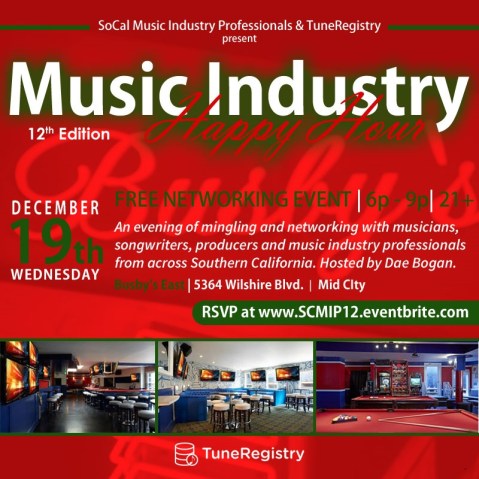
You’re Invited To The SoCal Music Industry Professionals’ End Of Year Music Industry Happy Hour – Wed. Dec. 19th
A Curated List Of My Thoughts On The Music Modernization Act (And Related Topics)
I am a very vocal music creators’ rights advocate and copyright purist. Often, I have the opportunity to share my *opinions* on topics within and circling the music industry that impact the ways in which music creators — especially DIY musicians — navigate and thrive in the United States.
Over the last ten months I have been especially vocal about the Music Modernization Act. I’ve been quoted in Billboard, Rolling Stone, Pitchfork and Digital Media News. I’ve been invited to panel discussions at music industry conferences and keynotes at universities. And I have written several think pieces (and rants) on the bill, which is now law, and related issues.
Still, I am asked what my thoughts are on the MMA.
I’ll summarize my thoughts by saying that I believe the intent of the MMA is good and admirable on its surface — that is, to improve the way rightsholders are accounted to and paid for the use of their music. I believe there is some good stuff in the MMA; particularly, the entirety of Title 2 (The CLASSICS Act) and Title 3 (The AMP Act). However, I feel that there is still work to be done. I also feel that some compromises, at the expense of DIY music creators, were made too easily (this is partially based on private discussions that I’ve had with individuals with privileged knowledge of the negotiations and dealings that took place during the drafting and subsequent amending of the MMA). That being said, I also believe that the soon to be formed Mechanical Licensing Collective has the opportunity to prove to songwriters that this law was truly about them.
Only time will tell.
Here’s a 2018 curated list of my “thoughts” on the Music Modernization Act (and related topics):
- (Oct 16, 2018) Here Are 10 Ways That The Music Licensing Collective (MLC) Can Set The Bar As A Collective Licensing Organization In The 21st Century – https://bit.ly/2RW9kW2
- (Sep 14th, 2018 in Pitchfork) Why So Many Hip-Hop Producers Are Putting Business Before Beats – https://bit.ly/2PEsi1x
- (Aug 19th, 2018) Another Music Modernization Act Opinion Piece – https://bit.ly/2NLp9LC
- (Aug 15th, 2018 in Rolling Stone) Why More Pop Songwriters Are Stepping Into the Spotlight – https://bit.ly/2ClAuAc
- (Jul 24th, 2018) Songwriters Are Owed Nearly $2B In Unclaimed Royalties!!! — Maybe More — I’ve Been Saying This For Some Time Now (Against Pushback), But Finally The Press Has Confirmed It – https://bit.ly/2CMR6Sp
- (May 15th, 2018 in Billboard) Black Box Royalties Myths, Common Misconceptions Debunked at Music Biz 2018 – https://bit.ly/2q4dhLD
- (May 7th, 2018 in Digital Music News) Is the Music Modernization Act Enabling ‘Legal Theft’ Against Smaller Artists? – https://bit.ly/2IugrCS
- (Apr 25th, 2018) 5 Ways The Music Modernization Act Could Be Fairer To ALL Music Creators – https://bit.ly/2Jzn1tb
- (Apr 20th, 2018) I Was Interviewed By The Congressional Budget Office Regarding The Music Modernization Act, And Now I’m Even More Concerned For DIY Musicians – https://bit.ly/2AdwpN0
- (Jan 17th, 2018) – My Thoughts On The MMA In Light Of The CRB Mechanical License Rate Decision – https://bit.ly/2P6bT98
Where do you stand on the MMA?
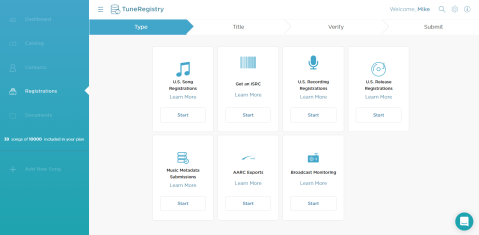
Demystifying TuneRegistry And The Concept Of Subscription-Based Self-Publishing Administration
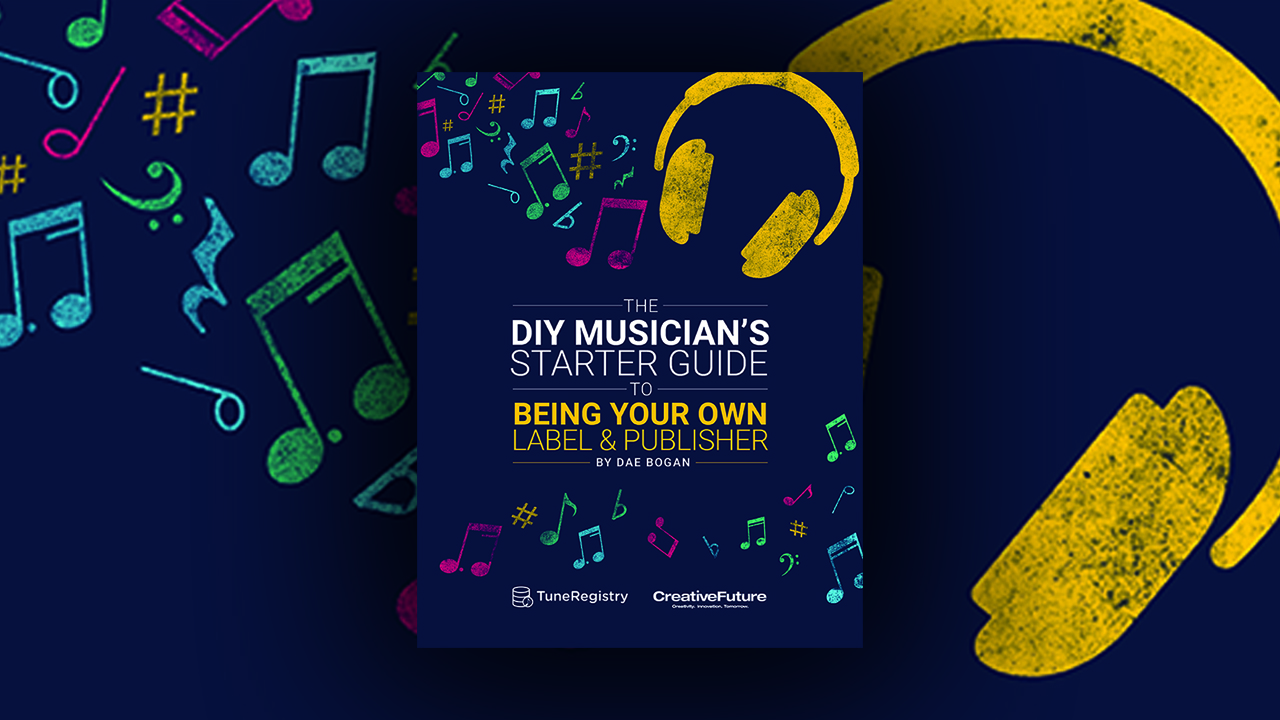
Free DIY eBook
CONNECT WITH ME


 Dae Bogan Music