
ETLA, The Research Institute Of The Finnish Economy, Publishes Report On State Of Digital Music Infrastructure – Calls For Transparency And Addresses “Black Box” Issues
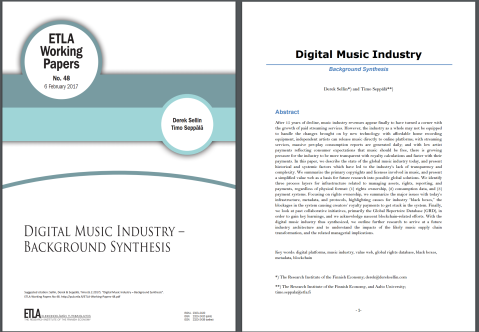
I had the honor of being interviewed by researcher and author, Derek Sellin, for his industry report “Digital Music Industry – Background Synthesis” for ETLA Working Papers No. 48, published by Elinkeinoelaman Tutkimuslaitos – The Research Institute of the Finnish Economy.
Black boxes materialize for many reasons, including but not limited to: the inability to identify rights holders despite payments made for the use of their compositions; the lengthy time required for filing domestic and ultimately international copyrights, often begun only when a recording is actually released; multiple claims for the same rights exceeding 100% of ownership, resulting in indefinite disputes; international collaborations with less than all creators asserting their rights; international legal inconsistencies regarding what type of performances result in payments (most visible in the fact that radio play does not generate royalties for recording artists in the United States); and the slow and often manual processes to report usage and clear payments under international reciprocal agreements. – Dae Bogan
You can download the report at https://www.etla.fi/en/publications/digital-music-industry-background-synthesis/.
About ETLA
The Research Institute of the Finnish Economy (Etla) is engaged in applied economic research with emphasis on topics that are important from the Finnish point of view. The main focus is on issues that relate to productivity and drivers of its growth, to the functioning of the labour market, as well as to challenges in maintaining a balanced macro economy including sound public finances. Etla monitors economic development, compiles forecasts as well as assesses economic policy and comments on it.
Etla is a private non-profit organisation. Its operations are backed by the supporting association, the members of which comprise the Confederation of Finnish Industries and the Confederation of Finnish Industry and Employers (TT) Fund. The funding from the background organisations covers more than a third of the institute’s budget and forms a solid base for its operations. Read more.
[VIDEO] Independent Music Industry Conference Panel Live Video
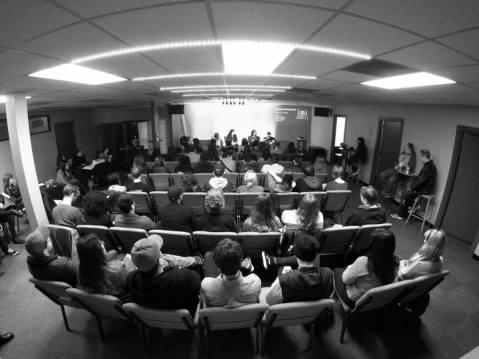
If you missed the inaugural Independent Music Industry Conference, produced by Mike Ziemer, producer of the So What Music Festival, you missed a very cool and informative boutique event. But, don’t worry! Below are the live videos from the Record Label panel and the Music + Technology panel, both moderated by me.
Record Label Panel
Music + Technology Panel
If you can’t view this video, click here.
Los Angeles Songwriters Collective Photo Recap

I had a great time as the keynote speaker atthe Los Angeles Songwriters Collective meetup this past Monday. Here are some photos.
Announcing Pride Music: A Music Business Workshop for LGBTQ Music Creators

Last month, I announced that I was working on a music business workshop for LGBTQ creators; and the reasons why I felt such a workshop was necessary. Read more here.
I am excited to present PRIDE MUSIC: A Music Business Workshop for LGBTQ Music Creators, taking place Nov 16th & Dec 17th at Brotherhood Clubhouse – BIF. Tickets $15 at https://pridemusic.eventbrite.com
The Elephant In The Room: Unclaimed / Undistributed Royalties
In the United States, there are several “unclaimed / undistributed royalties” funds held by music rights organizations. These funds collectively consist of tens of millions of dollars in undistributed earnings generated by the use of music within the greater music industry, from legislative appropriations imposed on manufacturers of audio home recording media, and from agreements with foreign entities.
Some of the organizations (SoundExchange, AFM & SAG-AFTRA Intellectual Property Rights Distribution Fund, Film Musicians Secondary Markets Fund, Live Television Videotape Supplemental Market Fund, and although this is not royalties per say, the US Copyright Office has a Section 115 NOIs Filing database that can be used to track down missing mechanical royalties) have created public databases so that music creators can search to see if they have royalties sitting in these funds. However, the biggest funds do not have public databases and often music creators can not be reached by any of these funds to be notified that they have unclaimed royalties.
I am working on a side project called RoyaltyClaim.com to address this issue of unclaimed / undistributed royalties. The goal is to get each of these funds to join the RoyaltyClaim.com Disclosure Program and to encourage them to submit very basic information to us on a periodic basis regarding the income participants who are due royalties. We will then aggregate these disclosures and maintain one searchable public database accessible for free by music creators and income participants.
By aggregating these lists of unclaimed / undistributed royalties information, we can aid income participants — including songwriters, recording artists, publishers, labels, musicians, background vocalists, composers, and beneficiaries (in the event of musician parents or spousals who passed away, but their music still generates royalties) — in locating and claiming their monies.
If you are a music creator, you should signup at RoyaltyClaim.com to be notified of our launch. We are currently in conversations with the various funds to get them to cooperate and help creators and their families.
The Uniquely US Challenge That Indie Artists Face When Asked To License Music To Indie Filmmakers, For Free

FREE WEB CONFERENCE: Artist Launch’s Virtual Music Business Summit

FREE WEB CONFERENCE:
Artist Launch’s Virtual Music Business Summit
August 24th, 2016, Starting at 12pm PST
• Dae Bogan (Co-founder & CEO of TuneRegistry)
• Benji Rogers (Chief Strategy Officer of PledgeMusic)
• Reggie Hawkins (Program Director of Hip Hop Nation on SiriusXM Radio)
• Cynthia Charles (Touring at AEG Live’s Urban Touring Division)
• Cherie Hu (Media & Entertainment Writer for Forbes)
Join the live Q&A on “HOW TO PROTECT AND MARKET YOUR TALENT” with Dae Bogan at 3:30pm – 4:00pm PST
See full schedule: https://karenmariemason.com/
Tune-in here: http://events.instantteleseminar.com/?eventid=88530465
Please Vote For My SXSW Panel Idea

For the past two years, I’ve been mentoring music and music tech entrepreneurs at SXSW. From music app founders to indie bands to artist managers, I’ve given my time to provide advice and guidance to awesome people working to improve their careers or businesses.
Over the last year, I’ve focused a great deal of my time on the issues surrounding rights and metadata in the music industry. My research and work has culminated in the launch of my startup, TuneRegistry, which enables music creators and rights-holders to manage their music catalogs and register their rights and metadata all in one place. We believe that by empowering music creators with a tool to organize accurate metadata and streamline the rights registrations processes, the music industry as a whole will be better accountable to artists and writers.
This summer I had the honor of teaching a course at the UCLA Music Innovation Summer Institute on the music tech business. During the program, I curated and moderated a panel on rights and metadata and invited representatives from Music Reports, Crunch Digital, BuzzAngle Music, and the co-founder of TuneRegistry to speak on the challenges we’re seeing in the digital music space. The panel went so well that I was encouraged to submit the panel to SXSW.
I am happy to say that the panel, along with the original speakers — Bill Colitre (Music Reports), Keith Bernstein (Crunch Digital), Jim Lidestri (BuzzAngle Music), and Jesse Morris, Esq. (TuneRegistry) — is up for consideration for SXSW 2017.
Please take a moment to check out the panel idea, comment, and vote at http://panelpicker.sxsw.com/vote/62361.
Hangout With Dae This Saturday On Google Hangouts

Free DIY eBook
CONNECT WITH ME


 Dae Bogan Music