Archive | Music Business RSS for this section

[VIDEO] Watch How TuneRegistry Can Help Indie Music Creators Protect Music & Unlock Royalties

Homepage

Are you an indie artist looking to unlock additional income streams from your music?

Are you a band confused about what rights each member owns and how to protect them?

Are you a manager looking to save time and streamline reoccurring music industry administration tasks?

Are you an indie label or publisher looking for a better way to organize your company’s catalog in a collaborative space?

TuneRegistry is a next generation music management platform that enables creators and rights-holders to streamline the administration of their music catalogs.

Check out this tutorial reel to see how TuneRegistry can help you.

Learn more at www.tuneregistry.com.

The Uniquely US Challenge That Indie Artists Face When Asked To License Music To Indie Filmmakers, For Free

film-596009_1920

Over the last few years I’ve been approached by several indie filmmaker friends seeking my help on getting music licensed for their indie film projects. While some have had budgets, most have asked for recommendations on getting music for free. Now, as an advocate for indie music creators and rights owners, I tend to disregard “no compensation” opportunities as taking advantage of artists and/or devaluing the work of music creators (although the folks behind the opportunities are wicked good people).


Several times I’ve had to respectfully tell my indie filmmaker friends that I could not share their “music placement” opportunity, but instead I could direct them to resources to license music for cheap.


I’ve since realized that what I have not done was explain why, specifically in the United States, giving filmmakers music for free is frowned upon. So, in this post I aim to do that.


But first, I will say that I understand and agree that many opportunities for music placed in film — as well as TV shows and commercials — can be a huge break for up-and-coming artists. Productions that are widely released and viewed can result in significant exposure for the music, which can translate into increased radio airplay, digital downloads, and audio and video streams, which dramatically increases the artist’s income potential and exposure. There’s a long history of songs from movie and TV soundtracks going Gold & Platinum and topping the charts.


That being said, small indie film projects are typically not the productions that create these kind of success stories. In fact, I’d argue that over 90% of independently produced projects do little by way of “exposure” for artists (if you’re an independent artist reading this who’ve had your music placed in film, please comment and share your experience).


The reality is many indie film  projects do not have the distribution or exposure to generate the volume of public consumption to translate into significant benefit for the artists who contributed music to the film. This is because only a small percentage (maybe less than 1%) of the people who’ve watched the movie would actually make any effort to track down a song placed in the movie.


Now, let’s talk about how artists get paid for music licensed to films. I am focusing solely on commercially released songs being licensed to a film. I am not going into the details of original songs composed for a film, film scores, or any “commissioned” work for a film. I am strictly talking about a filmmaker asking an artist to use an already recorded and released track.


Ok, so typically, a production company should obtain what’s called a synchronization license from the artist (or label) to use the track in the film.


The term “synchronization” refers to the act of synchronizing a sound recording to a motion visual embedded in a video. A production company should pay two (2) fees for licensing music to film: master use fee and synchronization fee.


The master use fee is a fee paid to the artist (or his/her label if they are signed to a record label) for the use of the sound recording, also known as a “master.” The synchronization fee is a fee paid to the songwriter (or his/her publisher if they are signed to a publishing company) for the use of the song, also referred to as the composition.


The artist/label owns the sound recording/master. The songwriter/publisher owns the song/composition (for example the song “Diamonds” by Rihanna was actually co-written and is co-owned by Sia and her publisher; but the sound recording of “Diamonds” that you hear on the radio is owned by Rihanna’s record label. Both the writer/publisher and the artist/label must get paid for the use of “Diamonds” in a movie; those are two separate copyrights).


Alright that was a crash course on publishing.


In order for a filmmaker to license a piece of commercially released music to your film, you need a synchronization license from the independent artist (I’m going back to talking about independent artists, although I used Rihanna (a “major” artist) in my example above). An independent artist may not have a publisher nor a label, so he/she is the sole owner and should still get paid the synch fee (for the song/composition) AND the master use fee (for the sound recording/master).


Now, so far I’ve talked about what’s known as the up front fees. These are the fees you, filmmaker, would pay to an independent artist to put their music in your movie. But like I said in the beginning, many filmmakers have asked me to help them get music for free. 😦


I wouldn’t mind this too much if we weren’t talking about small projects that will be released (and generate most of its viewership) in the United States.


Why?


Outside of the United States, artists earn public performance income from the movie theaters. That’s right, movie theaters must pay public performance fees to public performance organizations for exhibiting movies. These backend royalties can add up if the movie becomes popular and has many showings across many territories.


However, in the United States movie theaters are exempt from having to pay public performance fees. This means, independent artists (specifically, singer-songwriters) do not earn income from movie theaters when they exhibit movies containing their music.


So, when you do not earn up front fees from synch and master use fees, because the filmmaker “doesn’t have a budget for music” AND you do not earn backend royalties from U.S. movie theaters, because they are exempt from paying what theaters in other countries pay, it is frowned upon to give music for free to U.S. filmmakers making low budget movies. Because these low budget projects may not have the distribution and marketing backing of it’s major and big-independent counterparts, the potential for the movie to generate “non-compensation benefits” for the artist (e.g. radio airplay, downloads, streams, awards, etc.) is significantly low.


Basically, if your indie film is being released in a few United States independent theaters and then on DVD and you want music for free, it will be a challenge. There is no substantial benefit for the artist.


All that being said, there are several examples of small budget projects generating grassroots marketing buzz and cult popularity that does impact the distribution and exposure of the movie, which in turn could generate benefits for artists who’ve given gratis (free) licenses to filmmakers. But this is not the norm. Furthermore, there are scenarios where you can license must free in the interim, but commit to payments based on hitting milestones such as getting distribution, hitting box office sales milestones, hitting DVD rental or sales goals, etc. This is a good way for a filmmaker who doesn’t have a big music budget to potentially negotiate with artists to defer compensation based on the performance of the project.


Thoughts? Questions? Stories to share? Post in the comments.

20 Different Ways to Release an Album: From Beyonce to Frank Ocean to U2 & Beyond

frank-ocean


Having trouble developing a release strategy for your new album? Check out the release strategy of 20 different albums on this article “20 Different Ways to Release an Album: From Beyonce to Frank Ocean to U2 & Beyond” on Billboard: http://www.billboard.com/biz/articles/news/digital-and-mobile/7495436/20-different-ways-to-release-an-album-from-beyonce-to


Also, check out my article “10 Steps to Building a Single Release Campaign” on CD Baby DIY Musician’s Blog: 10 steps to building a single release campaign: https://www.indieonthemove.com/blog/2013/11/10-ways-to-raise-funds-for-your-next-music-project-without-selling-a-single-record


Also, check out my article “10 Ways To Raise Funds For Your Next Music Project (Without Selling A Single Record)” on Indie on the Move website: https://www.indieonthemove.com/blog/2013/11/10-ways-to-raise-funds-for-your-next-music-project-without-selling-a-single-record


And always remember to REGISTER BEFORE YOU RELEASE with TuneRegistry.

FREE WEB CONFERENCE: Artist Launch’s Virtual Music Business Summit

artistlaunch.jpg

FREE WEB CONFERENCE:

Artist Launch’s Virtual Music Business Summit 

August 24th, 2016, Starting at 12pm PST

• Dae Bogan (Co-founder & CEO of TuneRegistry)

• Benji Rogers (Chief Strategy Officer of PledgeMusic)

• Reggie Hawkins (Program Director of Hip Hop Nation on SiriusXM Radio)

• Cynthia Charles (Touring at AEG Live’s Urban Touring Division)

• Cherie Hu (Media & Entertainment Writer for Forbes)

Join the live Q&A on “HOW TO PROTECT AND MARKET YOUR TALENT” with Dae Bogan at 3:30pm – 4:00pm PST

See full schedule: https://karenmariemason.com/
Tune-in here: http://events.instantteleseminar.com/?eventid=88530465

Breaking Bread, Giving Bread Crumbs: The Challenge Facing Beyoncé, Drake, And 150 Other People
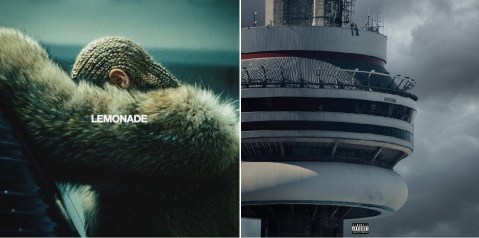
Beyonce and Drake

Between Beyoncé’s “Lemonade” and Drake’s “Views” albums, there are over 150 writers and producers credited across their combined 32 tracks.

I can only imagine the music compensation nightmare that will ensue over the next 12 months as streaming, DPD, and airplay royalty checks start to go out to the multi-national team of creators and rights holders.

Who is responsible for ensuring the accuracy of rights holder information across all tracks? Who is checking that digital music services have complete metadata to match sound recordings to their underlying compositions? Who is accounting to the background vocalists and session musicians?

Did every producer and engineer secure letter of directions from Beyoncé and Drake to properly claim a portion of Pandora payouts? Who is looking after the contributors who do not have multinational publishers? Will they capture their piece of neighboring rights, DART royalties, or Spotify mechanicals?

Who will lose out due to inefficiencies? Who will have money left on the table due to an inability to properly claim and collect?

These are the questions that we ask ourselves at TuneRegistry and why we’ve built the next-generation music rights & metadata management platform to empower creators and rights holders.

Grammy Winning Engineers Launch Digital Mastering Service For DIY Musicians, eMastered
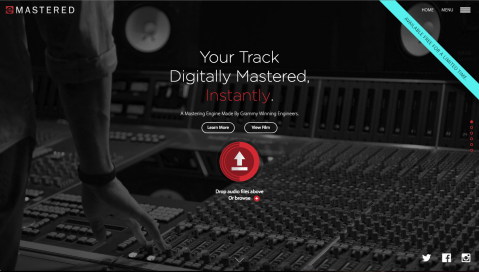
Screen Shot 2016-03-23 at 5.10.49 PM (1)

Using an intelligent mastering engine built from analyzing thousands of hit songs, eMastered gives musicians an easy and affordable way to master tracks from the comfort of their own homes.

Grammy Award-winning engineer Smith Carlson and hit EDM singer/producer Collin McLoughlin announce the launch of eMastered, an online tool redefining the way musicians approach audio mastering. eMastered enables users to instantly master recordings online, making what is traditionally a complex and expensive process much more simple, affordable, and accessible to musicians worldwide.

Read More…

#MusicBusinessMonday: Session Musicians
04-11-2016 - Session Musicians Header

Session Musicians: Quality music starts with talented musicians. Your mastery of instruments, performance, and sometimes improvisation can make the difference between a recording that’s just Ok and a recording that’s a masterpiece, so your skills should not go unrewarded.

Did you know that session musicians and background vocalists may be entitled to royalties when the recordings on which they’ve performed are played on digital services such as Pandora, SiriusXM, Music Choice, and thousands of Internet webcasters?

Read More…

#MusicBusinessMonday: Music Producers

04-04-2016 - Music Producers Header

Music Producers: You’re often the underdog in the royalty fight. Although the Recording Academy’s Producers & Engineers Wing is pushing for an amendment to the U.S. Copyright Act that would provide an allocation of non-interactive digital streaming royalties (SoundExchange royalties) to producers, no laws currently stipulate that you must receive sound recording royalties from your work when Pandora, SiriusXM, Music Choice, Slacker, iHeart Radio, or any of the other 2,500 digital services perform music that you produced (however, producers can receive publishing income if you’re a “writer” on the song).

So, what’s the solution? How do you make more money from your works when retail record sales royalties are becoming a myth?

Read More…