
What Every Small Artist Management Firm Must Do Immediately
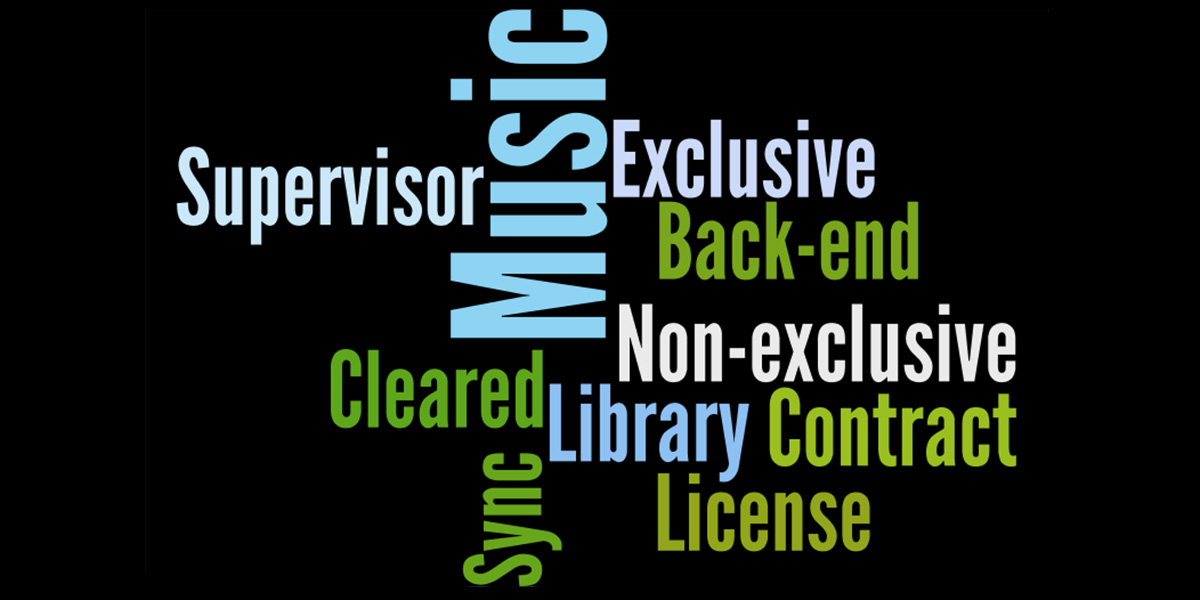
Artist Management Firms: If you do not have someone on your team whose sole responsibility is to utilize online music sync agencies, pitch ad agencies, and cozy up with music supervisers, you’re missing out, bigly.
When I owned/operated Renaissance Artist Management (aka RAM Artist), I established an in-house position for the sole purpose of securing music sync opportunities. This was during the early days of micro-sync and the boom of online sync agencies.
We leveraged online agencies (at the time that included Rumblefish before they were acquired by HFA and pivoted). Check out Songtradr, Music Bed, MusicDealers, YouLicense, Pump Audio, and many others like them.
Consider giving some tracks to exclusive libraries who do well pitching your artists’ sound. Red Bull Media House is always looking for good music and they get YUGE placements.
Make sure to read the deats of their contracts.
Here’s a few things to look out for:
- Exclusivity – Try not to give micro sync agencies exclusivity. If you’re giving a company exclusivity, it better be a solid library. (TuneCore PRO users…did you know when you opt-in to their sync licensing program, you’re giving them exclusivity?)
- SoundExchange Royalties – Some pitch houses and libraries have tried to sneak in a cut of your SoundExchange royalties. Don’t let them get it. They are not getting your music placed on digital radio, so they do not participate in your digital radio royalties. I successfully helped an indie artist negotiate that clause out of a library agreement.
- Tagging/ReTitling– Tagging is the practice of adding an identifier to your song title when the song is registered with a PRO. Retitling is creating a new title for the song when registering. The goal of both methods is to disambiguate any performance royalties generated as a result of the libraries sync placement activities. This is necessary when you have multiple non-exclusive libraries getting places of the same song. They want to make sure that when the cue sheet from the TV show gets to the PRO, the royalties earned against that specific placement gets to the right entity. It’s not unheard of for one song to be placed by several non-exclusive sync agencies, each with retitles or tagging and capturing royalties for their specific placement. Do know that the writer gets the writer share for all of the placements. The agencies/libraries participate in the publishers share of their specific title.
- Duration of Term – Exclusive libraries may want up to 3 years exclusivity. Aim for 1 year for the first term.
Learn about royalty forensics, that is the art(science?) of tracking down uses of your music and capturing associated royalties (this is definitely important when it comes to big multi territory placements, TV syndication, and film secondary market distributions). Tunesat and ACRCloud are two audio detection platforms that’ll detect performances of your music in sync media.
You may want to setup your own music licensing store, so that when you meet music sups, you can send them to an easy-to-search library of your own music. Check out Soundgizmo and LicenseQuote for this.
And of course, don’t forget to make sure the music is registered before it starts to generate royalties, with TuneRegistry.
How To Legally Record And Sell A Cover Song In 3 Steps

This post was originally written for and published on Dozmia’s blog.
If the popularity of user generated content (UGC) platforms, such as YouTube and SoundCloud, has taught us anything about the music industry in the Digital Age, it is that aspiring artists from anywhere can amass huge online audiences and earn global reach by putting out cover songs that spark a reaction.
Success stories like those of Justin Bieber, Tori Kelly, 5 Seconds of Summer, Charlie Puth, Shawn Mendes, and Ed Sheeran are no longer rare phenomena. Talented unsigned artists like Jade Novah and Austin Mahone have earned tens of millions of views and plays across their UGC accounts. Previously undiscovered talent have gone on to land brand sponsorships, live performances with major recording artists, appearances on TV, casting in commercials, and more– all without the backing of a major record label.
However, while recording and uploading cover songs to UGC platforms can be a great first step to building a fanbase, monetizing those songs on traditional digital music services can be a legal nightmare if not done correctly. Furthermore, knowing when, where, and how to capture all of the royalty streams that your cover recording earns will put you in a better position to reap all of the rewards from releasing a cover recording that takes off.
Here are three steps that you should take if you plan to legally record and release a cover song:
Step 1: Secure the proper licenses to reproduce and distribute the original composition.
The U.S. Copyright Act grants copyright owners six exclusive rights including the right to reproduce and the right to distribute their compositions in phonorecords. When you record a cover of an existing song, you are effectively using someone else’s copyrighted work and they must be compensated for the use when you distribute the recording in physical and/or digital media.
The law includes a provision that enables anyone to reproduce and distribute a composition by following the specific requirements set out in the compulsory license. These requirements basically state that you must notify the copyright owner of your intent to use their song and you must account to (provide reports and statements on usage) and pay statutory mechanical royalties to the copyright owner for each use.
The term “mechanical” refers to when songs were mechanically reproduced in phonorecords. The statutory mechanical royalty rates are set by the Copyright Royalty Board.
Currently, the statutory mechanical royalty rate for physical formats (CDs, cassettes, LPs) and permanent digital downloads (e.g. iTunes) is 9.1¢ for songs 5 Minutes or less or 1.75¢ per minute or fraction thereof for songs over 5 Minutes.
Harry Fox Agency (HFA), Loudr, and Easy Song Licensing are just three of the resources for securing a mechanical license.
HFA is a membership-based mechanical licensing agency owned by SESAC. HFA represents and issues mechanical licenses in the U.S. on behalf of their U.S. music publisher members. HFA’s website claims that they currently represent over 48,000 music publishers. This makes it easier for you to go to them for most of the top popular songs released in the U.S. HFA’s service for obtaining a mechanical license is called SongFile.
Through SongFile, you pay upfront for the number of physical or digital phonorecords that you project to sell. For example, if you will sell 1,000 CDs, then you’ll pay 9.1¢ x 1,000 = $91 per cover song, which will then be paid to the publisher(s) to compensate the songwriter(s). You can also secure a license for interactive streams. However, in the United States, some interactive streaming services already pays the mechanical interactive streaming rate, so you do not have to when releasing to these platforms in the United States. Spotify, for example, pays HFA for the mechanical license for songs used on their platform in the United States, so you do not have to worry about securing a mechanical license if you’re only releasing to Spotify.
The rates for interactive streams (e.g. Spotify) and limited downloads (e.g. offline mode) are determined by a formula that takes into account the service type, license type, whether or not it’s ad-supported, amounts paid to labels, and other factors. Spotify’s rate comes out to about $0.0007 per stream. Again, they pay this to HFA so you don’t have to!
Loudr and Easy Song Licensing are independent services that charge a small service fee (about $15 per song) to secure a mechanical license for any song that you’d like to cover. This is awesome because if you’re covering some obscure song from an indie band in Wyoming or an international songwriter from France, you wouldn’t be able to license the song through HFA’s SongFile, which only represents and licenses U.S. publishers.
When you’re getting a license through Loudr or Easy Song Licensing, do not select interactive streams. Like I mentioned above, Spotify is already paying this to HFA and other services are paying Music Reports, Inc. (MRI), which is a rights administrator that represents a number of digital music platforms. Outside of the U.S., digital services pay local collection societies, who then pay the publishers.
So, definitely secure a license if you’re releasing a cover song on a physical format. Definitely secure a license if you’re releasing a cover song as a digital download. If you’re releasing only to major interactive streaming platforms, then you may not have to secure a license because most of these companies pay HFA or MRI already.
Step 2: Get a unique code to distinguish your recording.
If you’re planning to do a cover of a popular song, chances are that many other artists have or will cover the same song. With multiple releases of the same song to the global music ecosystem, it is important to distinguish your recorded version of the original song from all others. This is done with a unique identifier called the International Standard Recording Code or ISRC for short.
The ISRC code is a unique 12-character alphanumeric code assigned to each version/mix of a recording (ie. QMZTA1700001). For example, if you have a live version and a studio version of your cover song, each will need its own ISRC. If you get a dance remix of your cover or do a stripped down acoustic version of your studio-produced cover, again each of these versions will require a unique ISRC.
When you distribute music digitally, almost all digital platforms require an ISRC for each recording. Your ISRC can and should also be embedded in the metadata of your recording file so that when your recordings are released as a digital download or on physical formats, the ISRC is attached to the recording.
Be very careful to only purchase ISRC codes from official ISRC Managers. ISRC Managers appointed by the US ISRC Agency, the Recording Industry Association of America (RIAA), are the only companies approved to assign ISRCs on behalf of the owner of a recording. These companies have guaranteed that they will abide by the Procedures for Assignment of ISRCs by ISRC Managers.
Other companies claiming to assign ISRCs on behalf of their clients are not authorized to do so and the ISRC’s they generate are invalid and risk collisions with codes issued by authorized registrants and ISRC Managers. This happens when fake ISRCs are issued or legitimate ISRCs are re-used. This results in erroneous metadata being disseminated across the digital music ecosystem, which can result in missing or misallocated royalties and disputes.
TuneRegistry is an all-in-one music rights and metadata management platform that’s also an approved ISRC Manager offering free and discounted ISRC codes included in its subscription plans. You can quickly and easily obtain ISRCs for each of your versions/mixes inside your account and immediately use the ISRC with any digital distributor to get your cover song distributed. You can view a complete list of approved ISRC Managers at http://www.usisrc.org/managers/index.html.
Step 3: Unlocking your royalties and getting paid.
The goal of virtually all aspiring artists is to have their music heard as wide and as far as possible. When songs are hits, earning national and even international reach can happen literally overnight. And even when there is slow momentum as buzz picks up across blogs and social sites, the right mention, the right placement on a playlist can break a song within a matter of weeks.
Whether or not your cover song blows up to international success, you may still earn and be due royalties for the exploitation of your cover song recording. Although you will not earn publishing royalties related to the underlying composition (remember, the original songwriter is the copyright owner and compulsory license enables you to record and distribute a cover), such as performance royalties that are paid out by ASCAP, BMI, and SESAC, you will own the master sound recording and will be able to collect master royalties.
Here are some of the income streams associated with the master sound recording and how you obtain the royalties:
- Sales Income – This is pretty straightforward. You earn income when your recording is sold in physical format or permanent digital downloads. Sales are generally passed on to you through your distributor.
- Interactive Streaming Royalties – When your recording is streamed on interactive platforms (e.g. Spotify), the service pays a streaming master use royalty to the distributor, who then pays you for the streams. The royalty rate is based on a formula that takes into account the type of use, the number of total streams, your share of streams, and territory.
- Non-Interactive Streaming Royalties – Webcasters and digital services that broadcast recordings over the Internet (e.g. Pandora, iHeart Radio), cable (e.g. Music Choice), and satellite (e.g. SiriusXM) in radio-style programming where the end users/listeners have limited to no control over the selection of music pay a royalty for the digital performance of sound recordings to SoundExchange. SoundExchange then pays out 45% of the royalties to the featured performers on the recording, 50% to the copyright owner of the master recording, and 5% to a fund for background vocalists and session musicians maintained by AFM & SAG-AFTRA Intellectual Property Rights Distribution Fund. It is important that you register your track title, the performers, copyright owner (which will be you if you’re independent and not signed to a label), and ISRC to SoundExchange. This helps them to identify you and match incoming usage reports and royalties from digital services to you as the income participant. After joining SoundExchange, you can easily keep on top of registering all of your tracks directly through your TuneRegistry account. This way, you’ll never forget to make sure that you’re raising your hand to capture your non-interactive streaming royalties.
- Master Use for Sync Fees – If your cover song gets licensed to a TV show, a movie, a commercial, or any other audiovisual media, you would need to obtain a synchronization license from the publisher of the composition. While you own the recording of your cover song, the copyright owner owns the composition and still give permission for the composition to be used in audiovisual media (this is a separate license from the compulsory mechanical license). The producer of the content will need to pay the synch fee for the composition and pay a master use fee for the master use license of the sound recording. These negotiations take place directly between the producer of the content (or their representatives) and the owners of the copyrights (you for the master sound recording and the songwriter or publisher for the composition that you’ve covered).
Now that you’re an expert on legally recording and selling cover songs, share the knowledge with your musician friends! No artist should be afraid to record and release cover songs — unless you’re releasing to YouTube, because that’s a different beast! The good news is, many publishers have opted-in to an agreement between YouTube and the National Music Publisher’s Association to earn a revenue share from advertisements placed on videos that feature recordings that embody their compositions. However, getting a license for YouTube could be down through We Are The Hits.
5 Royalty Streams Every Indie Artist Should Know

This post was originally written for and published on Repost Network’s blog.
With the rise of music distributors and digital music aggregators, it has never been easier for an indie artist to release and monetize their music across the global digital music ecosystem. The Digital Music Era has significantly lowered the barriers to entry to the top outlets for music search and discovery; and startup entrepreneurs continue to develop and launch new platforms to innovate search, discovery, sharing, and access.
Today, music fans can easily access music from their favorite artists or discover new artists to fall in love with, pitting major established artists against their up-and-coming indie artist counterparts. And the music industry is changing for the better as a result (the Recording Academy now recognizes music released on free services for GRAMMY Award consideration and Billboard has accepted YouTube and SoundCloud streams for the purpose of charting).
Innovation in technology has made it possible for any indie artist with decent enough production tools and access to the Internet to record and release new music at any time. And with thousands of artists pumping out new music, it is no wonder that the industry has grown to over one million new tracks entering the global music market every month.
Each of these tracks begin earning royalties from its first play on any of the 400+ digital music services and 3,000+ webcasters operating around the world. And all of these royalties, billions of dollars of royalties, flow through a complex network of pipelines into various buckets of royalty collection with the ultimate goal of trickling down to the appropriate music creators and rightsholders. While this sounds straight-forward for a number of reasons this is far from a smooth process; and millions of dollars in royalties are in fact not making its way to the music creators and rightsholders to which they are due.
Part of the reason starts with you, the music creator. It is especially important for independent artists to understand the various income streams that your releases generate and the ways in which you must be setup to collect your royalties.
Here is an awesome infographic created by Future Music Coalition that visually breaks down how creators are compensated. Below it, I highlight five royalty streams that every indie artist should be setup to collect.
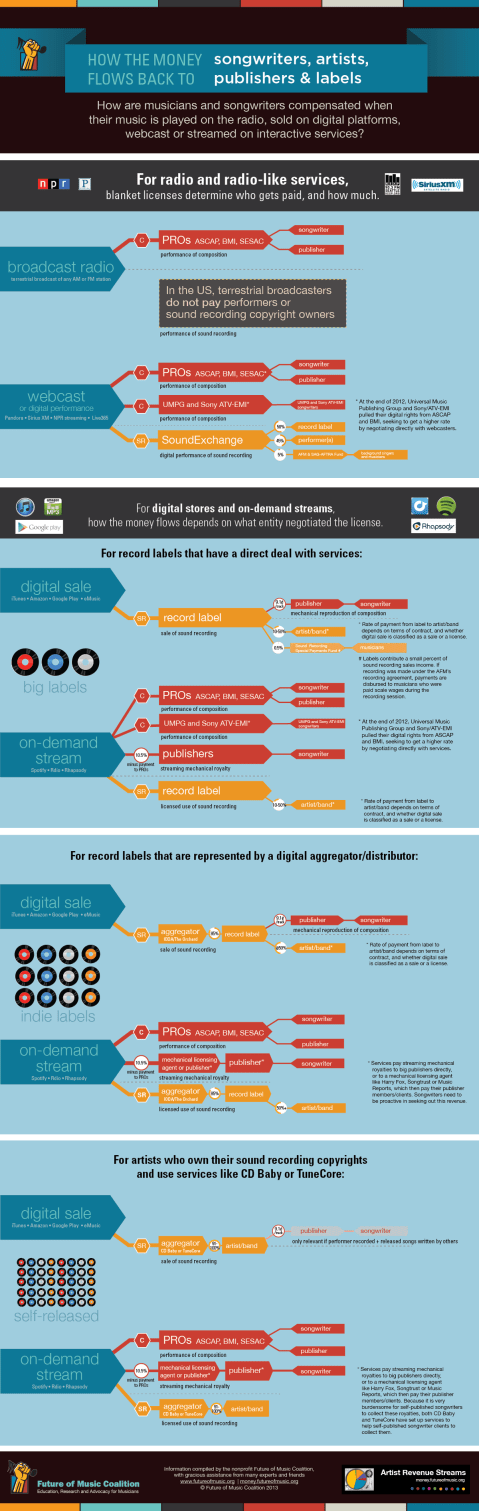
If you plan to release music digitally, you should be aware of and setup to collect all of the royalty streams that your music earns. Your music earns royalties for the use of two different copyrights. The first is the copyright for the composition (song). The second is the copyright for the sound recording (master). These two copyrights earn royalty streams that are collected and paid out by different sources to different income participants, as explained below.
Royalty Stream 1: Performance Royalties for Compositions
With few exceptions, virtually all uses of your composition earns performance royalties. Performance royalties are earned when your composition is played on digital radio-like services (e.g. Pandora), when your composition is accessed and played through on-demand streaming services (e.g. Spotify), and when your composition is performed in venues, bars, and restaurants. All of these companies have performance licenses from one or more performing rights organization (PRO). In the United States, ASCAP, BMI, SESAC, and Global Music Rights are the PROs who issue blanket licenses for the performance rights in compositions to digital music services. In return, these services pay royalties to these PROs. The PROs then pay 50% to the songwriter(s) of the composition and 50% to the publisher(s), in accordance with the publishing splits reported to the PRO by the copyright owners. In order to collect performance royalties, you must join a PRO and register your composition (your songs) and the associated ownership splits (for example, 4 Writers might have equal ownership (25% each) or varied ownership (Writer 1 – 25%, Writer 2 – 50%, Writers 3 – 12.5%, Writer 4 – 12.5%)) to the PRO in a timely manner. One of the reasons music creators and rightholders do not receive the performance royalties that their compositions earn is because they have not joined a PRO or have not registered their songs with their PRO.
Royalty Stream 2: Mechanical Royalties for Compositions
Mechanical royalties are earned when your composition is reproduced and distributed in phonorecords (a medium in which a sound recording is stored). This includes compositions embodied in sound recordings stored in physical formats (CDs, vinyl, cassette), MP3 permanent downloads (e.g. iTunes), and interactive streams (e.g. Spotify). In the digital music sector, streaming services secure mechanical licenses either directly from copyright owners or by utilizing the compulsory license as provided by copyright laws. Regardless of how they secure their mechanical license, the major services pay mechanical royalties to Harry Fox Agency (HFA) and Music Reports Inc. (MRI), who then pay the publishers of the composition. One of the reasons music creators and rightsholders do not receive the mechanical royalties that their compositions earn is because they have not registered their songs with HFA or MRI, who help digital music services secure the mechanical licenses. For unsigned indie artists, this can be much more difficult if you do not have a publisher because HFA only represents eligible publishers who’ve affiliated with them. MRI is a rights administrator and will issue notices to copyright owners if their digital music service clients intend to utilize the copyright owner’s composition in a manner that requires a mechanical license. Spotify pays HFA mechanical royalties for the compositions used in their platform. Amazon Music pays MRI mechanical royalties for the compositions used in their platform. (Note that in the United States, iTunes passes the mechanical royalty to the distributor, who then pays the label. If you’re an unsigned artist, then you receive the income since you are your own label. Outside of the United States, iTunes and on-demand services such as Spotify pay mechanical royalties to a mechanical licensing society in the territory represented by the society. In order to capture these foreign mechanical royalties, a publisher or administrator must affiliate with and register the compositions with the foreign mechanical collection society.)
Royalty Stream 3: Permanent Download Royalties for Masters
A permanent download is generally a sales transaction through a digital retail store (e.g. iTunes). This income is passed along to the distributor, who then pays the label (less any applicable commissions). If you’re unsigned artist, then you receive the income since you are your own label.
Royalty Stream 4: Interactive/On-demand Streaming Royalties for Masters
Just like a permanent download, interactive/on-demand streams (e.g. Spotify) of sound recordings generates master use royalties that is passed along to the distributor, who then pays the label (less any applicable commissions). If you’re unsigned artist, then you receive the royalties since you are your own label.
Royalty Stream 5: Non-Interactive Streaming Royalties for Masters
Unlike a permanent download or interactive/on-demand streams of sound recordings, non-interactive streams are not paid to your distributor. Webcasters and digital services that broadcast recordings over the Internet (e.g. Pandora, iHeart Radio), cable (e.g. Music Choice), and satellite (e.g. SiriusXM) in radio-style programming where the end users/listeners have limited to no control over the selection of music (non-interactive) pay a royalty for the digital performance of sound recordings to SoundExchange. SoundExchange then pays out 45% of the royalties to the featured performers on the recording, 50% to the copyright owner of the master recording, and 5% to a fund for background vocalists and session musicians maintained by AFM & SAG-AFTRA Intellectual Property Rights Distribution Fund. One of the reasons music creators and rightholders do not receive the non-interactive royalties that their masters earn is because they have not joined SoundExchange or have not registered their tracks with their SoundExchange.
When you release music digitally, you should be aware of the various royalty streams that your music earns, where those royalties are collected, and how to claim your earnings. Your distributor is one source of income for two of the royalty streams mentioned. To unlock the rest of your royalties, you’d need a capable publisher and a record company or you’d need to stay on top of the administration yourself.
A great way to keep track of all of these royalties is a service we recommend called TuneRegistry.
TuneRegistry is an all-in-one music rights and metadata management platform for the independent music community. Easily organize and store your song details, recording metadata, credits and ownership splits, and release information in your TuneRegistry account. It’s your robust music catalog manager that’s accessible online, so you don’t have to worry about tracking down emails, storing through documents in various desktop and cloud folders, losing collaborator contact information, or any of the other messy issues that most indie artists face.
TuneRegistry is your one-stop source for keeping your music catalog in check.
The advantage of TuneRegistry over other catalog management systems is that we’ve integrated the registrations process directly to ASCAP, BMI, SESAC, Music Reports, SoundExchange, and many more. Save time, reduce errors, and unlock royalties with our integrated registrations module. We make it super easy to get your music registrations to the organizations and data services who need it.
YouTube Announces Major Change To How It Will Handle Music Publishing

In an email sent to YouTube Music partners this week, YouTube announced that it will change the way it handles publishing.
Currently, YouTube allows rights holders to submit metadata and ownership information to a single global composition record. If there are multiple rights holders, their information is aggregated and rolled up into the “global” composition asset. Then various owners of sound recordings can create relationships (matches) between the “global” composition and their sound recordings. For example, 3 cover song recordings matched to a single “global” composition. However, YouTube is changing this process.
YouTube is doing away with a “global” composition and Composition Asset ID, which all rights holders on the composition would share, and now requiring that rights holders submit a “Composition Share” asset (think of it in relationship to a Split Sheet, the writer/publisher share) and provide their own unique Custom ID to YouTube, which associates back to the composition in the rights holder’s own database (e.g. a catalog number).
Notably, YouTube will no longer create composition to sound recording relationships on behalf of rights holders. It will become more important than ever for right holders to stay on top of their ownership splits and submissions. Furthermore, because YouTube will now rely on rights holders own Custom IDs, it will be important to implement and maintain a clean unique ID database. This could be the catalog number or the same unique ID the publishers use when registering works to PROs via CWR.
Read the full email below…
Dear YouTube Music Publishing Partner,
We are launching a new publishing data model to give you more transparency into and control over how your rights are associated with sound recording assets. In this new model, we will no longer have one “global” composition asset with metadata, ownership, and embedded relationships provided by various owners. Instead, each owner will have their own “Composition Share” assets. These “Composition Share” assets represent only the metadata and ownership information provided by a single owner. Your provided embedded relationships between “Composition Share” assets and sound recording assets will always be applied.
Our current planned launch date for this change is four weeks from now, on Monday, April 3.
This new model will require one major change on your side. Because we will be deprecating our historical Composition Assets and replacing them with a new asset type, today’s Composition Asset IDs will no longer be used. In most cases where you now use Composition Asset ID (including delivery and reporting), you should transition to using the Custom ID field. We recommend that the data you provide in this field always mirror the proprietary work codes that you use in your own database. In order for your Custom IDs to behave in a sensical and deterministic manner, it is critically important that your Custom IDs function as a primary key. That is, every Composition Share must have a Custom ID, and each Custom ID must refer to one and only one Composition Share. We strongly urge you to examine your Custom ID data now and confirm that your Custom IDs refer to only a single work each. If you suspect that this is not the case, please reach out to [omitted] for assistance. We would be happy to send you reports of how you are currently using Custom ID and where any gaps in your data may exist. If your Custom IDs do not function as a primary key in our new model, you may experience errors and ingestion failures.
Because this is a major change, this may require some workflow adjustments on your side. A few important things you should be aware of:
You will have greater control of embedded relationships between Sound Recordings and “Composition Shares.” Any embedded relationships delivered by any publishing partner will always be applied. If partners deliver conflicting data, these conflicts will immediately manifest in the YouTube Content Manager. By the same token, if you do not deliver us a Composition-Share-to-Sound-Recording relationship, we will not create one for you based on other partners’ data. You can continue to create these relationships through CSV ingestions, and we will be adding the ability to delete these relationships in bulk via CSV ingestions. We are also adding functionality to the Content Manager to allow you to edit these relationships directly in the user interface.
Conflicts now exist at the Sound Recording level, rather than at the Composition level. This means that you will see a larger number of conflicts in your conflicts queue. This increase in the number of assets in conflict does not necessarily represent a larger number of views in conflict; conflicts are merely being reported to you on a more granular level. Given that you will now have greater control over embedded relationships, conflicts caused by bad data should be much easier to resolve. When communicating about conflicts with other partners, you should now use Sound Recording Asset IDs instead of Composition Asset IDs.Asset revenue will be reported at the Sound Recording level, rather than at the Composition level. This means that your asset revenue reports will grow (they will have more lines). To see revenue reported to you at the Composition level, simply pivot the asset revenue report on Custom ID. If you need assistance processing these larger reports, please reach out to your technical account manager or send an email to [omitted].
We recognize that this is a major change that may result in substantial changes to your current workflows. We want to make this change as easy as possible for you and we are here to help and to listen to your feedback. If you have any questions not addressed in this email or on the Help Center, please contact your regular YouTube representatives. To submit feedback directly to our product specialists, please hit the “Help & Feedback” button in CMS. For operational or technical support, please reach out to [omitted]. We will also be hosting office hours and workshops at our New York City office, at our Los Angeles office, and in Nashville in the weeks after the new model is launched. If you are interested in attending, please reach out to your regular YouTube contacts.
Best,
Taylor Fife
YouTube Music Publishing Team
Why United States Music Creators Earn Fewer Royalty Streams

This post was originally written for and published on Tradiio’s blog.
Did you know that music creators in the United States earn fewer royalty streams than their international counterparts?
In the United States, there is no national performance right in sound recordings. The US Copyright Act sets out several rights for compositions (songs), such as the right to reproduce and distribute compositions in phonorecords, but thanks to a combination of outdated rules and tough opposition from lobbying organizations that represent broadcasters, the law does not include a performance right for sound recordings.
This means that whenever a recording is performed on AM/FM radio in the US, broadcasters are not required to pay artists or record companies any royalties from the advertisements revenue that they earn on the back of those performances. Considering that there are over 15,000 radio stations across the US performing hundreds of thousands of plays of music each week, US music creators and labels are potentially missing out on millions of dollars in royalties.
Virtually all other developed nations outside of the US have a performance right in sound recordings, which is known as neighbouring rights. When a US artist’s recording is performed on BBC in the UK, it earns neighbouring rights royalties for the US artist.
The fact that recordings earn royalties outside of the US is good news, right? Not so much.
Because the US does not have a national performance right in sound recordings (no neighbouring right), no recording earns these royalties. This includes recordings by artists from countries that do recognize neighbouring rights. So yeah, insert your favorite European band who gets high rotation on US radio.
As a result, the countries who do recognize neighbouring rights do not send the neighbouring rights royalties generated from the performance of recordings by US artists in their territory back to any of the US music rights organizations. They keep it or distribute it to the artists and labels in their territory.
Generally speaking, most indie artists who earn neighbouring rights royalties outside of the US will never see this royalty stream unless the US government makes a change to copyright law. Although there are some small companies who try to capture neighbouring rights royalties on behalf of US music creators, they tend to focus on a select roster of more established artists, leaving up-and-coming indie artists with no support.
So what now?
Well, now that you know US artists earn less royalty streams from their music than their international counterparts, it is really important to maximize the royalty streams that they do earn.
Many independent artists miss out on royalties that their music does earn because they do not properly register their songs, recordings, and releases with the various music rights organizations and licensing agencies who collect and distribute royalties. This is understandable, as it can be a pain to keep up with the many different registration processes across a number of organizations (ASCAP, BMI, SESAC, Music Reports, Harry Fox Agency, SoundExchange, the Alliance for Artists and Record Companies, and more). It can be burdensome, time consuming, and often confusing to properly register a complete album. However, missing just one registration or filing registrations late can result in lost royalties, or even disputes over ownership.
This is where TuneRegistry steps in to help.
TuneRegistry is an all-in-one music rights and metadata management platform for the independent music community. Easily organize and store your song details, recording metadata, credits and ownership splits, and release information in your TuneRegistry account. It’s your robust music catalog manager that’s accessible online, so you don’t have to worry about tracking down emails, storing through documents in various desktop and cloud folders, losing collaborator contact information, or any of the other messy issues that most indie artists face.
TuneRegistry is your one-stop source for keeping your music catalog in check.
The advantage of TuneRegistry over other catalog management systems is that we’ve integrated the registrations process directly to ASCAP, BMI, SESAC, Music Reports, SoundExchange, and many more. Save time, reduce errors, and unlock royalties with our integrated registrations module. We make it super easy to get your music registrations to the organizations and data services who need it.
A Primer On Music Publishing, Rights Splits, And Royalties For Confused Artist Managers

I recently assisted an artist manager with a post-release dispute between his client (DJ/producer) and their guest artists on the track.
Here’s a quick primer for new managers who may not be 100% clear on how copyright & publishing work/relate:
1. There are two (2) separate copyrights: the composition (song) and the sound recording (master).
2. There are four (4) types of income participants: songwriter and publisher for songs (we call this “writer’s share” and “publisher’s share”) / artists and record companies for masters. In the event a writer is not signed to a publisher, he/she owns the publisher share of income. In the event an artist is not signed to a record label, he/she owns what would be the record company share of income (however, if you’re working with a production company, they could own these rights depending on your production agreement).
3. COMPOSITION: Generally, the songwriter and publisher split is 50-50 (this proportion is represented in percentages as 50%/50% (most of the publishing world) and 100%/100% (specific to BMI), but it is the same proportion). American Society of Composers, Authors & Publishers (ASCAP), Broadcast Music, Inc. (BMI), SESAC, and Global Music Rights (GMR) collect and pay out performance royalties to songwriters and publishers. Harry Fox Agency and Music Reports, Inc. collect and pay out mechanical royalties to publishers (if you rep a writer who does not have a publisher, you may be missing out on mechanical royalties in the U.S. and overseas). Synchronization (placing music in film & TV) is a license that is negotiated between content producer and publisher (or you as the manager repping a songwriter). The content producer pays an upfront synch fee and then the performance generates performance royalties on the backend once it is has been distributed/broadcast (unless it’s a movie in U.S. movie theaters or DVDs; in which case you should negotiate a higher upfront synch fee since the U.S. does not have a performance right for music performed in movie theaters). There are more royalties, but that’s a primer.
Also Read: Demystifying The Music Industry: What’s The Difference Between ASCAP/BMI/SESAC and SoundExchange?
4. MASTER: Generally, the artist and record company split income based on the terms of a recording contract. The exception is neighbouring rights, hometapping/private copy, and DART royalties. All of these royalties are collected and paid out by agencies directly to the artist and record company. SoundExchange pays out digital performance royalties for non-interactive Internet services (e.g. Pandora), satellite (e.g. SiriusXM), cable (e,g. Music Choice), and over 2,500 other webcasters (e.g. iHeart Radio and Slacker). SoundExchange is our only version of “neighbouring rights” in the U.S. SoundExchange pays 45% to the artist, 50% to the record company, and 5% to background vocalists and session musicians via AFM & SAG-AFTRA Intellectual Property Rights Distribution Fund. Digital services pay master streaming royalties directly to your distributor/aggregator. There is a fund for hometapping/private copy and DART royalties paid out by Alliance of Artists and Recording Companies to artists (50%) and record companies (50%) because, among other reasons, in some countries (like Japan and Netherlands), music is rented much in the way we rent DVDs. Overseas, masters also earn neighbouring rights royalties (performance of masters on radio, TV, movies, etc.). The only way to capture these royalties is to sign up with a neighboring rights agency like Kobalt Music or Symphonic Distribution.
Now that you have a premier, what you need to make sure to do for EVERY song released is to spell out in the contract the COMPOSITION/SONG SPLITS and the MASTER OWNERSHIP SPLITS.
If you do a split sheet with guest artists on a song, you’re only covering the composition, unless you have some addendum agreement attached that says the splits will also be applied to the master sound recording. Otherwise, you can have two different sets of splits; one set of splits for the composition (the songwriters and publishers) and a second set of splits for the master (the featured performers and the record company/master owner(s)).
SCENARIO 1: EDM DJ/producer produces a track and invites a guest artist to lay down vocals. If producer composed the track and artist wrote the lyrics, then they’ll all have a percentage on the COMPOSITION/SONG split sheet. If producer wrote all of the lyrics, then he/she will own 100% of the COMPOSITION/SONG. Now, the master recording has a different split. The guest artist is effectively the featured performer on the MASTER, so he/she would be allocated the 45% featured artist share of SoundExchange royalties and the 50% artist share of AARC royalties. The copyright owner in the master (label or individual) would receive the 50% copyright owner share of SoundExchange royalties and 50% record company share of AARC royalties. In order for the producer to receive a piece of the SoundExchange royalties, you’d need to include the allocation in your agreement and have the ARTIST sign a Letter of Direction, which you’ll submit to SoundExchange (join the Creative Affiliate Program to expedite this). This LOD will split the “featured performer share” between the Artist and Producer. (Note: These splits have nothing to do with sales and master streaming royalties).
SCENARIO 2: A five member band put out a new song. Only two members wrote the song, but all five members performed on the recording. The two writers would split the COMPOSITION/SONG ownership, and each of the five members will receive a share of the featured artist share of SoundExchange royalties. Master sales/streaming royalties will have a different split.
I can go on and on.
The point is, there are 4 buckets in the music industry when it comes to copyright/publishing:
- Bucket 1: Writer/Composer/Lyricist
- Bucket 2: Publisher
- Bucket 3: Artist
- Bucket 4: Master Owner/Record Company
Each of these buckets receive their OWN income streams, and most music rights organizations and royalty collection agencies will pay one or two of these buckets DIRECTLY based on the splits that you provide when you register the songs/tracks to the entities.
This is why it is imperative to #1 have these splits spelled out and agreed upon on paper prior to release and #2 register the songs/tracks with ALL entities BEFORE release.
Obviously, TuneRegistry is the only product on the market designed to help you with this at an indie artist price point.
TuneRegistry presents “Rights & Metadata in the Evolving Digital Music Space” #SXTuneRegistry #SXMetadata #SXSW

TuneRegistry presents “Rights & Metadata in the Evolving Digital Music Space” http://schedule.sxsw.com/events/PP62361
#SXTuneRegistry #SXMetadata #SXSW
ETLA, The Research Institute Of The Finnish Economy, Publishes Report On State Of Digital Music Infrastructure – Calls For Transparency And Addresses “Black Box” Issues
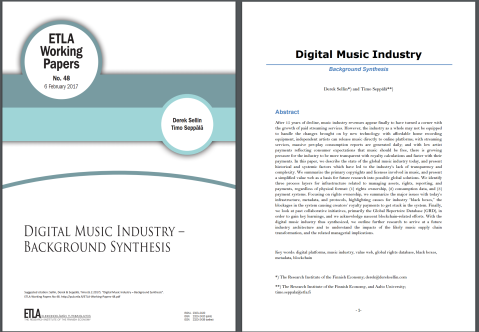
I had the honor of being interviewed by researcher and author, Derek Sellin, for his industry report “Digital Music Industry – Background Synthesis” for ETLA Working Papers No. 48, published by Elinkeinoelaman Tutkimuslaitos – The Research Institute of the Finnish Economy.
Black boxes materialize for many reasons, including but not limited to: the inability to identify rights holders despite payments made for the use of their compositions; the lengthy time required for filing domestic and ultimately international copyrights, often begun only when a recording is actually released; multiple claims for the same rights exceeding 100% of ownership, resulting in indefinite disputes; international collaborations with less than all creators asserting their rights; international legal inconsistencies regarding what type of performances result in payments (most visible in the fact that radio play does not generate royalties for recording artists in the United States); and the slow and often manual processes to report usage and clear payments under international reciprocal agreements. – Dae Bogan
You can download the report at https://www.etla.fi/en/publications/digital-music-industry-background-synthesis/.
About ETLA
The Research Institute of the Finnish Economy (Etla) is engaged in applied economic research with emphasis on topics that are important from the Finnish point of view. The main focus is on issues that relate to productivity and drivers of its growth, to the functioning of the labour market, as well as to challenges in maintaining a balanced macro economy including sound public finances. Etla monitors economic development, compiles forecasts as well as assesses economic policy and comments on it.
Etla is a private non-profit organisation. Its operations are backed by the supporting association, the members of which comprise the Confederation of Finnish Industries and the Confederation of Finnish Industry and Employers (TT) Fund. The funding from the background organisations covers more than a third of the institute’s budget and forms a solid base for its operations. Read more.
[VIDEO] Independent Music Industry Conference Panel Live Video

If you missed the inaugural Independent Music Industry Conference, produced by Mike Ziemer, producer of the So What Music Festival, you missed a very cool and informative boutique event. But, don’t worry! Below are the live videos from the Record Label panel and the Music + Technology panel, both moderated by me.
Record Label Panel
Music + Technology Panel
If you can’t view this video, click here.
Announcing Music Business Workshop Focusing On LGBTQ Music Creators

UPDATE: I’ve announced the first services of workshops – “PRIDE MUSIC: A Music Business Workshop For LGBTQ Creators”. Read the announcement.
When I came to LA as an aspiring artist, there weren’t many “out” recording artists being marketed in mainstream music. When I stopped pursuing music and began to build my career on the business side, I learned that there were plenty of LGBTQ folks in the music industry behind the scenes and many who weren’t ready to live their truth already in mainstream.
Over the 13 years I’ve been here, we’ve seen acceptance grow and artists like Ricky Martin and Lance Bass come out. We’ve seen Sam Smith, Adam Lambert, Frank Ocean, and many others own their truths and break records while doing it.
Nevertheless, there are still many artists who need the support and tools to be their authentic selves in the music industry.
I have taught many music business and marketing classes and workshops. I’m putting these pilot programs together because in all of the many music industry conferences and programs in which I’ve participated, there hasn’t been a unified approach to covering the fundamental complexities of music industry AND the unique needs of LGBTQ creators.
This is why I am excited to announce that I will be developing and teaching two pilot music business workshops focusing on the unique needs of LGBTQ music creators at the new Brotherhood IMPACT Fund space in West Hollywood (aka Brotherhood Clubhouse).
SAVE THE DATES: 11/16 (7p to 9p) and 12/17 (3p to 5p)
The workshops will consist of 1 hour of my signature music industry insights and education and 45 minutes of the issues that relate to LGBTQ creators (e.g. touring in countries where homosexuality is illegal, spousal/beneficiary grants of residual music royalties (thanks Marriage Equality), dealing with social media bullying, authenticity when creating music for the masses, storytelling and distribution of audiovisual works depicting LGBTQ relationships, gay baiting, and more.
As a gay music industry professional who now works with creators and professionals at all levels, it is important to me to give back and help the next generation to be more empowered creators.
More details to come. Follow my Facebook page for the event info http://www.facebook.com/DaeBoganMusic
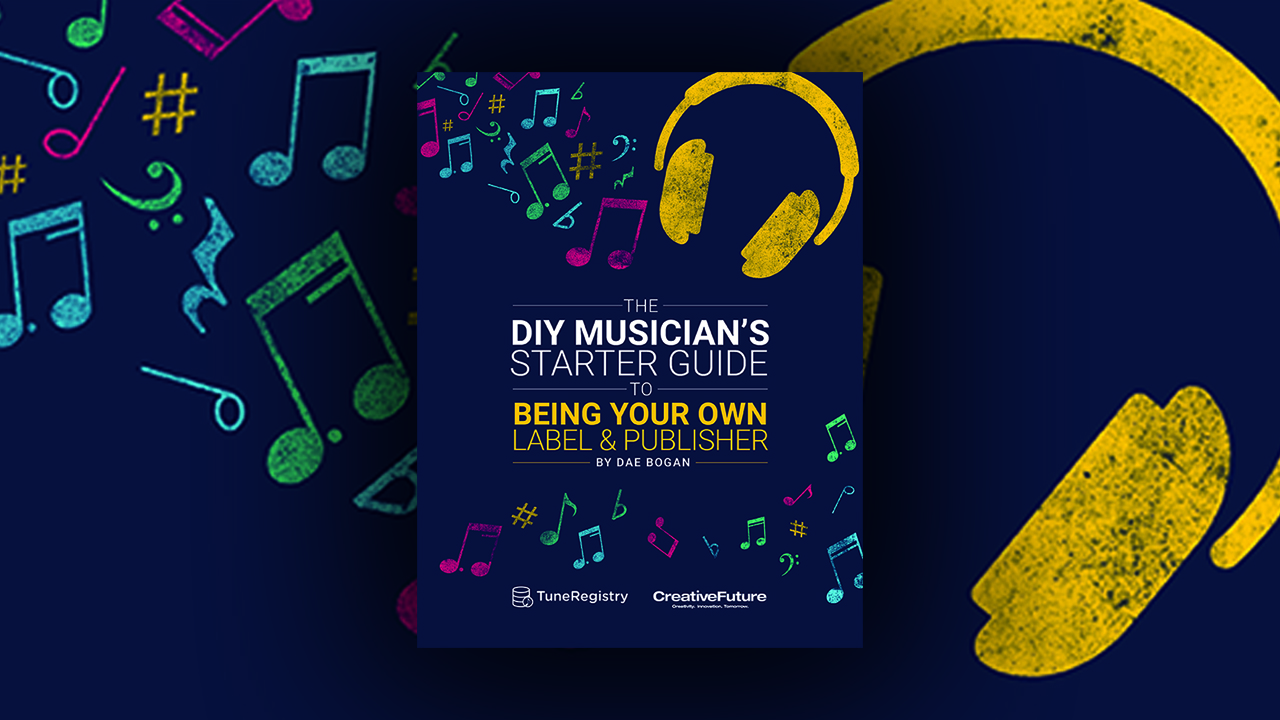
Free DIY eBook
CONNECT WITH ME


