
Dae Bogan Included In Bobby Owsinski’s ‘The Music Business Advice Book: 150 Immediately Useful Tips from the Pros’

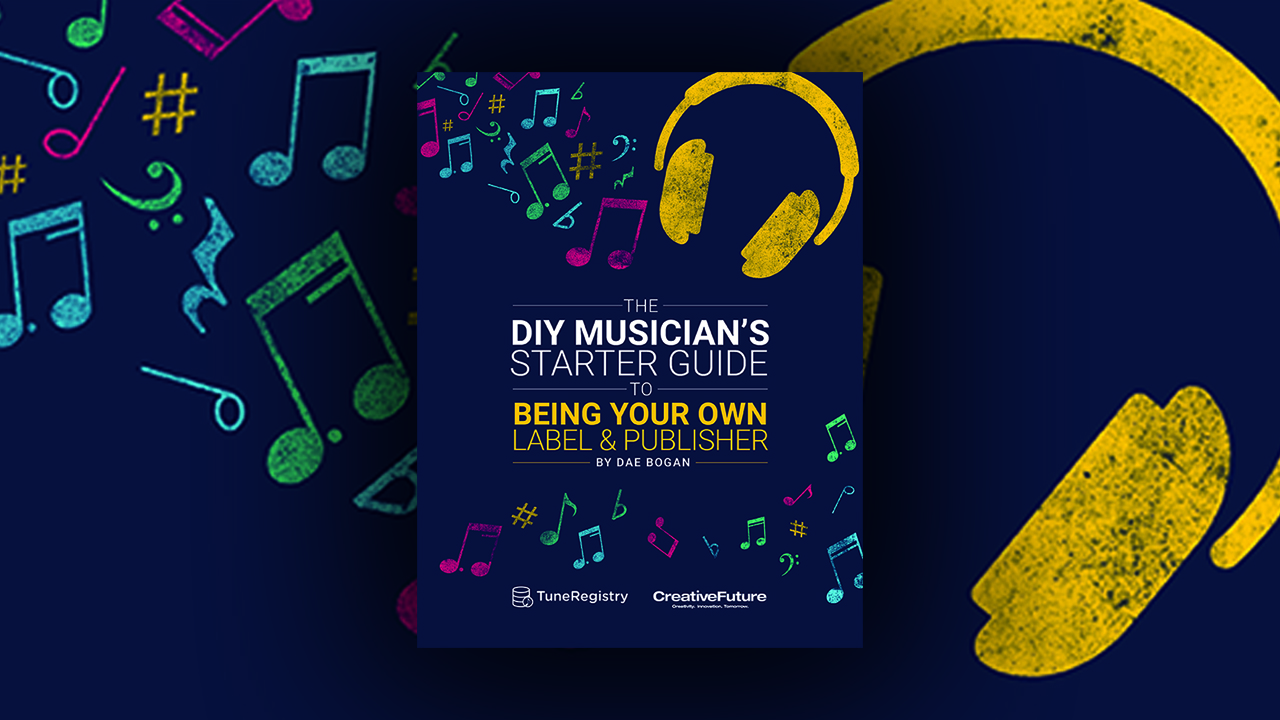
Bobby Owsinski is one of the music industry’s greats. His ability to curate music industry knowledge into easy-to-ready texts across his over 20 books has helped thousands of music creators and music industry professionals in their careers. I’ve had the pleasure of being on Bobby’s podcast, Inner Circle, and participating on several music conference panels with Bobby. He is truly an inspiration. In fact, it was partially my participation in the making of his book “Music 4.0: A Survival Guide for Making Music in the Internet Age” that inspired me to write my first, very short, ebook “The DIY Musician’s Starter Guide To Being Your Own Label & Publisher.”
I am honored, once again, to have been included in Bobby’s latest book, “The Music Business Advice Book: 150 Immediately Useful Tips from the Pros,” available on Amazon.
About the book:
The music business can prove to be a difficult career road when you’re first starting out, but it can be traveled a lot easier with some helpful guidance from a pro who’s willing to share a few hard-earned hints. The Music Advice Book is a compilation of the pearls of experience from 130 top music pros from various segments of the industry who have previously shared their most important tips on Bobby Owsinski’s Inner Circle Podcast over the course of almost 5 years.
These 150 tips cover everything from following your passion, learning to network, and working well with your musical team, to owning your own content and even figuring out how much to charge for your services. Also included are even some useful music production words of wisdom, as well as the indispensable “10 Rules Of Networking.”
The insights in The Music Business Advice Book are essential for those new to the music industry but valuable to seasoned pros as well.
Another Music Modernization Act Opinion Piece

Some music industry executives believe that my position on many issues affecting music creators is too bullish. They dismiss my analyses as sensationalism. They believe, or are at least silent on the notion, that demanding the fair and equitable treatment of middle-class songwriters and recording artists should come with exceptions that disproportionately benefit corporations: major publishers and digital service providers.
But I am a copyright purist.
I believe that the authors of copyrighted musical works — songwriters — should have more say in the way in which their creations are valued and monetized in the marketplace. I do not believe in trickle-down economics or its promise that what’s best for the few at the top will benefit the majority at the bottom.
Greed disproves this all of the time.
Greed is asking songwriters to forgo the potential financial upside of bringing forward legitimate claims of past copyright infringement while simultaneously telling the songwriter community that monies that may become due to them could be redirected, by market share, to the few at the top who negotiated the preemptive dismissal of claims in the first place. Greed is telling artists to campaign for a piece of legislation that will reduce the number of entrants into the on-demand streaming market while simultaneously controlling/dominating the editorial opportunities of the DSP incumbents, greatly reducing opportunities that would otherwise be made available to emerging artists by startups that wish to partner with and elevate emerging artists.
I do believe that the Music Modernization Act will pass. I just hope that the decision-makers give some real thought to the millions of up-and-coming music creators who are not represented by the individuals who wrote the legislation that’ll change the way their copyrights will be exploited in the U.S.
What Can The Socioeconomic Context Of The Culture From Which Hip-Hop Is Derived Tell Us About How The Biggest Genre In The World Gets The Shitty End Of The Royalty Stick?

A young Talib Kweli on a New York City block as published on this Cuepoint article.
Streaming services are a beast that needs constant feeding. Younger hip-hop artists, already accustomed to providing sites such as SoundCloud with a constant stream of mixtapes and features, have adjusted to its demands more quickly than artists from other genres, and have thrived accordingly. At the heart of rap’s streaming dominance is something more ephemeral: Some songs just stream better than others, for reasons that no one can really explain yet. Hip-hop streams better than other types of mainstream music, and trap music streams better than other types of hip-hop. – The Washington Post (April, 2018)
R&B/hip-hop music was the year’s biggest genre, accounting for 24.5 percent of all music consumed….R&B/hip-hop genre represented 24.5 percent of all music consumption in the U.S. — the largest share of any genre and the first time R&B/hip-hop has led this measurement for a calendar year. (The 24.5 percent share represents a combination of album sales, track equivalent album units and streaming equivalent album units — including both on-demand audio and video streams.) — Billboard Magazine (January, 2018)
The statistic presents the number of on-demand music streams worldwide in 2016 and 2017, by genre. According to the source, the number of urban [Hip-Hop and R&B] on-demand streams rose from 55.9 billion in 2016 to 100.34 billion in 2017 – Statista (2018)
Is the Music Modernization Act Enabling ‘Legal Theft’ Against Smaller Artists?

Read the article here:
https://www.digitalmusicnews.com/2018/05/07/music-modernization-act-mma-legal-theft/Why More Pop Songwriters Are Stepping Into the Spotlight
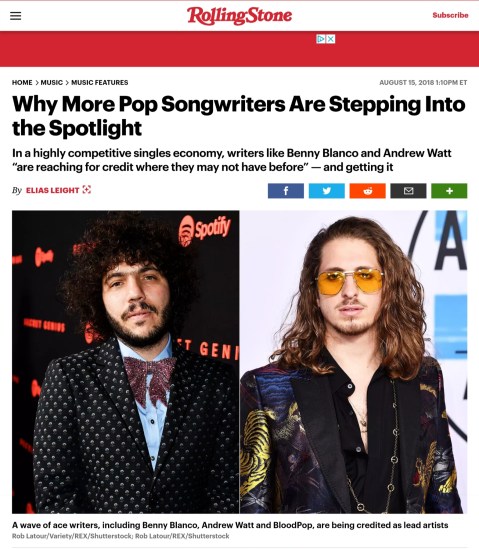
I shared my thoughts on the status of income-earning for songwriters in today’s streaming landscape in this piece by Elias Leight for Rolling Stone:
“But regardless of whether you’re an upper-echelon songwriter living large or a middle-class one struggling to pay rent, the new system encourages writers to ‘think creatively about how to get more income streams,’ says Dae Bogan, Founder and CEO of the music-rights administration platform TuneRegistry.
If songwriters are indeed feeling the crunch, pushing for artist credit when possible is a natural response – it gives them access to money on the master’s side of recordings. Historically, “we get paid on publishing, the the words, the lyrics, the melody, the staff music written on a page,” explains Watt. “The master is the physical recording: Justin Bieber’s voice and DJ Snake’s production on ‘Let Me Love You.’ The master is where the money is. When a song is sold to a label, they buy the master. If the label gives that to an act, they make sure they own part of that master, otherwise in the streaming world, they’re not making any money.”
Now, Bogan says, “songwriters can say, I write hits; this is gonna be a hit for you; I want a piece of the master’s side.” That’s especially true if hit writers are in a position of leverage relative to the singer – “if it’s a young artist or an artist who’s been stagnant.”
This is in some sense a form of poetic justice for writers. “I used to manage songwriters, and we’d write for a number of artists who would demand that they get 10 percent of the publishing even though they didn’t write a single lyric,” Bogan says. “For decades, artists would dip into publishing to diversify their income stream. So now it’s like, let’s take that model and flip it on its head.”
Read the full article: https://www.rollingstone.com/music/music-features/benny-blanco-eastside-pop-songwriter-credit-711061/
Should The Term ‘Urban Music’ Be Eradicated?
Is “urban music” nothing more than a modern colloquialism for the pre-1960’s term “colored music”? Some music industry figures despise the term because it generalizes a set of genres and the diversity of cultures associated with those genres and sub-genres. Furthermore, “urban music” suggests an affinity to racial, sociopolitical, and socioeconomic disenfranchisement that doesn’t translate or characterize the economics and consumption of the main genres encapsulated, or rather hindered, by the label “urban music” — that is, Hip-Hop and R&B are two of the most consumed streaming, radio, and live music genres in the world and many of the genres’ namesakes have no doubt released projects that would more fittingly be considered pop. Should the term “urban music” be eradicated?
Read this article written by Tim Ingham for Music Business Worldwide and let’s discuss in the comments.
SXSW 2019 Panel Voting Has Opened
Becoming A Modern Music Entrepreneur
Breaking Artists Through Video: Your How-To Guide
Right On! – Real developments in rights technology
The Future of (meta)Data
Join Me At SCMIP’s Music Industry Happy Hour 10th Edition Hosted by Dae Bogan
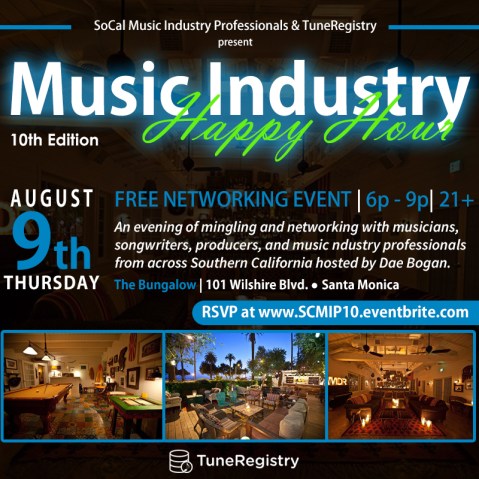
SoCal Music Industry Professionals & TuneRegistry present
Music Industry Happy Hour (10th Edition)
An evening of mingling and networking with musicians, songwriters, producers, and music ndustry professionals from across Southern California hosted by Dae Bogan.
Thursday, August 9th | 6pm to 9pm | 21 and over
at The Bungalow Santa Monica
101 Wilshire Blvd., Santa Monica, CA
RSVP at www.SCMIP10.eventbrite.com
Guest Post: How Amazon’s Twitch.tv Cheats Music Creators
This is just another example of the way in which the DMCA Safe Harbor forces music creators to subsidize the businesses of mega corporations.

Guest post* by Erin M. Jacobson, Esq.
[This article was first posted on Forbes.com and previously on themusicindustrylawyer.com.]
Music creators (songwriters and performing artists) and rights’ owners (music publishers and record labels) are not collecting a new and substantial source of income – and most of them are not aware they are not collecting it. Enter Twitch, the website exploiting creators and owners without paying for a single cent of music usage.
What is Twitch
Twitch, a subsidiary of Amazon, is a live-streaming video platform that has “over two million broadcasters and 15 million daily active users.” Anyone can become a Twitch “broadcaster,” meaning users set up their own channels and live-stream various content, which includes, but is not limited to, video-game play, card games, pranks, craft tutorials and more.
The broadcasts start out as live streams and are saved on the channel for re-broadcasts and…
View original post 1,761 more words
Songwriters Are Owed Nearly $2B In Unclaimed Royalties!!! — Maybe More — I’ve Been Saying This For Some Time Now (Against Pushback), But Finally The Press Has Confirmed It
Over the last few years, I’ve been researching and sounding the alarm on the growing problem of unclaimed music royalties or so-called “black box” royalties.
I’ve estimated the value of the collective black box to be nearly or above $2B. I’ve presented research, have written extensively and have spoken publicly about this problem, which disproportionately affect independent and legacy songwriters.
Despite my fanfare, industry insiders and stakeholders have shrugged or have blatantly called my estimates a gross overstatement and have held that unclaimed royalties are at best a few hundreds of thousands of dollars and mostly owed to “long-tail artists” who do not quite understand how the music industry works. This is a very myopic, company-focused view. These talking heads tend to speak from their position of administering one right for some music licensees. My estimates are looking at multiple rights administered by multiple entities, which would make the collective black box exponentially greater than the escrow account of a single entity.
Also Read: State of Unclaimed U.S. Music Royalties and Licenses
Yesterday, Variety published an article on the Music Modernization Act where a very important fact was tucked away on a single sentence in a paragraph near the end of the piece:
The DSPs are holding some $1.5 billion in unmatched mechanical royalties. If the MMA passes, that money would be passed through to the MLC which would match it to the songwriters and publishers. [bold and underline added for emphasis]
via Variety
$1.5B of royalties (I still believe this number is higher) is sitting in, probably, interest-bearing escrow accounts while songwriters and small-to-medium sized music rights holders struggle to understand how and why.
Last year I founded RoyaltyClaim, the world’s first search engine of unclaimed music royalties and licenses, which has recently been acquired by Made In Memphis Entertainment. We’ve helped DIY musicians and rights-holders identify thousands of unclaimed entitlements in just a few months, with one paricular music producer uncovering nearly $150k in unclaimed royalties due to him.
The problem is huge. The system is not transparent. And the people in charge could do a better job communicating these things to rights-holders.
Also Read: I’m Working On A Side Project Addressing ‘Black Box’ Royalties
I’ve been on many panels at music industry conferences where I’ve maintained my position that DIY musicians and small-to-medium sized rights-holders are owed hundreds of millions of dollars, if not several billion, and often my co-panelists have taken a position that my claims are sensational and overstated.
I disagree.
When those on the panel talk about black box we are talking about the aggregate of unclaimed royalties that occur because of any number of factors,’ and not just limited to one service or one collection society, explained moderator Dae Bogan, CEO of TuneRegistry.”
via Billboard
Source: https://www.billboard.com/articles/business/8456271/black-box-royalties-myths-panel-music-biz-2018
Read the Variety article here.
Check out my commentary on black box royalties here.
Free DIY eBook
CONNECT WITH ME


 Dae Bogan Music