
Demystifying TuneRegistry And The Concept Of Subscription-Based Self-Publishing Administration
My Response To Ari Herstand’s Comments Regarding TuneRegistry
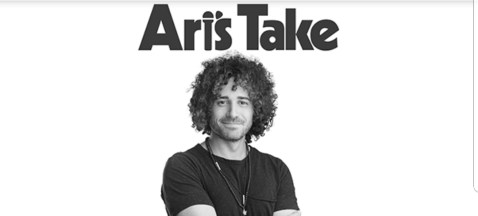
Tonight, I finally had time to read a recent piece by Ari Herstand in which he reviewed a Spotify playlist submission service called Playlist Push owned by an acquaintance of mine. It was a good piece because Ari spent time using the service and met with the founder to ask questions. His review was credible because he was knowledgeable. Like the good journalist that I generally respect him as, he did his research well.
However, I was taken aback when I clicked through to another article — on registering music with music rights organizations (an obvious interest of mine) — that was referenced in the Playlist Push article and came across a passage at the end where Ari precedes to pass judgment on my company, TuneRegistry, and tells his readers that he can’t recommend us. This was shocking and upsetting because, unlike his review of Playlist Push, Ari has not used TuneRegistry and has never set with me, the founder, to discuss what we do or ask questions (despite the fact that I have invited him to do so in the past). In fact, he states in what is basically a sort of rant against our model, that he has questions about our service.
Ari wrote,
Worth mentioning that TuneRegistry is a new company that was created to get your songs registered most places for a fee. They don’t take a commission, so they don’t really put much effort into tracking down your royalties, they just get your songs registered and hope that the appropriate organizations pay you correctly (but you are required to register yourself with all the organizations they collect from – which is a major headache and NOT recommended). TuneRegistry takes a lot more effort and hands on work by you, but they serve a purpose for those that have the time, energy and understanding of how all this works and want to manage it themselves (and keep all their royalties).
But, you do not need to use them. Let me repeat, you do NOT need to use TuneRegistry (I got some questions about this). I just listed them as an alternative to an admin publishing company. To be honest, I can’t recommend them because of the headaches they cause in making you register with all these orgs. But some people like headaches. So… go for it! I recommend giving up 15% to a full-fledged admin publishing company and saving yourself the headache.
In response, I left the following comment on the article so that readers of Ari’s piece would receive more context from me, the founder of TuneRegistry:
TuneRegistry founder here. I appreciate that Ari decided to mention us in this piece. He’s one of the champs out here providing information to independent artists. That being said, as a music creator rights’ advocate, speaker, writer, music business educator (https://daeboganmusic.com/category/educator), and former indie artist and music manager, I would like to add some context to our offering as a counter to the negative-leaning and misleading tone presented in the piece.
TuneRegistry is an affordable (two Starbucks coffees a month) software that empowers DIY music creators to administer the music rights that they own and control, while retaining 100% of their copyrights and 100% of their royalties. We enable both composition side and master side rights administration, all in one place.
Prior to launching TuneRegistry — which was co-founded by a music industry professional & educator, two lawyers, and a technologist…all of whom are also musicians — I spent 2 years working with all of the U.S. music rights organizations to get them onboard to allow self-published music creators to reap the benefits of being their own publisher. This means, you do not have to give up 20% of your publishing income in perpetuity (until you cancel) just because a 3rd party publishing administrator registered a song for you with a PRO one time several years ago.
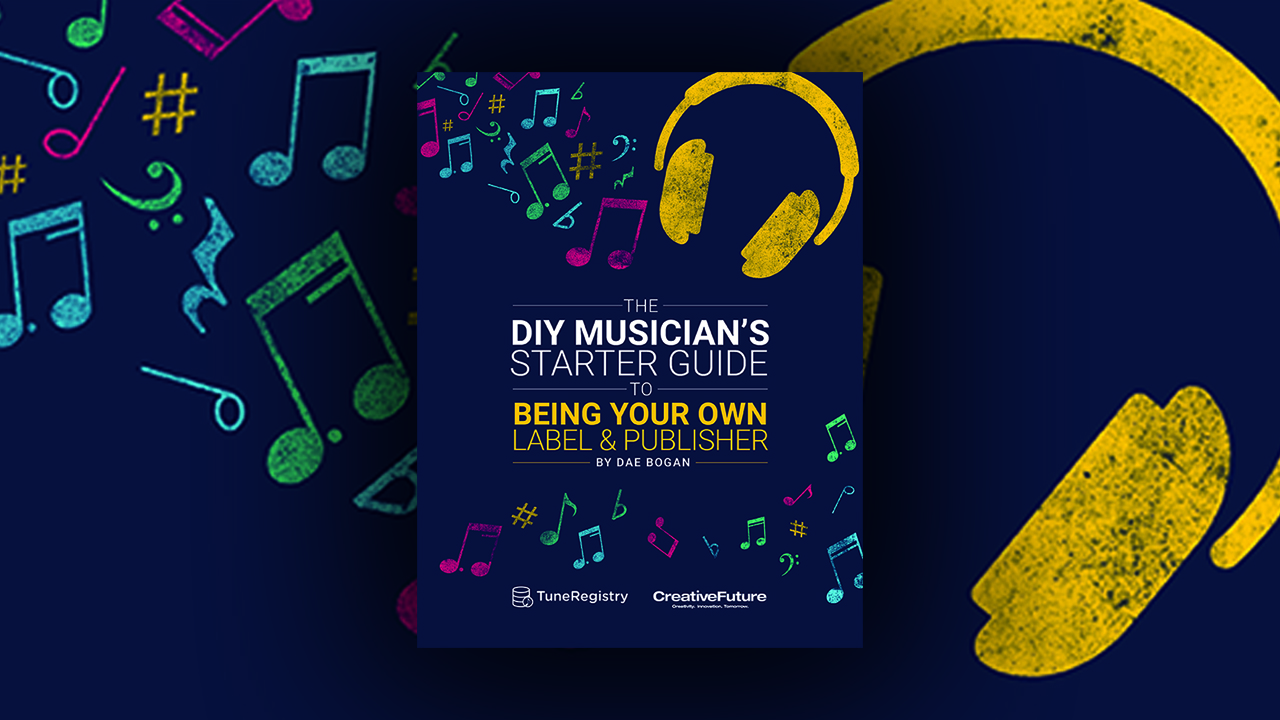
Ari states that we “don’t take a commission, so they don’t really put much effort into tracking down your royalties, they just get your songs registered and hope that the appropriate organizations pay you correctly.” It is correct that we do not take a commission. 100% of the royalties flow to the rights-holder. The notion that we do not care about your royalty flow is grossly misleading. We care immensely about your ability to be accounted to and paid royalties. It is this fundamental idea, the creators should be paid all of what they are due, that is at the heart of TuneRegistry. We work with creators every single day to clear conflicts, disputes, push customer service inquiries at societies forward, and provide education on how royalties work and how to collect them (see our free ebook “The DIY Musician’s Starter Guide To Being Your Own Label & Publisher” https://www.tuneregistry.com/lp/the-diy-musicians-starter-guide-to-being-your-own-label-and-publisher). I personally spend thousands of dollars and hundreds of hours in the music industry, at conferences and meeting with organizations and societies to improve outcomes for indies. In a word, we care. We are smaller than all of the traditional publishing administration companies that Ari mentioned in his piece, some of whom boast about having over 150,000 songwriters in their catalog. Without disparaging any of them, I will say that it is impossible to actively “track down” royalties for 150,000 songwriters. Passively receiving royalty payments and unauditied royalty statements, is not the same as tracking down royalties, something that I’ve done with my other company RoyaltyClaim.com, the world’s first search engine for unclaimed royalties, but I’ll digress.
Ari also mentions that, “you are required to register yourself with all the organizations they collect from – which is a major headache and NOT recommended.” We do not collect from any organization at this time. Because you receive 100% of your royalties, you must go to the organization and create accounts to provide them with your banking information so that they can pay you. You must also create accounts so we have an account to register your music into from the TuneRegistry dashboard. This is a one-time thing for only up to 6 organizations. It literally takes an hour or two to submit the applications. This isn’t really that much of a headache. In my opinion, a much bigger headache is giving up 20% of your U.S. publishing royalties in perpetuity (until you cancel) to a 3rd party because you couldn’t put a few hours on a Saturday afternoon aside to get this done. You (the reader) should do the math and be the judge. Can you take out one afternoon to join a few U.S. music rights organizations and then keep 100% of your U.S. music royalties or are you too busy to complete a few forms and would therefore opt to give away 20% of your publishing income in perpetuity? Also, the notion that creating your own accounts is “not recommended” is a fallacy. Not only do all of the organizations encourage music creators to be proactive in their own rights administration, they actively suggest and educate you on how to do so. See this article (https://daeboganmusic.com/2018/03/12/how-to-apply-for-a-harry-fox-agency-online-account-as-a-diy-musician-a-step-by-step-guide/) that we wrote with the approval of Harry Fox Agency showing indie songwriters step-by-step how to get their own account and unlock their Spotify mechanical royalties, which we’ve been doing for some time now (including facilitating opt-ins into direct Facebook, Instagram, and Oculus licenses). Our free ebook mentioned above provides instructions on how to properly setup your own music rights company. We’ve helped many artists and managers do so, and they’ve written positive feedback from this guidance (https://twitter.com/MissAlexWhite/status/1044997438753435649?s=19).
Ari stated, “TuneRegistry takes a lot more effort and hands on work by you, but they serve a purpose for those that have the time, energy and understanding of how all this works and want to manage it themselves (and keep all their royalties).” Yes, we built TuneRegistry for music creators who care about knowing what’s going on with their music business, who care about the ownership and management of their catalogs, and who’d rather get paid all of their U.S. music publishing income faster (no 2 calendar quarters delay by a 3rd party administrator) by being paid directly from U.S. music rights organizations.
Ari writes, “But, you do not need to use them. Let me repeat, you do NOT need to use TuneRegistry.” Technically, you do NOT need to use anyone. This was a bit of an unnecessary statement. He continues, “I got some questions about this. I just listed them as an alternative to an admin publishing company. To be honest, I can’t recommend them because of the headaches they cause in making you register with all these orgs. But some people like headaches.” I would be happy to discuss. I’ve invited you to this discussion several times. You have my email. And please drop the “it’s a headache” bit. That is an incredibly subjective and unfair characterization of the process, by someone who has yet to go through it with us, no less.
Ari concludes, “I recommend giving up 15% to a full-fledged admin publishing company and saving yourself the headache.” To this I say, to each his own. I think there are great admin publishing companies out there doing great work. Many, however, do not accept DIY musicians. In fact, one stated this during his panel at Music Biz Expo this summer. An artist in the room asked what he should do since traditional publishing administrators would not represent his small catalog. The speaker said that artists will just have to wait until their careers grow. I stood up and rejected that notion and introduced TuneRegistry. I do not accept that music creators need to give away up to 20% of their U.S. publishing income. And we’ve been proving this with our users since we launched at SXSW in 2017.
In closing, Ari I appreciate your desire and work to spread information to music creators. Many look to you for advice, insight, and truth. As a writer or contributing journalist myself, I respect your usual research-driven evaluations of services and resources. However, I don’t think you gave us a fair review here since you’ve neither used TuneRegistry nor set down with me to talk about what we’re doing or how. Since you chose to mention my company in your article, a company that my team and I spend and sacrifice so much time and resources to help hundreds of DIY music creators, I would like to invite you, again, to have a discussion with me so that you can get a demo and ask any questions that you may have.
– Dae Bogan
Co-founder & Chief Executive Officer, TuneRegistry
Lecturer of Musicology, UCLA Herb Alpert School of Music
Music 2020: The Next Era of Innovation in the Music Industry

Wednesday night, at California State University – Northridge (CSUN), I conducted my latest workshop, “Music 2020: The Next Era of Innovation in the Music Industry,” in Professor Andrew L. Surmani’s class for his M.A., Music Industry Administration students.
In this workshop, we explore the art and process of ideation; discuss the differences between invention, disruption, and innovation; and profile a number of developing innovations within the music industry including augmented reality (AR), virtual reality (VR), mixed reality (MR), artificial intelligence (AI), machine learning (ML), blockchain and crypotcurrency. The presentation ends with a design thinking exercise where students break out into groups to work through the fundamental design thinking process of developing a minimum viable product to solve a vetted problem in the music industry.
The students seemed to like the workshop:
Dae, you were fantastic and the CSUN MIA students thoroughly enjoyed your very organized, insightful and forward thinking presentation. That was evident in the line of students waiting to talk to you at the break. Thank you again for coming to talk to our graduate music industry students.
– Andrew Surmani, Associate Professor of Music Industry Studies, California State University – Northridge
I’m looking forward to conducting this workshop next week at the College of the Canyons.
How Blockchain And Cryptocurrency Can Speed Up Spotify International Publishing Royalty Payments To US Songwriters

There’s been a lot of talk about applications of blockchain technology and cryptocurrency payments in the music industry. In fact, there isn’t a single major music industry conference that doesn’t dedicate some programming to related topics. There are several projects and startups currently underway to address licensing, discovery, attribution, remuneration and more with blockchain, smart contracts, and cryptocurrency.
For those of us who aren’t blockchain developers, simply keeping up with the many applications of blockchain in the music industry is the closest we’ll get actually knowing how this all (could) works.
I’ve been thinking about how blockchain and cryptocurrency could speed up the process of paying U.S. songwriters, who wait upwards of 1.5 years to get paid for the use of their songs on Spotify outside the U.S.
The current state of the flow of international publishing income to U.S. Independent Songwriters who own their publishing and use traditional publishing administrators to collect in the U.S. is quite depressing.
As an example, Tommy released a song on Spotify in January 2018. In the United Kingdom, the song earned $100 “publisher share” Spotify UK digital public performance royalties.
Here’s the breakdown:
START: $100 “publisher share” of Spotify UK digital performance royalties in January 2018.
1. PRS collects Tommy’s publishing income in the UK ($100) in January 2018.
2. PRS retains 10% admin fee and remits the balance ($90) to ASCAP in October 2018.
3. ASCAP retains 12% admin fee and remits the balance ($79.20) to the Publishing Administrator in February 2019.
4. Publishing Administrator retains 20% admin fee and pays Tommy ($63.36) in July 2019.
END: Tommy is paid $63.36 for his Spotify UK “publisher share” income (earned $100) after waiting 1.5 years and experiencing a reduction of 37% of his royalties. Imagine $1,000 reduced to $633.60 or $10,000 reduced to $6,336.00.
Had Spotify used blockchain technology to dynamically identify Tommy as the rightsholder in his song and paid him instantly at the close of the month with cryptocurrency, Tommy would have already spent his $100 on studio time!
Dae Bogan October Appearances

Connect with me at these October music industry events. For more details, visit this page.
[Podcast] Dae Bogan Reflects On His Career Journey On This Episode Of “Hey, How’d You Get That Music Job???”

I was invited to the podcast “Hey, How’d You Get That Music Job???” to talk about my journey into the music industry and growth as a music industry professional. This was quite the vulnerable discussion as I explored my past as far back as a child aspiring artist, my YOLO move to Los Angeles as a homeless teen, and the founding of my first music companies as a senior at a UCLA. If hearing how I navigated hurdles and barriers to entry to become a 3x exited music tech entrepreneur and Billboard recognized music business educator, have a listen to this podcast episode.
Link: http://musicjobspodcast.com/ep-39-serial-music-entrepreneurship-and-innovation-with-dae-bogan/
Dae Bogan To Join Association of Independent Music Publishers’ Panel Event “UNCONVENTIONAL MONEY: Royalty Sources You Might Not Think Of”

Dae Bogan (Founder & Executive Consultant, Rights Department) joins Landon Austin (Co-Founder and President, Noisely), Larry Mills (Co-President, Tresóna Multi-Media) and Mitch Rubin (VP Label & Publisher Services, Dubset Media) on a panel to be moderated by Michael Eames (President, PEN Music Group / AIMP President) at the Association of Independent Music Publishers‘ panel event:
UNCONVENTIONAL MONEY: Royalty Sources You Might Not Think Of To license your music is to monetize your music.
Whether it be via marching band, show choir, orchestra rentals, iPhone apps, online games and uses, wedding videos, photograph montages – the possibilities are endless. Join us for an exploration of non-traditional outlets and how the variety of them just might surprise you.
Date: September 27, 2018
Time: 11:30 – 1:45 p.m.
Register: https://www.aimp.org/events/register/922
Reservation Cutoff: September 26, 2018
Place: View Map
Lawry’s The Prime Rib
100 N. La Cienega Blvd. (near Wilshire)
Beverly Hills, CA 90210
Entrees:
- Lawry’s Roasted Prime Ribs Of Beef (Cutoff: September 26, 2018)
- Crispy Chicken w/Lemon Butter Glaze, Mashed Potatoes & Vegetables (Cutoff: September 26, 2018)
- Blackened Salmon w/Black Bean Pineapple Salsa, Mashed Potatoes & Vegetables (Cutoff: September 26, 2018)
- Roasted Vegetables with Quinoa (vegan) (Cutoff: September 26, 2018)
Cost:
AIMP Members – $44.00 per person
AIMP Non-Members – $57.00 per person

Our banking sponsor for this event is:

Parking: Self-parking is available on site at no additional charge.
Reservations accepted online at www.aimp.org or by telephone at 818-771-7301 until Wednesday, September 26th at noon. Advance registration deadline with entree choice also ends on Wednesday, September 26th at noon. Premier Members and/or groups of 5 or more who have RSVP’d and paid online may request reserved seating by e-mail or phone, 818-771-7301. We will do our best to accommodate late reservations made the day before the event, but please be advised that entrée selection and space may be limited. Online reservations can be paid online by credit card. Payment at the door is by cash, check or credit card (with a $5 surcharge). Those who walk up without a reservation will be served whatever is available, but most likely prime rib, and may have to wait at entry.
Full-time students with a current student I.D. – $47.00 per person*
*Qualifying students must reserve by phone and pay in advance by check or at the door. There are no online reservation or payment services for this discounted rate.
NOTE TO BERKLEE ALUMNI: If you are inquiring in response to a special offer via the Berklee Newsletter, please email LAinfo@aimp.org for registration instructions.
Attention Students! The AIMP has launched its education initiative at Lawry’s. What this means is that up to 8 students are allowed to attend each panel for $20 per person. The fee does not include food. This is a great opportunity to learn about music publishing and network. You must RSVP and pay in advance via e-mail or by calling 818-771-7301.
Attention attorneys: this activity has been approved for 1.0 hour of Minimum Continuing Legal Education Credit by the State Bar of California. Attorneys wishing to register for MCLE credit should bring their state bar number with them for the sign in sheet.
[Pick up your certificate at the luncheon – AIMP cannot issue certificates after-the-fact.]
Additional Speaker Information
Landon Austin is the co-founder and President of Noisely which is a licensing search engine for content creators. His career began as a creator where he gained a large online following from finishing top 3 in Dorito’s Crash The Super Bowl competition. His music videos on YouTube have accumulated over 25M vews and resulted in an international touring schedule and over 1.5M monthly listeners on Spotify. In 2017 Landon transitioned to an executive and founder role with Noisely to help bridge the gap between traditional publishing and the necessity for a more streamlined approach to licensing music in smaller applications such as wedding videography, photography, in-app music, YouTube and more. Noisely is currently focused on working with publishers and helping them to launch their own white-label micro-licensing platforms to increase bottom line revenues through access to niche markets.
Dae Bogan is a music rights executive, serial entrepreneur, music creators’ rights advocate, and educator with over a decade of experience in the music industry. Through his boutique music rights & technology consulting firm, Rights Department, Dae assists tech founders license and bring their products and services to market. Dae also works with small to medium-sized music rightsholders to help them navigate and evaluate new media deal terms. He has worked with Beatshare, mydiveo (acquired), PicPlayPost, Acappella, Stryve, WeGo Concerts, and many others.
A serial entrepreneur, Larry Mills has forged his way in the entertainment business over a 25-year career, which has seen him start Record Labels, Marketing Companies, Management Companies, and most recently as Co-President of music licensing company Tresona Music. Tresona is the world’s leader in the issuance of custom arrangement licenses. Tresona exclusively represents the catalogs of Sony/ATV, EMI, Universal Music Publishing, Kobalt, BMG, the catalogs of Hal Leonard, Disney and nearly 7,000 other music publishers for these rights. Tresona’s world class technology makes the licensing process seamless, and currently works with nearly 10,000 performing ensembles worldwide. Larry’s career kicked off with a record company he founded, Steam Records, which was started in the kitchen of his apartment in Atlanta back in 1992. Steam put out early releases by Rusted Root, Lisa Loeb, Shawn Mullins, Kristian Bush (Sugarland) and others. Soon after starting Steam, Larry was brought in to run Autonomous Records, another independent label, which spawned the careers of Sister Hazel and Creed. Autonomous was sold to Roadrunner Records in 1997. After that acquisition, Larry was brought in to run marketing for Pump Audio, the independent music licensing company, which was ultimately sold to Getty Images. After the acquisition, Larry ran the music division of Getty Images for 3.5 years. In 2011, Larry was recruited to be the VP, Strategic Marketing for Sony/ATV Music Publishing. During his tenure, he conceptualized and realized We Are The Hits, which is an on-line music video network, predominantly on YouTube, which allows the aspiring artists of the world to share in the advertising revenue from their cover songs, legally. Currently WATH generates over 3 Billion views a year on YouTube and pays out millions of dollars a year to both songwriters and independent artists. Larry acquired WATH in 2013 from Sony, and at that time partnered with Tresona.
Mitch Rubin is Vice President of Label & Publisher Services at Dubset Media, which offers an innovative music marketplace for artists, labels, publishers, distributors, and DJs. Through cutting edge technology, a rights management database, and easy to use dashboards, Dubset creates new mix & remix distribution and monetization opportunities built on transparency, ownership control, and simplicity. Mitch held senior management positions as a music publisher and for a digital music service, both in the United States and Internationally. He was an integral member of the team that grew BMG Music Publishing into the third largest music publisher in the world prior to its acquisition by Universal Music Publishing in 2006. Among his more notable accomplishments were developing BMG’s production music library business, now the largest in the world and, as Managing Director, turning around and growing the historically unprofitable Australia/New Zealand operation. Immediately prior to Dubset, Mitch was the Global Head of Licensing, Composition Rights, for Nokia, Microsoft, and MixRadio (a division of Line Corp). In that role, he oversaw the licensing of composition rights and managing rights holder relationships in more than 40 countries for such innovative products as Comes With Music and MixRadio. He concluded and managed dozens of agreements, many of which required bespoke licensing solutions due to lack of commercial precedents. Mitch joined the startup Dubset Media in early 2017.
Michael Eames is President of PEN Music Group, Inc. Founded in April 1994, PEN is a full-service independent music publishing company with a worldwide presence who is celebrating its 23rd anniversary in 2017. PEN offers efficiency and personal attention as a boutique company. With PEN’s A-list music contacts in film, TV and advertising, and a success rate that continues to grow (with 100+ placements each year), it is an effective alternative to the large multinational publishing companies. Eames and PEN proudly represent the catalogues of writer/artists as diverse as: JOHN FARRAR (legendary producer of Olivia Newton-John who wrote many of her biggest hits); DON FELDER (formerly of The Eagles who co-wrote the classic copyright “Hotel California”); Oscar®-winner DONNY MARKOWITZ (including the smash hit “(I’ve Had) The Time Of My Life” from DIRTY DANCING); OLIVIA NEWTON-JOHN herself; Grammy®-nominated artist/producer WENDY WALDMAN (who co-wrote “Save The Best For Last”); Emmy®- nominated lyricist AMY POWERS; GINA SCHOCK of the Go-Gos; the estates of late composers EARLE HAGEN and ALLYN FERGUSON who between them co-wrote classic TV themes such as The Andy Griffith Show, Barney Miller (and its spinoff Fish), Mod Squad, I Spy , Gomer Pyle, U.S.M.C. and The Dick Van Dyke Show, and many others. PEN is also well known for supporting and developing indie buzz artists such as Kimberly Cole and ShyBoy (both of whom have over 1 million followers on Twitter), as well as many other up-and-coming artists and writers. PEN has also recently begun to represent the videogame scores owned by Zenimax Media which include the Elder Scrolls franchise. PEN’s songs have been recorded by artists including The Black Eyed Peas, Celine Dion, the cast of GLEE, Selena Gomez, Miley Cyrus, Cazzette, kd lang, Santana, Christina Aguilera, Corinne Bailey Rae, Faith Hill, Paulina Rubio, Macy Gray, Kenny Rogers and Luther Vandross, among countless others. In the current climate of change in the music business, PEN has also partnered with various independent labels such as Oglio Records and Cheap Lullaby Records to leverage collective strengths. PEN has similarly been entering into joint ventures with respected music executives who start their own companies, most notably Eddie Gomez (formerly of Bug Music) who launched his Little Brother Music in 2012 and Lynn Grossman whose Secret Road Music Services manages Ingrid Michaelson and is a very successful company licensing music to film/TV/ads.
Register for this event now by clicking here.
Why I Founded TuneRegistry

When I managed artists, I made this “Song Processing Checklist” to keep track of everywhere that I was aware of to register my artists’ music. It was daunting. TuneRegistry simplifies this.
Nearly 10 years ago I founded my first music company. It was called Renaissance Artist Management (RAM Artist) and I managed DJs who I had for several years prior booked often to play club events that I produced while in undergrad at UCLA. Some of these DJs were also aspiring music producers, so later I launched Loft24 Records and Loft24 Publishing to help them collaborate with artists and topliners. I picked name Loft24 because I was 24 years old and I lived in a loft in Downtown Los Angeles, which had been a goal of mine since my youth (I have no idea why). I had also signed my first two live acts – a singer/songwriter and a rapper/songwriter — after producing a multi-city mall talent search tour for Reebok…they were the winners.
Prior to founding RAM Artist, Loft24 Records, and Loft24 Publishing, I had some music business exposure having grew up in a multi-generational music family and having been an aspiring musician myself, but my knowledge was nowhere near as expansive as it is today (insert a lot of self-teaching and an eventual masters degree in music business).
One of the things I was really good at as a manager and music entrepreneur was creating systems and processes to make workflows efficient. This was necessary considering all of the tasks I had to juggle as an artist manager, label owner, and music publisher. And I had a daytime job as VP of Marketing & Partnerships of a youth-targeted retail chain and founder/GM of its music division.
I had previously built database-driven e-commerce systems at two companies where I had worked in marketing; and with a history of event production, I was generally a very logistical and process-oriented person.
At the time that I was managing artists, DJs, producers, songwriters and marketing music, I was unaware of software that would make my life easier in these administrative tasks. So, I built my own.
I had previously developed a checklist of everywhere that I was aware of where my client’s music needed to be registered before it was released. I used this “Song Processing Checklist” for every work in our catalog. I’d manually login to ASCAP and the Copyright Office systems to register works and record confirmation numbers. It was daunting!
To pitch our catalog, I built an internal platform called “Music Licensing Portal” (basically an early version of what DISCO or SourceAudio is today). I’d invite music supervisors to search our catalog and initiate sync license requests.
Then I built what would be my first music tech startup, SongBank, a marketplace where A&R’s could shop for unpublished songs using an audio fingerprint of a reference songs. SongBank was described as a robust cloud-based project management platform developed specifically for songwriters and record label A&Rs (I’m still unaware of anything like it on the market). I wanted to help undiscovered songwriters get placements on major label projects after my experience pitching my writers to A&Rs. I had brought on advisers who were A&Rs or VP of A&R at Hollywood Records, Island Def Jam Music Group, Roc Nation, and Atlantic Records. I later stopped working on SongBank to launch Maven Promo (formerly ChazBo Music), which is an in-store independent music video network, which I sold to EMPIRE Distribution last year to fund the development and launch of RoyaltyClaim, the world’s first search engine of unclaimed music royalties, which I later sold to Haawk Inc and then to Made In Memphis Entertainment this year.
All of this leads me to this: TuneRegistry.
TuneRegistry is a software like no other. I conceptualized it based on all of the above experience (although I had been working on it prior to RoyaltyClaim). What started as a Word Doc checklist of places to register my client’s songs has evolved into a robust software to streamline the process of registering works across rights organizations, delivering music metadata across the music industry, the management of disputes and conflicts, and the insurance of royalty accountability, all in one place.
We had a setback for a few months, when I had to buy the company back from a company that had acquired it in 2017, but will be launching an new and improved platform on October 1st and I can’t wait
(Photos below are of the tools and platforms that I referenced above. I built these in my early twenties to operate my music companies and manage my clients’ careers more efficiently.)


Why So Many Hip-Hop Producers Are Putting Business Before Beats
I shared my thoughts on music business for Hip-Hop producers in this piece by Cherie Hu for Pitchfork:
“The way many of these companies are trying to match and verify their data? Hundreds of emails,” says Dae Bogan, founder and CEO of TuneRegistry, a rights management platform for indie artists. “Many labels are still using old software and systems to manage their digital catalog, and their rights department is different from the one responsible for metadata, which is different from the one responsible for collecting royalties. There’s a lot of bureaucracy involved.”
Read the full piece here.
Free DIY eBook
CONNECT WITH ME


