[Video] Artist Managers Connect presents AMA About The Mechanical Licensing Collective with Dae Bogan
Is the blanket license royalty rate determined after the majors have negotiated their license with the DSPs?
Does registration with the MLC supersede registrations with HFA and MRI?
If a song was previously licensed under the voluntary license, does it now have a secondary revenue to coming from the blanket license, or do you have to choose one path over the other?
Will the MLC establish reciprocal mechanical collections with foreign mechanical CMOs such as MCPS and AMCOS?
Watch me answer these questions and many more from artist managers in my “Ask Me Anything About The Mechanical Licensing Collective”
Watch: https://youtu.be/Kz43LyYXMUI
[Video] Dae Bogan In Conversation With Damien Ritter of Music Entrepreneurship Club on BeatStars Live

Watch the recording of the conversation.
Damien Ritter interviews Dae Bogan on The Mechanical Licensing Collective for Music Entrepreneurship Club on BeatStars Live.
[Video] Songtrust Presents ‘Let’s Talk Music Publishing: The Mechanical Licensing Collective (The MLC)’ With Dae Bogan

Watch the recording of Songtrust’s webinar.
Description: With the beginning of the new year, as the initiation of The Mechanical Licensing Collective (The MLC) begins, songwriters have a lot of questions about how this will affect them in 2021 and beyond. Join the Songtrust team, along with special guest Dae Bogan, Head of Third Party Partnerships at The MLC, to discuss everything you need to know about The MLC and their relationship to Songtrust.

[Podcast] Creative Innovators Podcast

In this podcast with Gigi Louisa Johnson, I discuss some of the key events in my youth and early adulthood that laid the foundation for my adventures as a serial entrepreneur and music rights professional.
Happy New Year! To kick off 2021, please enjoy our free online creative career courses at https://NextCareer.me AND enjoy this week’s Creative Innovators podcast with the amazing Dae Bogan. Link to listen: https://lnkd.in/gequU5B
Dae Bogan shares how he sees solutions and “warps” them into business ideas — which is both a blessing and a curse. He began with selling cakes in middle school and organizing bus tours in high school from Cleveland, OH to New York. From his early history in acting, singing, and creating and producing events, he moved into a long series of start-ups (including putting gogo dancers in store windows) before moving into various endeavors in music tech. Dae has started and sold a variety of cloud-based ventures as well as mentored founders of other startups. Dae shares how he now is bringing those diverse skills to bear as head of Third-Party Partnerships with The Music Licensing Collective. The MLC works with music publishers and artists to collect and distribute their streaming royalties.
[Video] Recording of Panel ‘How Credits Improve Contributor Identification and Payment’ from DDEX Virtual Creator Credit Summit 2020
Here is the recording of the panel on which I spoke at the DDEX Virtual Creator Credit Summit 2020.
How Credits Improve Contributor Identification and Payment

What I’ve Been Up To At The Mechanical Licensing Collective

Today, The Mechanical Licensing Collective (The MLC) announced that it has partnered with software companies in the music rights space.
This is the first significant announcement that sheds light on the work I’ve been doing in my role as Head of Third-Party Partnerships at The MLC.
I am thrilled to announce the addition of four new partners to The MLC’s Data Quality Initiative (DQI); an initiative that enables music rightsholders to assess in bulk the state of their catalog data as it appears at a music rights organization.
The addition of Blokur, EXACTUALS LLC, Music Data Services, and TuneRegistry to the DQI demonstrates The MLC’s commitment to engage companies and organizations at all levels of the music rights ecosystem to ensure that songwriters and music publishers have the information and resources they need to more efficiently administer their musical works in the United States. These four companies are aligned with The MLC’s intent to improve the ways in which music data is managed between rightsholders and a music rights organization.
I look forward to announcing more partnerships across a variety of initiatives in the months and years to come as we develop The MLC into a leading 21st century music rights organization and improve the accuracy with which songwriters and music publishers are accounted to and paid US digital audio mechanical royalties.
[Rewind] On This Day Last Year I Spoke At The Library Of Congress
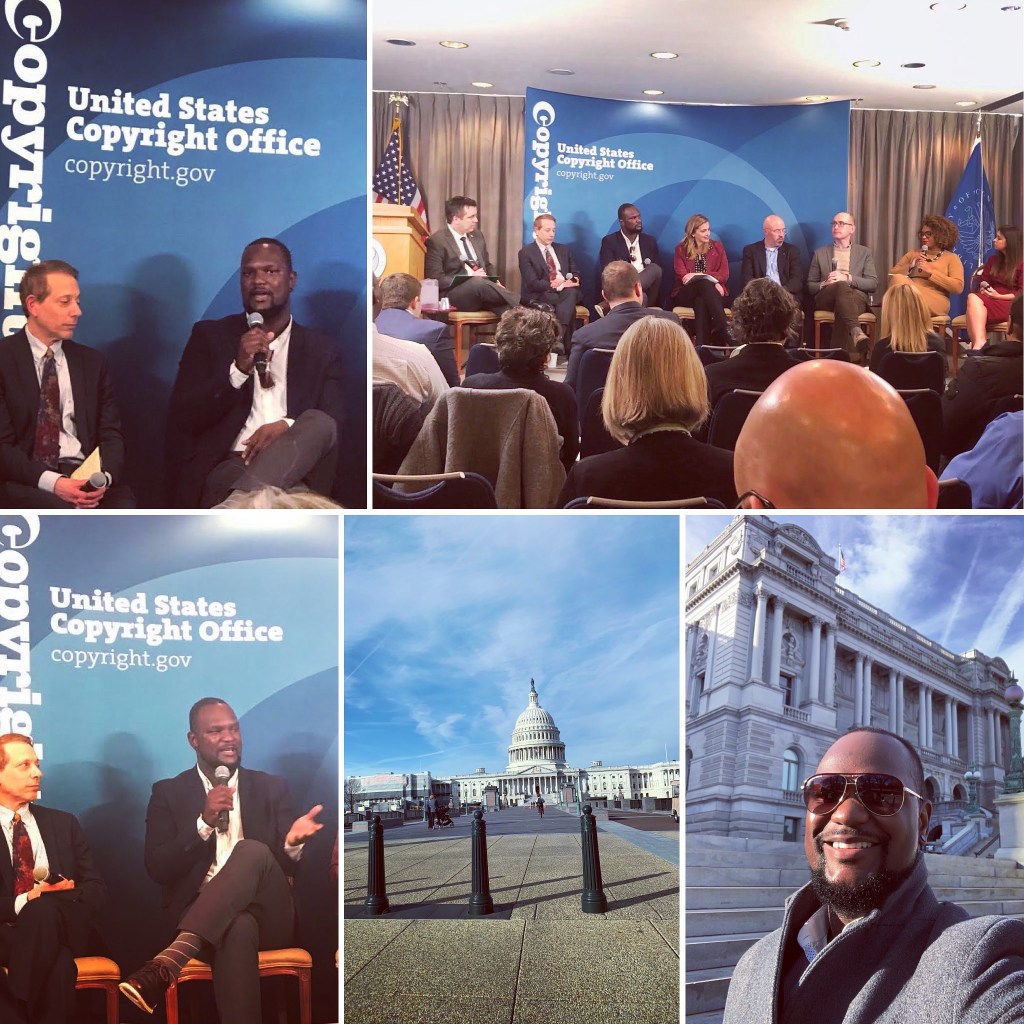
On this day last year, at the invitation of the Honorable Steve Ruwe, a United States Copyright Royalty Judge, I went to Washington, D.C. to participate in the U.S. Copyright Office’s Unclaimed Royalties Study Symposium and speak at The Library Congress on strategies for the effective outreach and engagement of music publishers and independent songwriters. A few months later I joined The Mechanical Licensing Collective as its Head of Third-Party Partnerships to develop and execute strategies to reach and empower music publishers and independent songwriters, composers, and lyricists.
#TBT Reflecting On Being Named A Billboard 2019 Digital Power Player And Looking To The Future Of Music Rights

Exactly one year ago, I was named a Billboard 2019 Digital Power Player in recognition of my work at the intersection of music rights and technology.

As the founder and CEO of two music rights software companies—TuneRegistry and RoyaltyClaim—I empowered independent music creators and rights-holders from over 40 countries with tools to protect and administer their copyrights in the United States and to uncover unclaimed royalties and music licenses around the world.
I started my career in the music industry as an independent artist and self-published songwriter, then evolved into an advocate of music creators as first an artist manager and eventually the owner/operator of an independent record label and independent music publishing company. Later, I pivoted from being hands-on the music to conceptualizing and developing technological solutions to address some of the challenges I faced while wearing the many hats that I had worn.
Today, I am writing yet another chapter in my career book as the Head of Third-Party Partnerships at The Mechanical Licensing Collective and as a Lecturer of Musicology (music industry entrepreneurship) at the UCLA Herb Alpert School of Music. At these organizations I play a new role in supporting music creators from the earliest start of their careers through the legacy of their musical works.
As I reflect on my passion and look to the future I am excited to imagine how I can contribute in some meaningful way to the careers and livelihoods of thousands of music creators; especially independent artists and self-published songwriters.
Dae Bogan Returns To UCLA Herb Alpert School Of Music To Teach Winter 2021 Quarter

I am thrilled to announce that I will be returning to UCLA for the 5th year to teach my course “Music Industry Entrepreneurship” at the UCLA Herb Alpert School of Music.
In 2017, I was honored to be recognized by Billboard in its 15 Best Music Business Schools of 2017 and later named to the Billboard 2019 Digital Power Players list for my work as a serial entrepreneur at the intersection of music copyrights, royalties, and technology. While updating my curriculum to fit a 100% online format will be a challenge, I look forward to guiding my international students in their exploration of entrepreneurship and innovation in the music industry.
This upcoming Winter ’21 quarter will coincide with my role as Head of Third-Party Partnership at The Mechanical Licensing Collective, which is the non-profit organization designated by the U.S. Copyright Office to issue and administer the newly created blanket digital audio mechanical license in accordance the Music Modernization Act of 2018. The historic passage of the MMA made it the most significant update to the U.S. Copyright Act in decades. To this end, I was honored to advise the U.S. Congressional Budget Office during its economic analysis of the bill and was humbled to be invited by Copyright Royalty Judge Hon. Steve Ruse to participate in the unclaimed royalties study symposium and speak at the Library of Congress on the ways in which The MLC could reach, engage, and support self-administered songwriters and small and emerging music publishers in the United States and abroad.
In a word, I don’t think I could be happier about where my hard work, accomplishments, and setbacks have lead me since deciding this time of year 17 years ago to pick up and relocate to Los Angeles from Cleveland, OH as a homeless, unemployed 18-year-old aspiring musician. While I pivoted from being the talent to supporting the talent early own, my passion for empowering and educating music creators and music entrepreneurs has never been stronger.
I can’t wait to see what this next chapter has to offer!
Dae Bogan To Moderate Keynote Panel “Academia + Industry Action” at Music Biz’s #NEXTGEN_U
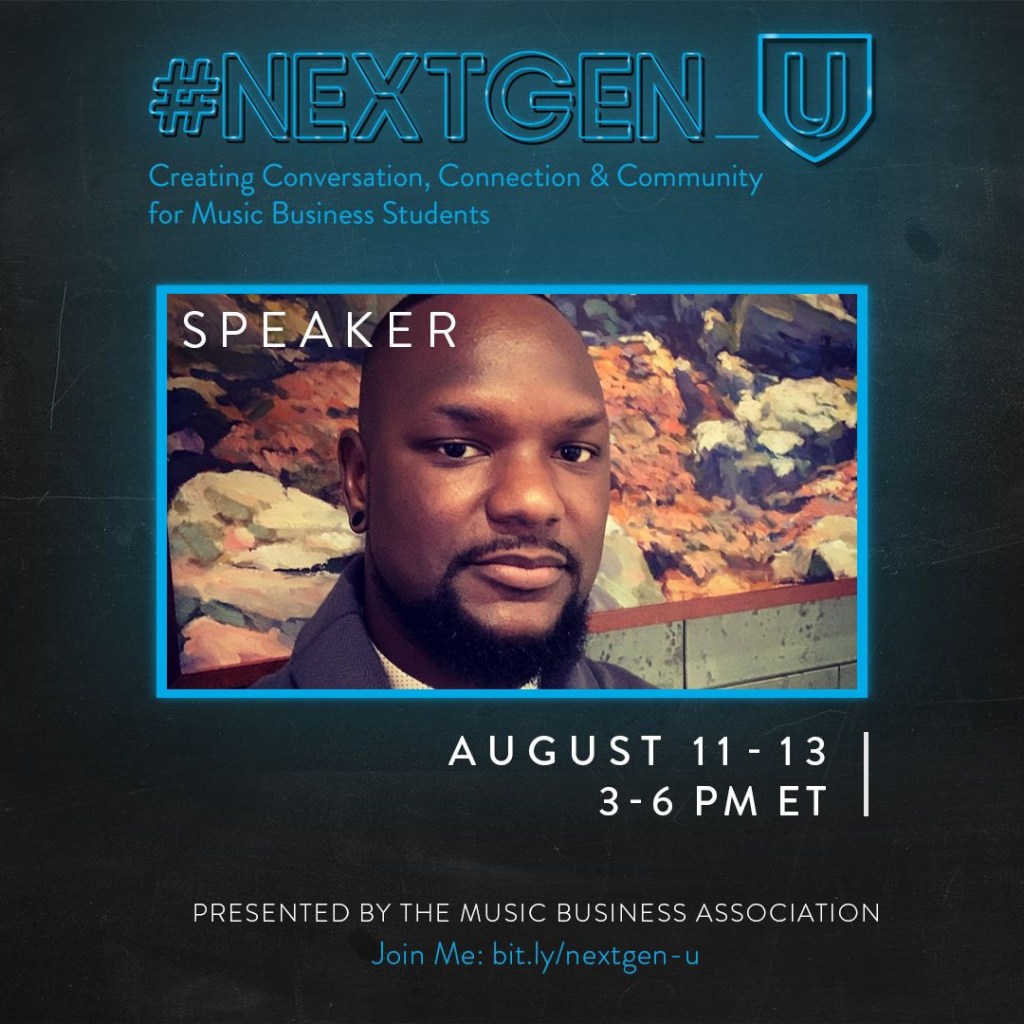
I look forward to moderating the keynote panel “Academia + Industry Action” at Music Biz’s #NEXTGEN_U, an event exclusive to students, recent grads, and faculty members taking place
Wednesday, August 12, 12pm PST / 3pm EST.
Keynote Panel: Academia + Industry Action
The intersection of academia and real-world experience is a constant hot topic for students. What’s more important: getting an A on your publishing split sheet project or making yourself available to intern an extra day a week? How do students effectively balance their workload while not missing out on the opportunities that await them outside the classroom? How important are these opportunities? What are professors doing to bring these experiences back into the classroom? Guest speakers are cool, but what else is academia doing to keep students engaged, learning, and thriving in the competitive music business ecosystem? And lastly, what opportunities exist, outside of internships, where brands and music companies are embedding students and their next-gen ideas into their business plans?
Moderator: Dae Bogan, Head of Third-Party Partnerships, Mechanical Licensing Collective (MLC) and Adjunct Professor, UCLA
• Marcie Allen, President & Founder, MAC Presents and Adjunct Professor, New York University
• Perry Bashkoff, Head of Music, Instagram
• Tonya Butler, Chair of Music Business, Berklee College of Music
• Todd Goodwin, SVP / Head of °1824, Universal Music Group

Free DIY eBook
CONNECT WITH ME


 Dae Bogan Music