
A Primer On Music Publishing, Rights Splits, And Royalties For Confused Artist Managers
I recently assisted an artist manager with a post-release dispute between his client (DJ/producer) and their guest artists on the track.
Here’s a quick primer for new managers who may not be 100% clear on how copyright & publishing work/relate:
1. There are two (2) separate copyrights: the composition (song) and the sound recording (master).
2. There are four (4) types of income participants: songwriter and publisher for songs (we call this “writer’s share” and “publisher’s share”) / artists and record companies for masters. In the event a writer is not signed to a publisher, he/she owns the publisher share of income. In the event an artist is not signed to a record label, he/she owns what would be the record company share of income (however, if you’re working with a production company, they could own these rights depending on your production agreement).
3. COMPOSITION: Generally, the songwriter and publisher split is 50-50 (this proportion is represented in percentages as 50%/50% (most of the publishing world) and 100%/100% (specific to BMI), but it is the same proportion). American Society of Composers, Authors & Publishers (ASCAP), Broadcast Music, Inc. (BMI), SESAC, and Global Music Rights (GMR) collect and pay out performance royalties to songwriters and publishers. Harry Fox Agency and Music Reports, Inc. collect and pay out mechanical royalties to publishers (if you rep a writer who does not have a publisher, you may be missing out on mechanical royalties in the U.S. and overseas). Synchronization (placing music in film & TV) is a license that is negotiated between content producer and publisher (or you as the manager repping a songwriter). The content producer pays an upfront synch fee and then the performance generates performance royalties on the backend once it is has been distributed/broadcast (unless it’s a movie in U.S. movie theaters or DVDs; in which case you should negotiate a higher upfront synch fee since the U.S. does not have a performance right for music performed in movie theaters). There are more royalties, but that’s a primer.
Also Read: Demystifying The Music Industry: What’s The Difference Between ASCAP/BMI/SESAC and SoundExchange?
4. MASTER: Generally, the artist and record company split income based on the terms of a recording contract. The exception is neighbouring rights, hometapping/private copy, and DART royalties. All of these royalties are collected and paid out by agencies directly to the artist and record company. SoundExchange pays out digital performance royalties for non-interactive Internet services (e.g. Pandora), satellite (e.g. SiriusXM), cable (e,g. Music Choice), and over 2,500 other webcasters (e.g. iHeart Radio and Slacker). SoundExchange is our only version of “neighbouring rights” in the U.S. SoundExchange pays 45% to the artist, 50% to the record company, and 5% to background vocalists and session musicians via AFM & SAG-AFTRA Intellectual Property Rights Distribution Fund. Digital services pay master streaming royalties directly to your distributor/aggregator. There is a fund for hometapping/private copy and DART royalties paid out by Alliance of Artists and Recording Companies to artists (50%) and record companies (50%) because, among other reasons, in some countries (like Japan and Netherlands), music is rented much in the way we rent DVDs. Overseas, masters also earn neighbouring rights royalties (performance of masters on radio, TV, movies, etc.). The only way to capture these royalties is to sign up with a neighboring rights agency like Kobalt Music or Symphonic Distribution.
Now that you have a premier, what you need to make sure to do for EVERY song released is to spell out in the contract the COMPOSITION/SONG SPLITS and the MASTER OWNERSHIP SPLITS.
If you do a split sheet with guest artists on a song, you’re only covering the composition, unless you have some addendum agreement attached that says the splits will also be applied to the master sound recording. Otherwise, you can have two different sets of splits; one set of splits for the composition (the songwriters and publishers) and a second set of splits for the master (the featured performers and the record company/master owner(s)).
SCENARIO 1: EDM DJ/producer produces a track and invites a guest artist to lay down vocals. If producer composed the track and artist wrote the lyrics, then they’ll all have a percentage on the COMPOSITION/SONG split sheet. If producer wrote all of the lyrics, then he/she will own 100% of the COMPOSITION/SONG. Now, the master recording has a different split. The guest artist is effectively the featured performer on the MASTER, so he/she would be allocated the 45% featured artist share of SoundExchange royalties and the 50% artist share of AARC royalties. The copyright owner in the master (label or individual) would receive the 50% copyright owner share of SoundExchange royalties and 50% record company share of AARC royalties. In order for the producer to receive a piece of the SoundExchange royalties, you’d need to include the allocation in your agreement and have the ARTIST sign a Letter of Direction, which you’ll submit to SoundExchange (join the Creative Affiliate Program to expedite this). This LOD will split the “featured performer share” between the Artist and Producer. (Note: These splits have nothing to do with sales and master streaming royalties).
SCENARIO 2: A five member band put out a new song. Only two members wrote the song, but all five members performed on the recording. The two writers would split the COMPOSITION/SONG ownership, and each of the five members will receive a share of the featured artist share of SoundExchange royalties. Master sales/streaming royalties will have a different split.
I can go on and on.
The point is, there are 4 buckets in the music industry when it comes to copyright/publishing:
- Bucket 1: Writer/Composer/Lyricist
- Bucket 2: Publisher
- Bucket 3: Artist
- Bucket 4: Master Owner/Record Company
Each of these buckets receive their OWN income streams, and most music rights organizations and royalty collection agencies will pay one or two of these buckets DIRECTLY based on the splits that you provide when you register the songs/tracks to the entities.
This is why it is imperative to #1 have these splits spelled out and agreed upon on paper prior to release and #2 register the songs/tracks with ALL entities BEFORE release.
Obviously, TuneRegistry is the only product on the market designed to help you with this at an indie artist price point.
TuneRegistry presents “Rights & Metadata in the Evolving Digital Music Space” #SXTuneRegistry #SXMetadata #SXSW

TuneRegistry presents “Rights & Metadata in the Evolving Digital Music Space” http://schedule.sxsw.com/events/PP62361
#SXTuneRegistry #SXMetadata #SXSW
ETLA, The Research Institute Of The Finnish Economy, Publishes Report On State Of Digital Music Infrastructure – Calls For Transparency And Addresses “Black Box” Issues
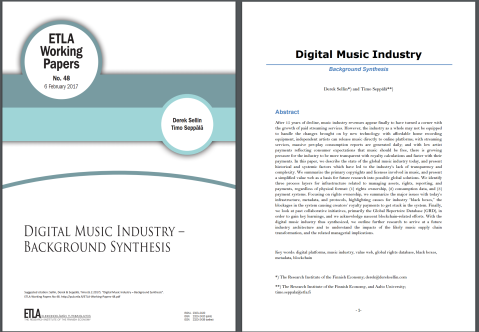
I had the honor of being interviewed by researcher and author, Derek Sellin, for his industry report “Digital Music Industry – Background Synthesis” for ETLA Working Papers No. 48, published by Elinkeinoelaman Tutkimuslaitos – The Research Institute of the Finnish Economy.
Black boxes materialize for many reasons, including but not limited to: the inability to identify rights holders despite payments made for the use of their compositions; the lengthy time required for filing domestic and ultimately international copyrights, often begun only when a recording is actually released; multiple claims for the same rights exceeding 100% of ownership, resulting in indefinite disputes; international collaborations with less than all creators asserting their rights; international legal inconsistencies regarding what type of performances result in payments (most visible in the fact that radio play does not generate royalties for recording artists in the United States); and the slow and often manual processes to report usage and clear payments under international reciprocal agreements. – Dae Bogan
You can download the report at https://www.etla.fi/en/publications/digital-music-industry-background-synthesis/.
About ETLA
The Research Institute of the Finnish Economy (Etla) is engaged in applied economic research with emphasis on topics that are important from the Finnish point of view. The main focus is on issues that relate to productivity and drivers of its growth, to the functioning of the labour market, as well as to challenges in maintaining a balanced macro economy including sound public finances. Etla monitors economic development, compiles forecasts as well as assesses economic policy and comments on it.
Etla is a private non-profit organisation. Its operations are backed by the supporting association, the members of which comprise the Confederation of Finnish Industries and the Confederation of Finnish Industry and Employers (TT) Fund. The funding from the background organisations covers more than a third of the institute’s budget and forms a solid base for its operations. Read more.
[VIDEO] Independent Music Industry Conference Panel Live Video
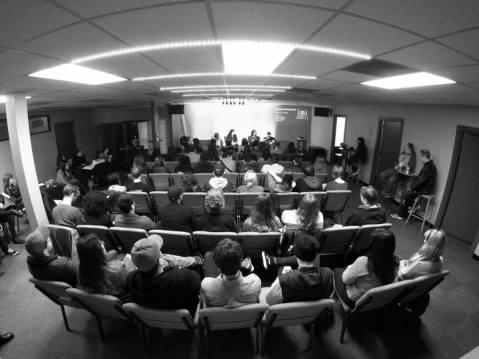
If you missed the inaugural Independent Music Industry Conference, produced by Mike Ziemer, producer of the So What Music Festival, you missed a very cool and informative boutique event. But, don’t worry! Below are the live videos from the Record Label panel and the Music + Technology panel, both moderated by me.
Record Label Panel
Music + Technology Panel
If you can’t view this video, click here.
Announcing Music Business Workshop Focusing On LGBTQ Music Creators

UPDATE: I’ve announced the first services of workshops – “PRIDE MUSIC: A Music Business Workshop For LGBTQ Creators”. Read the announcement.
When I came to LA as an aspiring artist, there weren’t many “out” recording artists being marketed in mainstream music. When I stopped pursuing music and began to build my career on the business side, I learned that there were plenty of LGBTQ folks in the music industry behind the scenes and many who weren’t ready to live their truth already in mainstream.
Over the 13 years I’ve been here, we’ve seen acceptance grow and artists like Ricky Martin and Lance Bass come out. We’ve seen Sam Smith, Adam Lambert, Frank Ocean, and many others own their truths and break records while doing it.
Nevertheless, there are still many artists who need the support and tools to be their authentic selves in the music industry.
I have taught many music business and marketing classes and workshops. I’m putting these pilot programs together because in all of the many music industry conferences and programs in which I’ve participated, there hasn’t been a unified approach to covering the fundamental complexities of music industry AND the unique needs of LGBTQ creators.
This is why I am excited to announce that I will be developing and teaching two pilot music business workshops focusing on the unique needs of LGBTQ music creators at the new Brotherhood IMPACT Fund space in West Hollywood (aka Brotherhood Clubhouse).
SAVE THE DATES: 11/16 (7p to 9p) and 12/17 (3p to 5p)
The workshops will consist of 1 hour of my signature music industry insights and education and 45 minutes of the issues that relate to LGBTQ creators (e.g. touring in countries where homosexuality is illegal, spousal/beneficiary grants of residual music royalties (thanks Marriage Equality), dealing with social media bullying, authenticity when creating music for the masses, storytelling and distribution of audiovisual works depicting LGBTQ relationships, gay baiting, and more.
As a gay music industry professional who now works with creators and professionals at all levels, it is important to me to give back and help the next generation to be more empowered creators.
More details to come. Follow my Facebook page for the event info http://www.facebook.com/DaeBoganMusic
The Elephant In The Room: Unclaimed / Undistributed Royalties
In the United States, there are several “unclaimed / undistributed royalties” funds held by music rights organizations. These funds collectively consist of tens of millions of dollars in undistributed earnings generated by the use of music within the greater music industry, from legislative appropriations imposed on manufacturers of audio home recording media, and from agreements with foreign entities.
Some of the organizations (SoundExchange, AFM & SAG-AFTRA Intellectual Property Rights Distribution Fund, Film Musicians Secondary Markets Fund, Live Television Videotape Supplemental Market Fund, and although this is not royalties per say, the US Copyright Office has a Section 115 NOIs Filing database that can be used to track down missing mechanical royalties) have created public databases so that music creators can search to see if they have royalties sitting in these funds. However, the biggest funds do not have public databases and often music creators can not be reached by any of these funds to be notified that they have unclaimed royalties.
I am working on a side project called RoyaltyClaim.com to address this issue of unclaimed / undistributed royalties. The goal is to get each of these funds to join the RoyaltyClaim.com Disclosure Program and to encourage them to submit very basic information to us on a periodic basis regarding the income participants who are due royalties. We will then aggregate these disclosures and maintain one searchable public database accessible for free by music creators and income participants.
By aggregating these lists of unclaimed / undistributed royalties information, we can aid income participants — including songwriters, recording artists, publishers, labels, musicians, background vocalists, composers, and beneficiaries (in the event of musician parents or spousals who passed away, but their music still generates royalties) — in locating and claiming their monies.
If you are a music creator, you should signup at RoyaltyClaim.com to be notified of our launch. We are currently in conversations with the various funds to get them to cooperate and help creators and their families.
I Participated In ‘GRAMMYs In My District’ And Met Congressman Adam Schiff #GIMD #SupportMusic


Today, I joined fellow members of The Recording Academy to participate in the advocacy division’s GRAMMYs in My District initiative, which organized hundreds of music creators and industry professionals across the United States to speak with their Congressional rep about music rights.
Here at Burbank City Hall to meet with @repadamschiff with fellow @thegrammys members to talk music rights. #GIMD #SupportMusic pic.twitter.com/SxznLqsqs5
— Dae Bogan (@daeboganmusic) October 26, 2016
I had the pleasure of meeting and speaking with my rep, Congressman Adam Schiff of California’s 28th District. Representative Schiff has the unique pleasure 🙂 of representing a district whose constituents include many creators, possibly the most content creators in the United States. As an attorney and friend of many creators, Representative Schiff stands as a politician who supports the rights of music creators.
I am happy to say that Representative Schiff already sponsors the Songwriter Equity Act, the Fair Play Fair Pay Act, and the Allocation for Music Producers Act (AMP Act) and will be doing what he can to get other congressional representatives on board. This is not an easy task. Big Media such as the National Association of Broadcasters strongly oppose and lobby against progress that would ensure artists are being fairly compensated for the use of their music on terrestrial radio.
The music community has to work together to fight for changes to push legislation that will given music creators the rights and control over their music, the way any working professional maintains control over the products and services that he/she puts into the marketplace.
We need copyright reform. We need these bills to become laws. We need multi-billion dollar corporations to stop subsidizing the salaries of their executives and their operational costs at the expense of music creators.
Google and Amazon Leverage Copyright Loophole to Use Songs Without Paying Songwriters


Two vastly wealthy multinational media companies are exploiting a copyright law loophole to sell the world’s music without paying royalties to the world’s songwriters on millions–millions–of songs. Why? Because Google and Amazon–purveyors of Big Data–claim they “can’t” find contact information for song owners in a Google search. So these two companies are exploiting songs without paying royalties by filing millions of notices with the Copyright Office at a huge cost in filing fees that only megacorporations can afford–an unprecedented land grab in nature, size and scope.
That’s right–Google and Amazon are falling over themselves to use their market power to stiff songwriters yet again. And as I will show, it is not just obscure songs that are affected. New releases, including one example from Sting, are also targets suggesting significant revenue loss to songwriters. (I go into this in more detail on this series of posts.)
I…
View original post 2,016 more words
Teen-Focused App Musical.ly Is the Music Industry’s New Secret Weapon | VICE | United Kingdom

Awesome article by Vice on how young singers and rappers are using musical.ly to build fanbases, promote new music, drive engagement and sales, and generate buzz that has led to record deals, radio airplay, and ranking on Billboard charts.
Are any of you using musical.ly as a part of your overall digital strategy? If so how and what results have you seen?
Impressive app sets for a music tech startup:
Musical.ly boasts more than 11 million video uploads per day from more than 120 million users worldwide; 64 percent of the app’s American users fall within the coveted 13–24 demographic, and 75 percent are female. Hoping to capitalize on that audience, Dae Dae debuted a 15-second snippet of “Wat U Mean” on musical.ly in August; to promote it, he hosted an in-app contest challenging listeners to make a music video of themselves performing his signature dance, where he languidly swings his arms in the air to the song’s staccato “Aye” shouts. Since its inception, the challenge has yielded a staggering 153,719 responses, with scores of newly won fans performing their own renditions of the “Aye” dance.
Read full article: http://www.vice.com/en_uk/read/the-social-media-app-musically-is-changing-music-marketing-v23n07
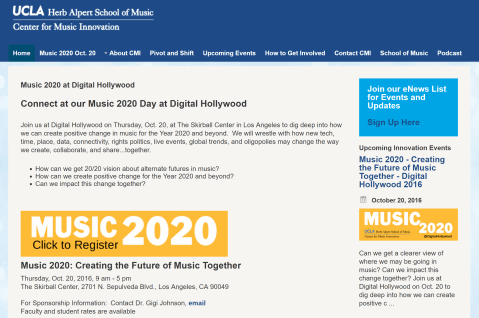
Dae Bogan To Moderate Panel On Music Rights And Micropayment Systems At UCLA Center For Music Innovation’s Music 2020 Day Event
Free DIY eBook
CONNECT WITH ME


 Dae Bogan Music