
[VIDEO] Full Video Of Royalty Claim Pre-launch Webinar
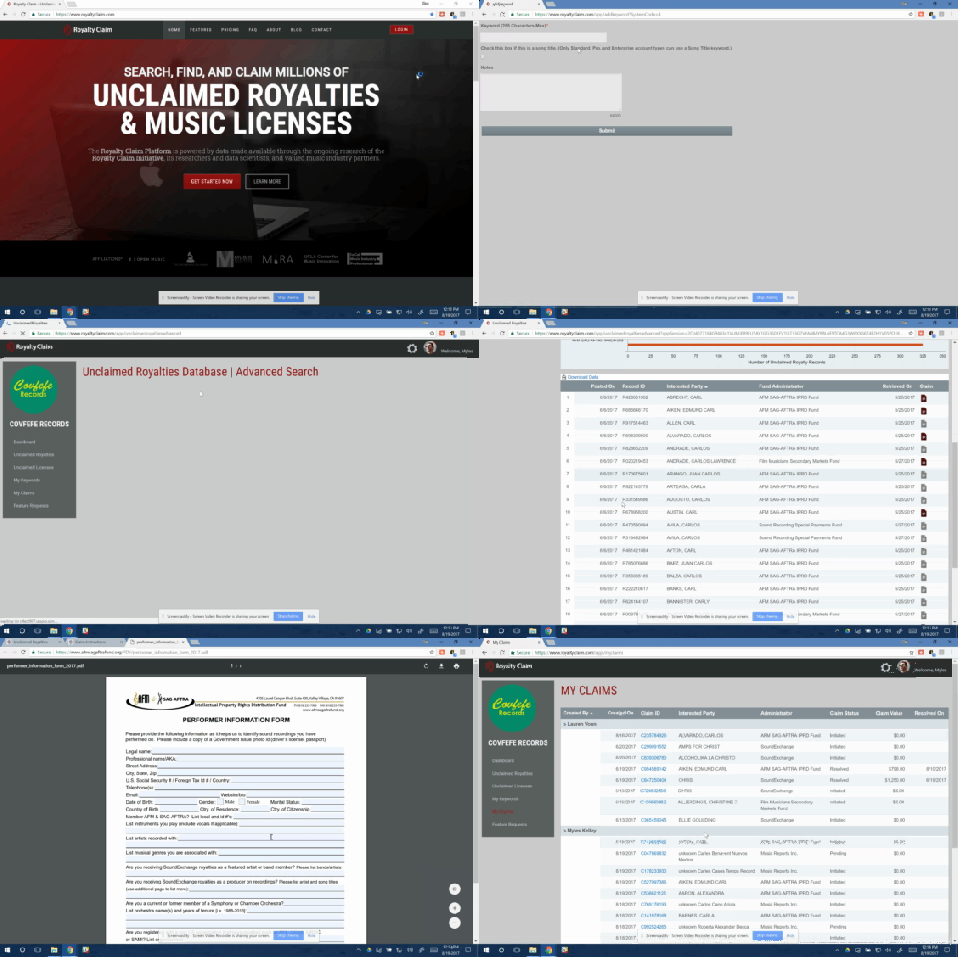
If you missed the Royalty Claim Pre-launch Webinar, watch the full recording here.
Royalty Claim Announces Pre-launch Webinar For This Weekend

Just Announced: Royalty Claim Pre-launch Webinar
Get a sneak peak behind the curtain with Royalty Claim’s Founder & Chief Researcher, Dae Bogan.
Agenda:
- Overview of the Royalty Claim Initiative.
- An encore presentation of our presentation at the Music Industry Research Association Conference.
- Live demo of Royalty Claim Platform v1.0.
- Music industry Q&A.
The webinar will take place on Saturday, August 19th at 10am PDT
(Almost) Everything That You Want To Know About Royalty Claim’s Data

QUESTION: WHERE DOES ROYALTY CLAIM’S DATA COME FROM?
ANSWER: MANY PLACES.
Royalty Claim Initiative researchers and data scientists locate, retrieve, synthesize and ingest an array of published and unpublished data that reference statutory notifications of certain music licenses, unattributed royalties (so-called “Black Box” royalties) and settlements; and income participants (payees) in undistributed royalties that stem from collective bargaining agreements, international reciprocal agreements, statutory royalties, and more. We also analyze data related to music consumption (e.g. downloads, streams, sales), broadcasts, performances, and other types of data to identify trends from which we can interpret insights into the global music licensing ecosystem.
THE FOLLOWING IS JUST A SAMPLE OF THE TYPES OF ROYALTY FUNDS IN WHICH WE ARE INTERESTED:
Royalty Claim’s Full Presentation At The Music Industry Research Association Conference

Royalty Claim attended the Music Industry Research Association‘s first inaugural MIRA Conference at the UCLA Luskin Conference Center this week. Royalty Claim’s Founder and Chief Researcher, Dae Bogan, MIA, had the honor of presenting a preview of our in-progress The State of Unclaimed Royalties and Music Licenses in the United States report before an audience of economists, sociologists, and researchers from universities and institutions from around the world, as well as music industry executives representing firms such as Nielsen, Pandora, Universal Music Group, and Warner Music Entertainment.
For the first time, updated statistics regarding the filing of “address unknown” Section 115 NOIs on the US Copyright Office during the first half of 2017 was revealed. Insights included an overview of the organizations that have utilized the procedure, including Amazon, Google, Spotify, iHeart Communications, and Microsoft. However, those large music users were expected. Interesting inclusions to the list were The Recording Academy and the Christian music service, TheOverflow and interesting omissions from the list are platforms that boast millions of tracks — Apple and Tidal — but may not be reaching every independent rightsowner that may have compositions available on those platforms.

.jpg)
The presentation also discussed the nature and causes of so-called “Black Box royalties”. A black box is an escrow fund in which music royalties are held due to an organization’s inability to attribute the royalties earned to the appropriate payee. Examples were given, including unattributed advances from DSPs to music companies, the US’s limitations on sound recording rights, and other issues.
.jpg)
The presentation concluded with a video demo of the Royalty Claim Platform, which received positive reviews from conference attendees. The full presentation is here.
Eron Bucciarelli (Soundstr), Dae Bogan (TuneRegistry & Royalty Claim), Benji Rogers (DotblockchainMedia & Pledge Music), and Jason Trikakis (HelloSugoi) Submit ‘How Tech Can Save the Music Industry’ Panel for SXSW 2018 – How To Vote Details

I’m excited to join fellow music tech founders Eron Bucciarelli (Soundstr), Benji Rogers (DotblockchainMedia), and Jason Trikakis (HelloSugoi) for a panel submission to SXSW 2018. Please vote and share the submission for “How Tech Can Save the Music Industry” #MusicTransparency
How Tech Can Save the Music Industry
The music industry is in dire need of change not only to thrive, but survive. Streaming, pirating and the secondary ticket market have dealt serious blows to our industry’s major revenue streams, but technology can be our savior. Join experts from the royalty, rights, ticketing and metadata blockchain sectors to learn not only how tech can provide short-term solutions, but also build a more sustainable industry. Join us to learn how tech can save the music industry. #MusicTransparency
QUESTIONS
- What are the current and near-future major issues of the industry that could be disrupted by technology?
- What solutions can tech offer and how can they be practically applied to our everyday lives?
- What is the long-term impact of these tech solutions? What happens without these solutions based on the current landscape of our industry?
SPEAKERS
- Eron Bucciarelli, CEO, Soundstr
- Dae Bogan, CEO, TuneRegistry & Royalty Claim
- Benji Rogers, CEO, Plege Music & dotBlockchain
- Jason Trikakis, CEO, HelloSugoi
CLICK HERE TO VOTE
Ask Me Anything About The Music Business, With Dae Bogan
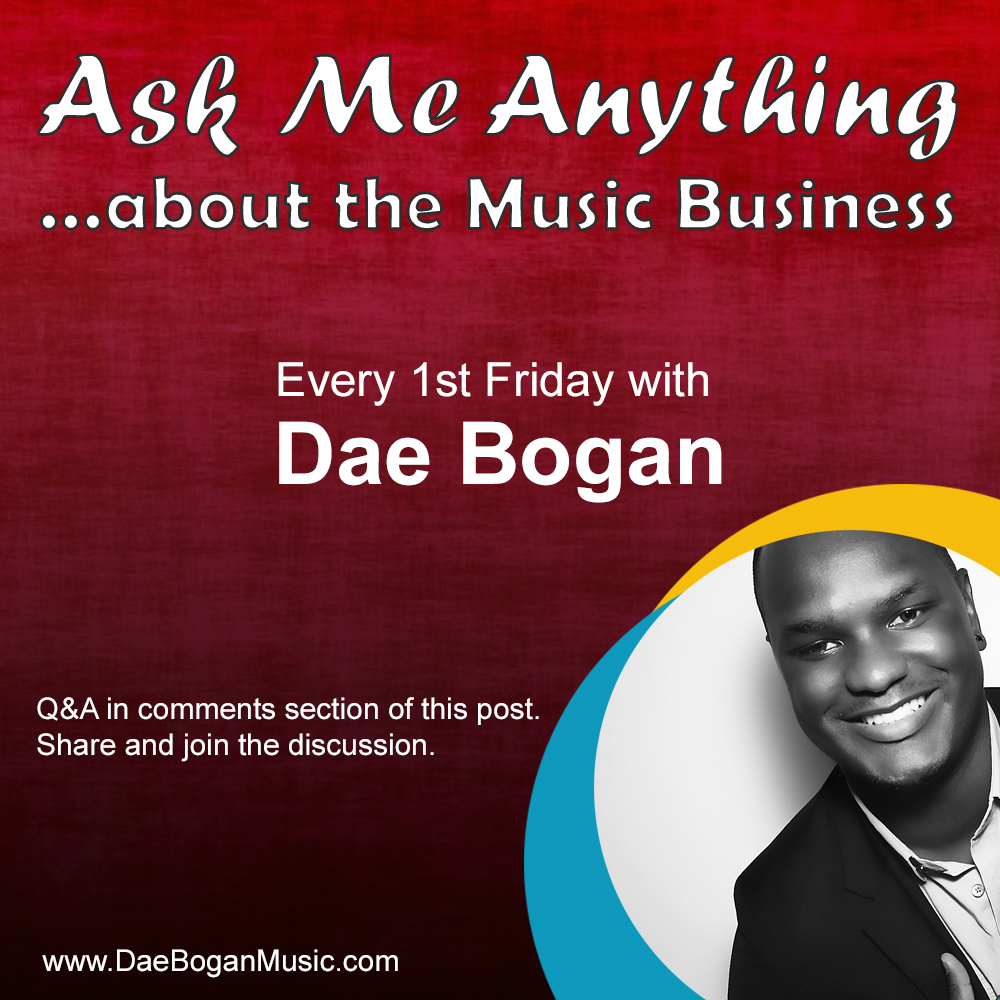
Ask me your music business question and I’ll attempt to provide you with an answer or direct you to a resource with a better answer or guidance. I cannot provide specific legal advice, but I can discuss general music business practices. Join the conversation on Facebook, Twitter, Linkedin, or DaeBoganMusic.com. Simply drop your question in the comments section wherever you see the above image.
Royalty Claim Pre-launch Is Just 7 Days Away!

|
How To Auction Off Your Future Royalties When You’re A Back-up Singer Or Session Music

Photo by Jason Rosewell on Unsplash
It is very important for background vocalists (and artists who provide background vocals on the side) to understand that they earn money BEYOND the studio session in which they performed. Billboard published an article on how a back-up singer on Wiz Khalifa’s “See You Again” featuring Charlie Puth put up 100% of his U.S. digital performer royalties for auction on Royalty Exchange with bids starting at $30,000. These royalties are collected by SoundExchange and administered by AFM & SAG-AFTRA Intellectual Property Rights Distribution Fund.
This is a great example of how a background vocalist can leverage his/her equity in a hit song to get paid big bucks, today! This also applies to session musicians.
#MusicBusinessMonday: Session Musicians
Royalty Claim has thousands of records of unclaimed royalties due to non-featured performers (session musicians, background vocalists, etc.) from recordings performed on digital radio (e.g. Pandora, Music Choice, iHeartRadio, SiriusXM, and more). Royalty Claim also provides data on ‘address unknown’ NOIs filed under the Section 115 compulsory mechanical license for services such as Amazon, Spotify, Apple, Google, and many others.
Read more about the auctioning your future royalties in the Billboard story here.
Learn more about Royalty Claim at http://www.royaltyclaim.com. Royalty Claim will pre-launch on August 10th. This is for anyone who pre-registered at www.royaltyclaim.com/comingsoon. Those who’ve pre-registered will be able to secure a life-time subscription to Royalty Claim for only $150. Royalty Claim official launch will be September 1st. At that point, anyone can join for free or choose any of the premium plans.
Mid-Summer Review

Happy August! This has been one of the busiest and most productive summers 🌞 that I’ve had in Los Angeles in recent years. Here’s a mid-Summer review:
The summer began with a downer that turned out to be a good thing. My “Music Industry Entrepreneurship” summer class at UCLA was cancelled, but ultimately that cancellation freed up more of my time for the things that followed.
In June, I began work on the Royalty Claim website and database platform. Royalty Claim is a product of my ongoing research into the global music licensing and royalty flow ecosystem, specifically my research into its inefficiencies and the legal loopholes that lead to billions of dollars in unpaid royalties owed to music creators and rightsholders. The Royalty Claim Initiative will aid in creating transparency in the global music licensing ecosystem by offering a free online searchable database of unclaimed royalties and music licenses. I recently joined the Music Industry Research Association and will be presenting a state of music licensing report at its first inaugural MIRA Conference at UCLA on August 10th. This will also serve as the launch of Royalty Claim.
At the end of June I hopped over to Puerto Vallarata, Mexico where I spent a week with a group of friends. It was so fun and I got to check off a bucket list item: ziplining in the wilderness. Good times!


During my trip to PV, the deal that I had been working on for several months had officially closed. That is, my in-store music video network business that I founded in 2012 had been acquired by Empire Distribution. It was great timing. The acquisition frees me up to focus and invest more on my company TuneRegistry and my new project Royalty Claim.

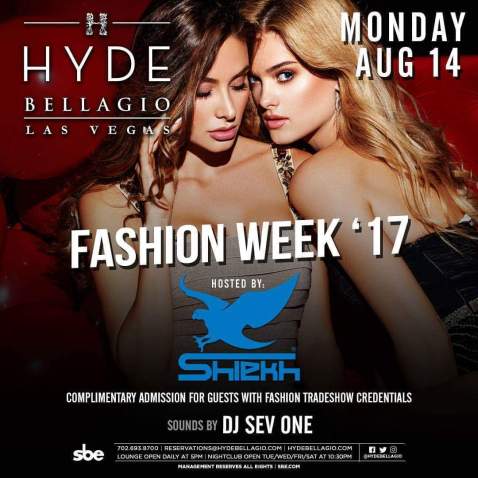
Also in July, I produced in San Francisco the first of a series of summer events for my client Shiekh. It was an event for the launch of the Puma x Kylie Jenner “Velvet Rope” sneaker collection. My #EventsByDae team kicked butt and we had a successful event for client and guests.

I will be producing the next event on Aug 14th at Hyde Bellagio in Las Vegas.
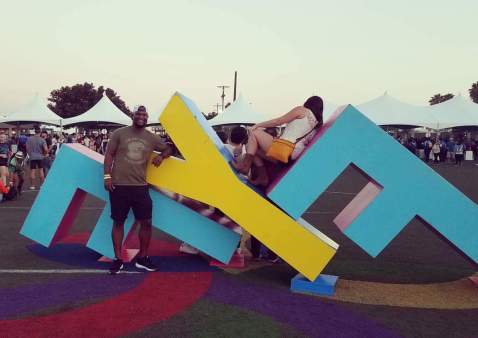
I also attended FYF Fest for the first time and I got approved for a new apartment that I’ve been eye’ing for months.

The Transparency in Music Licensing and Ownership Act: The Domesday Book Meets A Unicorn
“Unconstitutional taking and an international trade treaty violation all in one bill.”

Americans are freedom loving people and nothing says freedom like getting away with it.
Long Long Time, written by Guy Forsyth
Longtime PRO opponent Rep. Sensenbrenner introduced a bill entitled “The Transparency in Music Licensing and Ownership Act“, a piece of work that is Dickensian in its cruelty, bringing a whole new meaning to either “newspeak” or “draconian,” take your pick. It’s rare that the Congress can accomplish the hat trick of an interference with private contracts, an unconstitutional taking and an international trade treaty violation all in one bill. But I guess practice makes perfect. And since the MIC Coalition gave the bill a rousing cheer followed by a heaping serving of astroturf, we should not be surprised. (Read the bill here.)
While this legislation currently applies only to songs and sound recordings, other creators should not feel that they’ve dodged…
View original post 1,160 more words
Free DIY eBook
CONNECT WITH ME


