
Dae Bogan Talks The MLC for A2IM Indiescussion Conversation Series
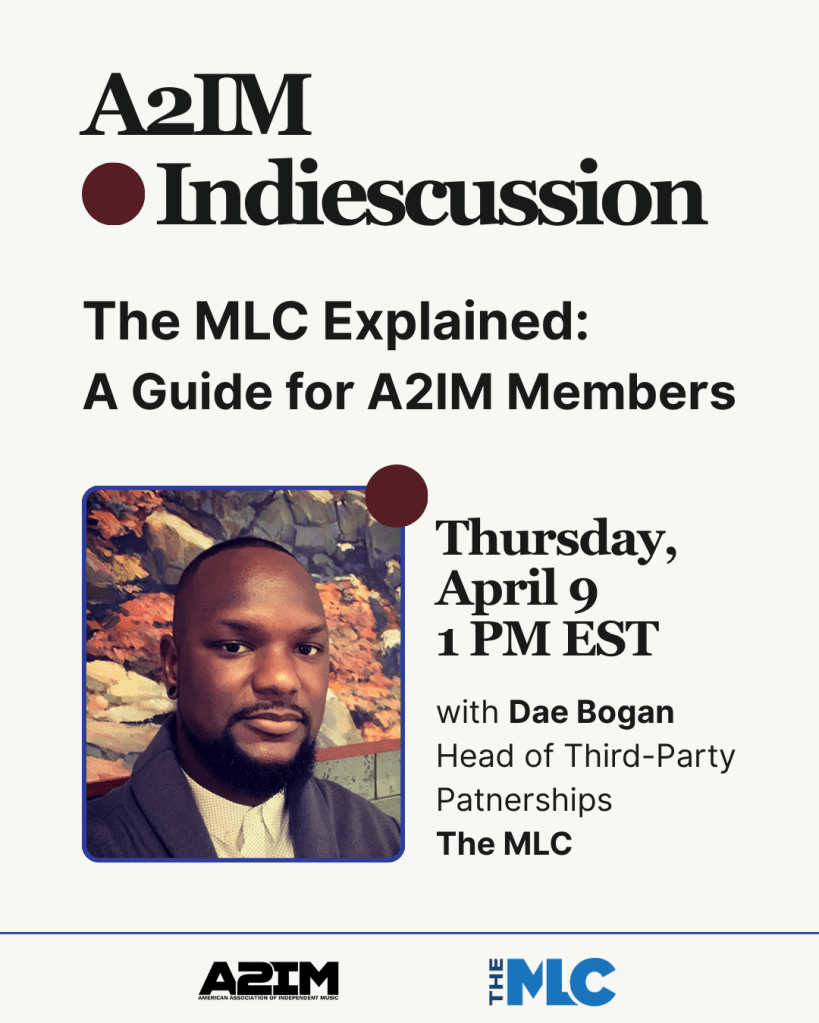
Are you an independent label, distributor, or music company navigating the U.S. streaming landscape?
Join us on Thursday, April 9 at 1 PM EST for an online conversation with Dae Bogan of The MLC.
In this session, we’ll break down how The MLC supports your songwriter and publishing partners by collecting and distributing U.S. mechanical streaming royalties, and what your team needs to know to ensure your catalog is properly registered and monetized. Learn how The MLC fits into the broader royalty ecosystem and how A2IM members can help maximize earnings for their creators.
Register at https://a2im.zoom.us/webinar/register/WN_U1PR5-QvSHiJTgxeu0QALw
Infinite Licensing in AI Music

For a few years now, in private conversations with various technologists, music rightsholders and fellow data nerds, I’ve been using, and trying to coin, the term “infinite licensing” to describe the concept of real-time AI-powered dynamic licensing of rights in both generative-AI and single-source derivative AI music applications.
No, I am not talking about smart contracts, which are finite preset rules hardcoded in a file that is then minted to a blockchain, but rather the convergence of AI (conceptual/subjective/ecosystem) and blockchain (context/ownership) within the permission layer of applications that can generate an infinite ♾️ combination of licensing deal terms.
Infinite licensing would behave sort of like an oracle within applications to dynamically value and clear rights in machine-to-machine, business-to-business, and consumer-to-machine applications, going beyond the scope of human objectivity, individual experience in negotiation and valuation, and workload capacity in the licensing process.
It removes limiting royalty formulas and most favored nations models and replaces them with highly customized and more commercially accurate representations of value at a given point in time.
I imagine a future where an AI system built on an LLM that has learned from previous licensing deals (and the outcomes and missed opportunities of such deals), ingested airplay and streaming stats, interpreted correlations and trends, while calculating the lost value of undervalued deals, analyzed historical sync data, quantifies hype, ingested sales data, and consumer behavior and sentiment data, etc. would dynamically determine rates and terms for gen-AI and single-source derivative AI music outputs.
Infinite licensing, unlike smart contracts, could factor in variations in types of use, the real commercial value of the source music involved, the perceived cultural value of music creators involved, the market value of the opportunity, and much more.
The blockchain aspect, which has been in development across a variety of projects and startups for over 10 years now, would provide the architecture for transparent and immutable rights management while remuneration could be supported by cryptocurrency.
In 2019, when I presented my lecture “Music 2020: The Next Era of Innovation in the Music Industry” at the California Institute of The Arts and again at Music Biz Conference, I argued that artificial intelligence, blockchain, and cryptocurrency would be among the technologies that will transform the music industry in the 2020’s.
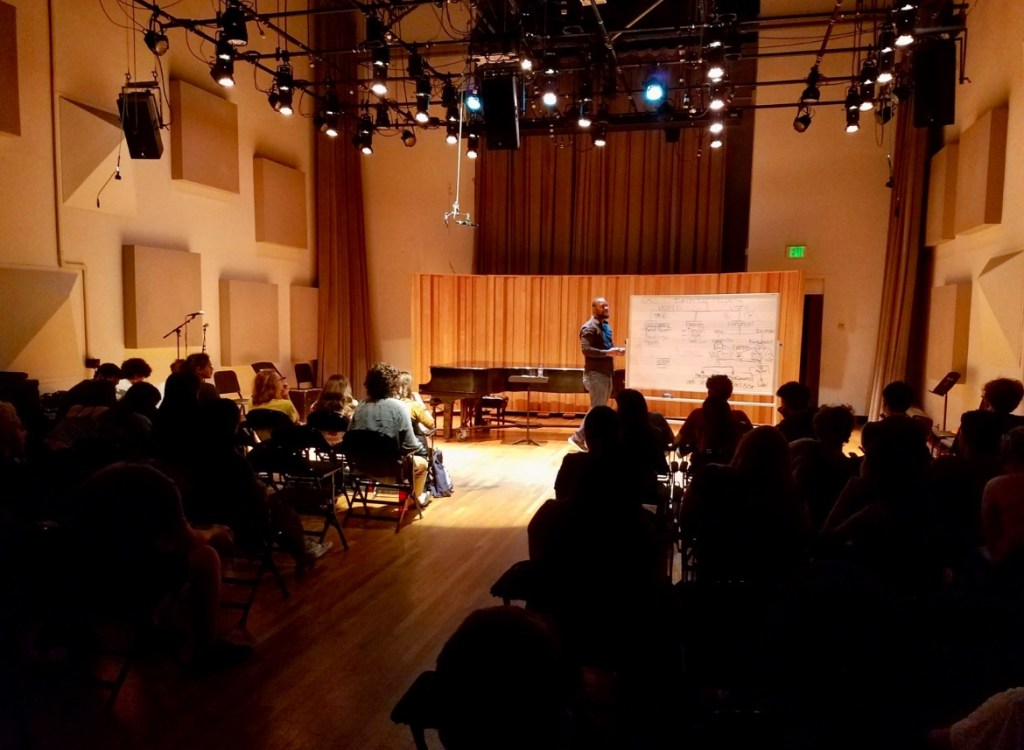
We’re halfway through the 2020’s and I think someone will figure out infinite licensing before 2030.
The Permission Layer for AI Music: Consent, Attribution, and Getting Artists Paid
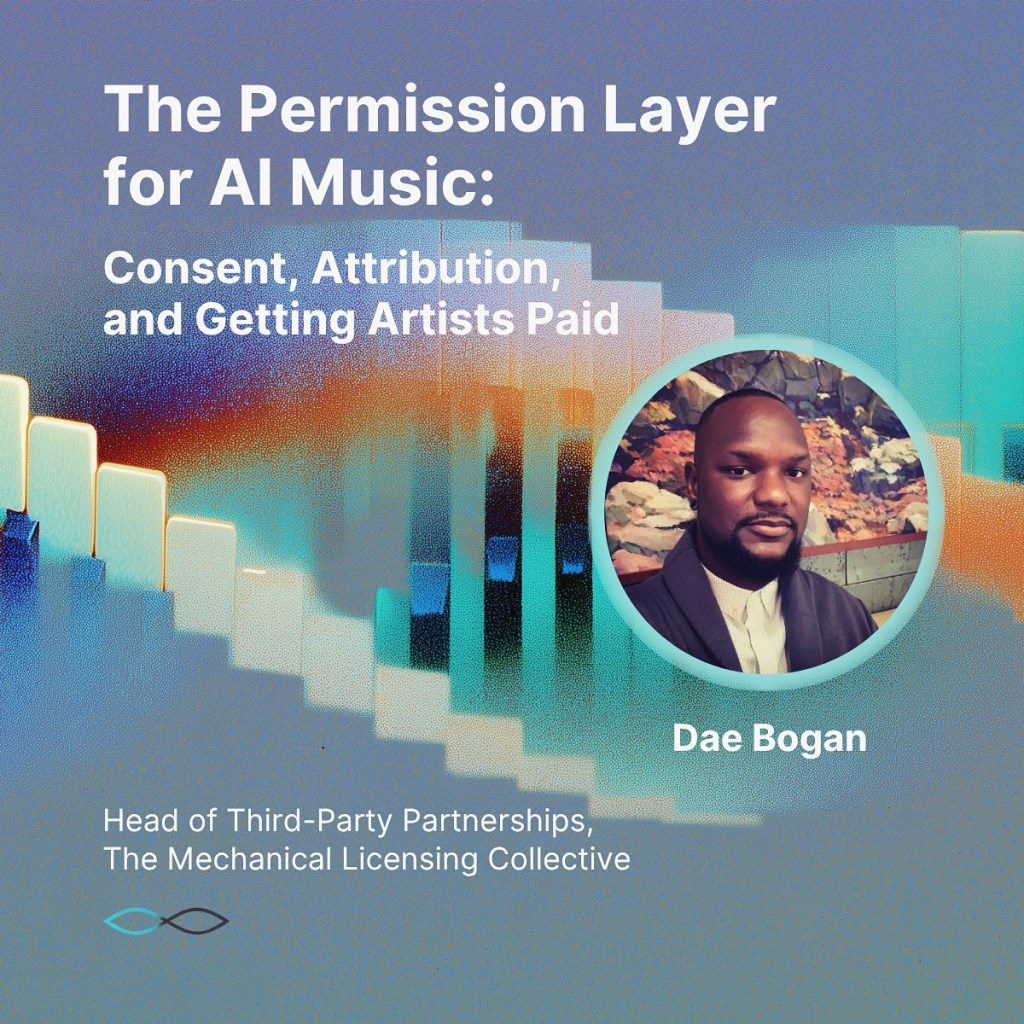
The Permission Layer for AI Music: Consent, Attribution, and Getting Artists Paid
🗓️ Wednesday, November 12, 2025
⏰ 9am PT • 11am CT • 12pm ET
How do you scale artist consent across millions of AI-generated tracks? What infrastructure makes attribution and payment actually possible?
AI music is charting on Billboard, signing major label deals, and reshaping production workflows. This panel brings together the architects building the permission layer to explore the frameworks being built right now—from control and consent to metadata and royalty tracking—that will determine how AI music enters advertising, brand campaigns, and commercial licensing.
Essential for brand marketers, creative directors, music supervisors, artists, business affairs teams, and anyone navigating music licensing in the AI era.
Host/Moderator: Abbi Press, Global Lead Business Affairs Manager, Creative at Uber | Founder of The Double Helix
Speakers:
- Daouda Leonard, Co-Founder & CEO, CreateSafe
- Dae Bogan, Head of Third-Party Partnerships, The Mechanical Licensing Collective
- Marc Rucker, Associate Director of Artist & Industry Relations, SoundExchange
- Tushar Apte, Music Producer/Songwriter/Composer, Warner Chappell Music
Register: https://luma.com/500w2bvc

The MLC presents RegFest

The MLC Presents: RegFest
Songwriters, artists, producers, and rightsholders — don’t miss this free online webinar to maximize your streaming royalties and protect your rights! Join award-winning songwriter and artist Cassandra Kubinski and The MLC’s Dae Bogan as they cover how to register your works and claim all your income streams.
🗓️ Monday, November 10th
⏰ 12pm PT • 2pm CT • 3pm ET
Register at https://themlc.zoom.us/webinar/register/WN_5WmDEPi0ThaFRZQFiDLC3A
The Socioeconomics of Globalization vs. Glocalization and Why Indie Artists in the Global South Have It Harder
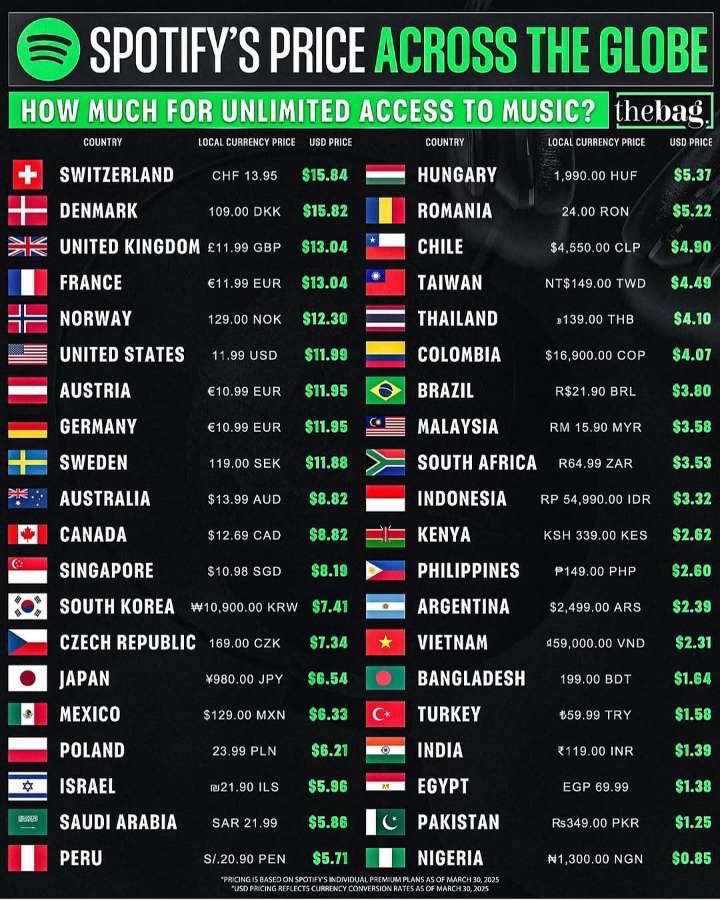
I have been having this very candid conversation about the digital music ecosystem and the socioeconomics (and sociocultural) factors at play in “globalization vs. glocalization” for years now.
Ever since I began exploring the “global south” in 2021, from South America to Southeast Asia to South Africa, and then subsequently moved to Latin America, I’ve observed challenges for local music creators and opportunities for Western music creators.
Artist earnings, in the digital space, are a factor of the socioeconomic health of the region in which artists receive most of their consumption. Two artists from two different countries with the same number of monthly listeners within their own country (glocalization) may not earn the same income due to the differences in the socioeconomic health of their respective countries.
The issue of socioeconomic health is exacerbated by poor copyright compliance and broken or insufficient licensing and royalty collection infrastructure.
Independent artists in lower socioeconomic markets could attempt to look for international collaborations with artists that can introduce them to listeners in more developed markets and they could leverage opportunities to exploit their music in ways that create discovery in new markets (e.g. synch, playlists, etc.). This will aid in exposing the music and eventually earning consumption in other foreign markets (globalization), possibly with better socioeconomic health (or at least higher royalty rates).
Additionally, indie artists should leverage communities like Vampr and BandLab Technologies and other such companies to connect and collaborate with artists, songwriters, and music producers to strive for cross-border appeal and opportunity.
[Podcast] SXSW 2025 – Scrubbing the System: Music Data Management Today
I enjoyed returning to SXSW earlier this month and the opportunity to join Jay Gilbert, Molly Neuman, and Rell Lafargue in discussing how companies are tackling and innovating on the challenge of music metadata.
Check out this podcast of our panel “Scrubbing the System: Music Data Management Today.”
[Podcast] SXSW 2025 – Crafting a Transparent Future for Music Rightsholders

Earlier this month, I had the pleasure of moderating the panel “Crafting a Transparent Future for Music Rightsholders” at SXSW. Joining me on stage were Chantal Epp (ClicknClear), Diego Maldonado (ONErpm), and Josh Simons (Vinyl Group). These companies are among the over 500 entities around the world that access The Mechanical Licensing Collective’s data through one or more of our data programs.
Click here to listen to the SXSW panel podcast to hear what we had to say about the future of transparency in music rights and data management on this podcast recording of our session.
View the PDF of the slides that were presented during the panel discussion. You can follow along with how the slides were presented by starting the podcast at audio mark 23:55.
Bonus: Below is a recording of a related webinar that I hosted last year during which each of these companies demonstrated how they leverage The MLC’s data in their businesses. Watch “Exploring The Use of The MLC’s Data: A Showcase of Three Companies”.
In accordance with the Music Modernization Act of 2018, The MLC develops and maintains a variety of data programs that are accessible to a diversity of companies around the world. The MLC’s database boasts over 30 Million musical works, with associated ownership information and matched sound recordings, and is enriched by our members and partners. As mandated by the MMA, The MLC makes the data available in bulk machine-readable formats and via an API.
Join The MLC’s Head of Third-Party Partnerships, Dae Bogan, in this 60-minute webinar showcasing real-world examples of The MLC’s data programs in use by differentiated technology companies around the world. Each of the selected showcase companies — ClickNClear (UK), Jaxsta (Australia), and ONErpm (Colombia) — will explain and demonstrate how it leverages The MLC’s data programs in the solutions that it offers to the music industry or in its backend operations.
Speakers:
· Jaxsta Showcase (Bulk Data Access Subscription) by Ben Orme, Jaxsta Product Lead / Business Development
· ClickNClear Showcase (Public Search API) by Chantal Epp, Founder & CEO
· ONErpm Showcase (DURP) by Diego Maldonado, Global Head of Publishing & Rights Management
DISCLAIMER: This video was uploaded to the MLC’s YouTube channel on 06/06/2024. Some content may no longer be accurate or up-to-date. For the latest information, please visit THEMLC.COM or reach out to our support team with any questions.
Dae Bogan To Lead Seminar “The Art And Business Of Songwriting Collabs”

New technologies and online resources have made it possible for songwriters to find and collaborate with fellow songwriters, musicians, and singers from around the world more efficiently and economically than ever before. The convenient nature of the virtual collaboration and music production ecosystem has contributed to the explosion of independent music made available on digital music services today. Accordingly, the RIAA and IFPI have both reported steady growth in independent music in the last few years.
Now, it’s your turn to get involved in the collab movement! Register to attend this insightful webinar on Thursday, June 20th, where Dae Bogan Music, Head of Third-Party Partnerships at The MLC, and Kevin McCarty, CEO and Co-Founder at We Should Write Sometime, will discuss the art and business of songwriting collabs while highlighting WSWS app features for songwriters and The MLC’s tools and resources for self-administered songwriters.
Save your spot here: https://go.themlc.com/weShouldWriteSometime2024
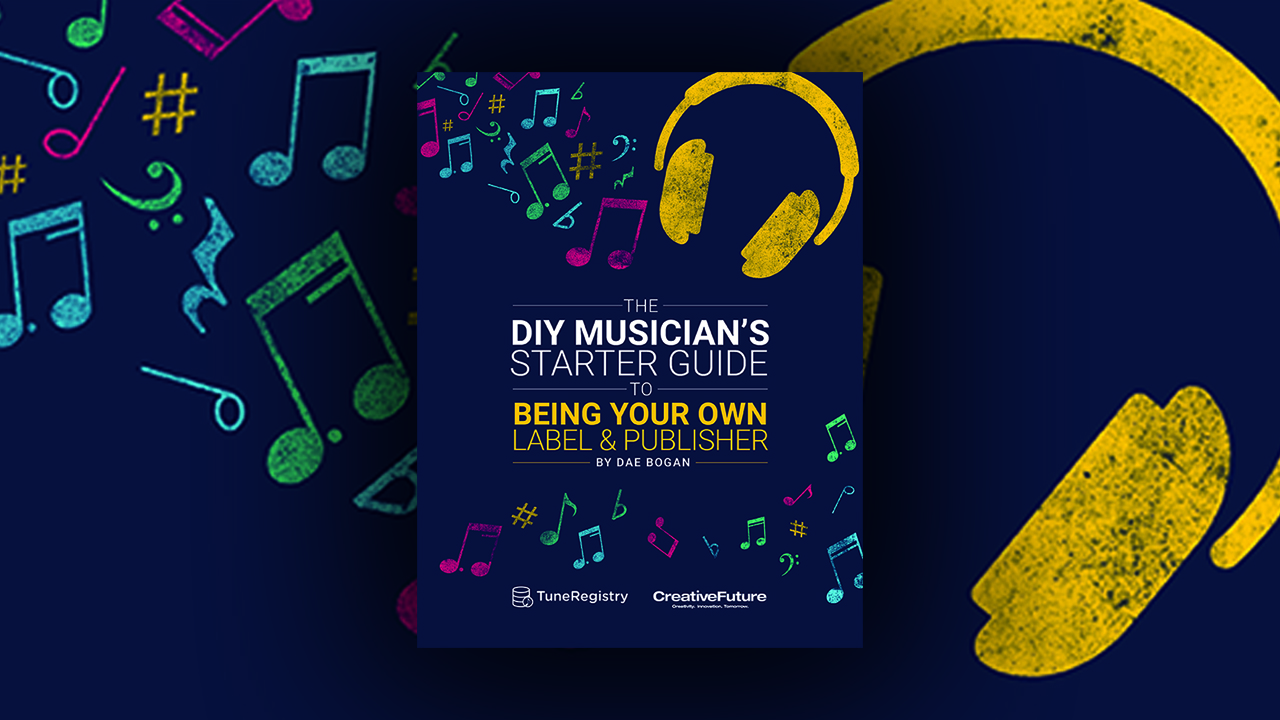
Free DIY eBook
CONNECT WITH ME


 Dae Bogan Music