The Socioeconomics of Globalization vs. Glocalization and Why Indie Artists in the Global South Have It Harder
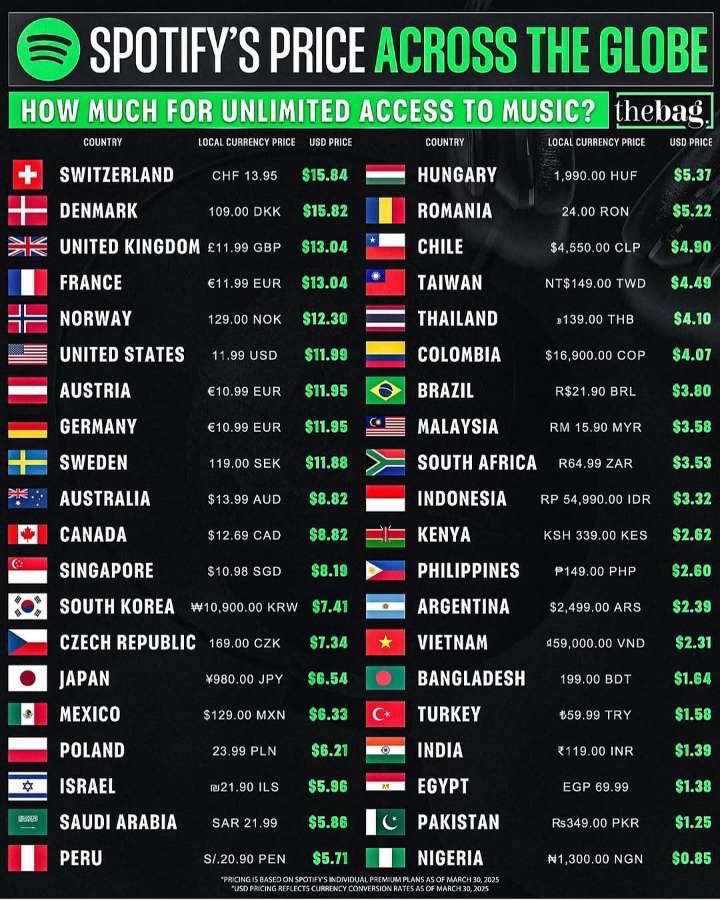
I have been having this very candid conversation about the digital music ecosystem and the socioeconomics (and sociocultural) factors at play in “globalization vs. glocalization” for years now.
Ever since I began exploring the “global south” in 2021, from South America to Southeast Asia to South Africa, and then subsequently moved to Latin America, I’ve observed challenges for local music creators and opportunities for Western music creators.
Artist earnings, in the digital space, are a factor of the socioeconomic health of the region in which artists receive most of their consumption. Two artists from two different countries with the same number of monthly listeners within their own country (glocalization) may not earn the same income due to the differences in the socioeconomic health of their respective countries.
The issue of socioeconomic health is exacerbated by poor copyright compliance and broken or insufficient licensing and royalty collection infrastructure.
Independent artists in lower socioeconomic markets could attempt to look for international collaborations with artists that can introduce them to listeners in more developed markets and they could leverage opportunities to exploit their music in ways that create discovery in new markets (e.g. synch, playlists, etc.). This will aid in exposing the music and eventually earning consumption in other foreign markets (globalization), possibly with better socioeconomic health (or at least higher royalty rates).
Additionally, indie artists should leverage communities like Vampr and BandLab Technologies and other such companies to connect and collaborate with artists, songwriters, and music producers to strive for cross-border appeal and opportunity.
[Podcast] SXSW 2025 – Scrubbing the System: Music Data Management Today
I enjoyed returning to SXSW earlier this month and the opportunity to join Jay Gilbert, Molly Neuman, and Rell Lafargue in discussing how companies are tackling and innovating on the challenge of music metadata.
Check out this podcast of our panel “Scrubbing the System: Music Data Management Today.”
[Podcast] SXSW 2025 – Crafting a Transparent Future for Music Rightsholders

Earlier this month, I had the pleasure of moderating the panel “Crafting a Transparent Future for Music Rightsholders” at SXSW. Joining me on stage were Chantal Epp (ClicknClear), Diego Maldonado (ONErpm), and Josh Simons (Vinyl Group). These companies are among the over 500 entities around the world that access The Mechanical Licensing Collective’s data through one or more of our data programs.
Click here to listen to the SXSW panel podcast to hear what we had to say about the future of transparency in music rights and data management on this podcast recording of our session.
View the PDF of the slides that were presented during the panel discussion. You can follow along with how the slides were presented by starting the podcast at audio mark 23:55.
Bonus: Below is a recording of a related webinar that I hosted last year during which each of these companies demonstrated how they leverage The MLC’s data in their businesses. Watch “Exploring The Use of The MLC’s Data: A Showcase of Three Companies”.
In accordance with the Music Modernization Act of 2018, The MLC develops and maintains a variety of data programs that are accessible to a diversity of companies around the world. The MLC’s database boasts over 30 Million musical works, with associated ownership information and matched sound recordings, and is enriched by our members and partners. As mandated by the MMA, The MLC makes the data available in bulk machine-readable formats and via an API.
Join The MLC’s Head of Third-Party Partnerships, Dae Bogan, in this 60-minute webinar showcasing real-world examples of The MLC’s data programs in use by differentiated technology companies around the world. Each of the selected showcase companies — ClickNClear (UK), Jaxsta (Australia), and ONErpm (Colombia) — will explain and demonstrate how it leverages The MLC’s data programs in the solutions that it offers to the music industry or in its backend operations.
Speakers:
· Jaxsta Showcase (Bulk Data Access Subscription) by Ben Orme, Jaxsta Product Lead / Business Development
· ClickNClear Showcase (Public Search API) by Chantal Epp, Founder & CEO
· ONErpm Showcase (DURP) by Diego Maldonado, Global Head of Publishing & Rights Management
DISCLAIMER: This video was uploaded to the MLC’s YouTube channel on 06/06/2024. Some content may no longer be accurate or up-to-date. For the latest information, please visit THEMLC.COM or reach out to our support team with any questions.
Dae Bogan To Lead Seminar “The Art And Business Of Songwriting Collabs”

New technologies and online resources have made it possible for songwriters to find and collaborate with fellow songwriters, musicians, and singers from around the world more efficiently and economically than ever before. The convenient nature of the virtual collaboration and music production ecosystem has contributed to the explosion of independent music made available on digital music services today. Accordingly, the RIAA and IFPI have both reported steady growth in independent music in the last few years.
Now, it’s your turn to get involved in the collab movement! Register to attend this insightful webinar on Thursday, June 20th, where Dae Bogan Music, Head of Third-Party Partnerships at The MLC, and Kevin McCarty, CEO and Co-Founder at We Should Write Sometime, will discuss the art and business of songwriting collabs while highlighting WSWS app features for songwriters and The MLC’s tools and resources for self-administered songwriters.
Save your spot here: https://go.themlc.com/weShouldWriteSometime2024
Dae Bogan to Join Panel On The Future of Music Publishing & AI at Canadian Music Week 2024

I’m coming to Toronto 🇨🇦 for Canadian Music Week June 2-5!!
I am looking forward to speaking on the panel “Harmony & Code: The Future of Music Publishing in the AI Era” on June 3rd at 12 PM. Tap in if you’ll be there!
Harmony & Code: The Future of Music Publishing in the AI Era
Join us for a compelling panel discussion where we explore the transformative impact of technology on the music publishing industry. This session will explore critical questions at the intersection of tech and music: What implications does AI have for the roles of music publishers and artists alike? What tools do artists need to thrive in this new landscape? We’ll examine the future of copyright laws, ponder the necessity of new rights, and debate how technology can coexist with music without exploiting creators. Don’t miss this essential conversation on the evolution of music rights in the digital age, designed for publishers, tech companies, and artists ready to navigate these changes.
Moderated By: Cole Davis Founder & CEO Switchchord
- Chris Dampier, Head of North America – Sentric Music
- Dae Bogan, Head of Third-Party Partnerships – The Mechanical Licensing Collective
- Paul Shaver, President – CMRRA (Canadian Musical Reproduction Rights Agency Ltd) and SX Works
- Virginie Berger, Chief Business Development and Rights Officer – Matchtune
Learn more at https://cmw.net/
Dae Bogan to Conduct Workshop ‘From Beat to Bank: Dissecting the Flow of Digital Music Royalties in Rap and Hip-Hop’

I am thrilled to announce the first of a series of in-person music rights and royalties workshops that I will be conducting in Nashville, Miami, and New York this year:
From Beat to Bank: Dissecting the Flow of Digital Music Royalties in Rap and Hip-Hop
🗓️ June 22nd • 4pm-6pm
📍 The Mechanical Licensing Collective in Nashville, TN
🎫 Free with Registration
Description:
“From Beat to Bank: Dissecting the Flow of Digital Music Royalties in Rap and Hip-Hop” is an interactive workshop specifically designed for aspiring Hip-Hop and R&B music creators.
Presented by The MLC and Nashville is Not Just Country Music and led by Dae Bogan, Head of Third-Party Partnerships at The MLC, the workshop will take creators through a crash course demystifying the intricate world of music rights, income entitlements, publishing administration and the distribution of U.S. digital music royalties.
Through a series of individual and group simulations, participants will delve into various facets of the industry including contribution and credit tracking, negotiation of splits, the impact of samples on copyrights and royalties, work registrations and the process of claiming royalty shares.
Participants will gain a deeper understanding and appreciation of how song and recording contributions translate into royalty payments from The MLC and other organizations.
The workshop will take place at The MLC’s office in Nashville on June 22 from 4 p.m. to 6 p.m. CT. Tune in by registering at https://www.eventbrite.com/e/the-mlc-ninjcm-present-from-beat-to-bank-workshop-tickets-637622174087
On the Impact of False Copyright Infringement Claims on Independent Artists and Other Digital Creators
Over the past 10 years, among other pursuits and adventures, I’ve advised independent artists and artist managers on copyright issues surrounding the exploitation of their music in the Internet Age. I’ve also advised entrepreneurs on the intellectual property compliance implications of their music app and digital media startups.
One interesting unintended consequence that has emerged out of the creation of copyright policing systems by Internet and digital music services is the abuse of these systems by bad actors whose only goal is to curb the success of a particular piece of content (music or video) or the creator of such content.
Services such as Youtube and Spotify have implemented takedown processes to comply with the Digital Millennium Copyright Act of 1998 and limit their liability while maintaining a safe harbor from damages that may arise out of copyright infringement lawsuits. However, bad actors can use these same tools that are meant to help rightsholders protect their rights to instead attack creators in what appears to be economic warfare against artists: false infringement claims and errorneous takedowns.
Takedowns can derail creators during viral momentums, which can be detrimental; especially for independent artists. I’ve advised several clients who’ve been the victim of such an abuse of the system.
Today, Billboard published an article, written by reporter Elias Leight who investigated the use of false infringement claims as a tactic to curb the success of rivals. I was interviewed for the article and provided some of the contextual and technological backdrop for the investigation:
Article Excerpt:
Like other prominent platforms, Spotify responds to infringement claims seriously by removing allegedly infringing songs, and you can report a song without breaking a sweat. Platforms honor an infringement claim whether the intentions behind it are legitimate or not.
“Anywhere there’s content and there’s some system with a trust mechanism to flag violations, there’s an opportunity for abuse and mis-use,” says Dae Bogan, head of third-party partnerships at the Mechanical Licensing Collective. “Bad actors are gonna do what they’re gonna do.”
Article: https://www.billboard.com/pro/spotify-false-infringement-claims/
[Video] Symphonic Distribution x The MLC Live Q&A with Dae Bogan

Did you know that there is over 424 million in unmatched royalties that The MLC is looking to pay out? Join Randall Foster & Dae Bogan as they dive deep into the world of publishing.
Watch: https://youtu.be/EhxljeejSqI
Free DIY eBook
CONNECT WITH ME


