
500 Spotify Playlists That You Can Pitch To Right Now
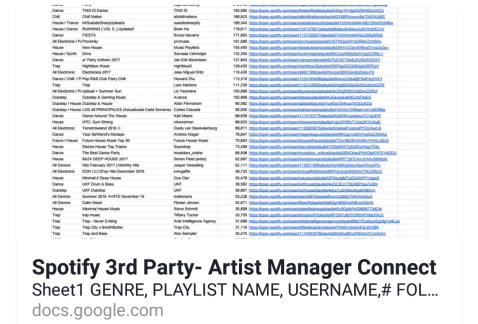
Several members of the Artist Managers Connect Facebook group (a global networking group of artist managers and other music industry professionals such as service providers, music tech founders, and label/publishing reps) curated a list of third-party Spotify playlists.
This amazing resource is a Google Sheet posted by AMC member Jorge Mejias with a caption:
Since I truly hate the fact that there are “PR” companies offering “Spotify Playlist Pitching” for upwards of $1K+ making false promises they know and then saying something around the lines of “it’s just how the industry is” or “Spotify playlisting is tough” or whatever-
Here is a google sheet w/ info on some of the most popular third party Spotify playlists that most of these companies are pitching to because-
1) this information is all public so I don’t feel bad giving it out & saving people some research
2) what you get out of it = how much time you dedicate to it
3) getting scammed in 2017 / not helping prevent it when you can is silly
Contact info is all out there so stop making excuses. Also the follower count on these are outdated.
*Edit* – also this is a thank you to everyone from AMC who has helped me out thus far. you rock~
*Edit2* – also please refrain from publicly posting any contact info- thank youuu!
*Edit3* – this post by no means aims to discredit companies who do properly provide pitching services. Dan put it best by saying “Would like to caveat that some of us work records at Spotify and Apple Music very transparently and based on years of repertoire and success for our artists within the platform’s respective ecosystems. ”
*Edit4* – thank you Dustin for contributing his spreadsheet
The list requires you to do a little bit of work to reach out to the curator, but the awesome thing about the list is that they’ve already done the work to identify the curator’s Spotify username and have tracked followers and genre to help you sort and prioritize.
List: https://docs.google.com/spreadsheets/d/1-jf6HkRHay43pv8f6X_VneDPuEY405YV3Ool8GVdZjs/htmlview
Go forth and pitch your music!
Let me know if you land a placement.
5 Music Business Tasks You Can Do Before The End Of 2017

2017 is coming to an end. Here’s a quick rough rundown of some things you can (and some that you must) accomplish before the end of the year:
1. GET YOUR GROOVE MUSIC MECHANICAL ROYALTIES BEFORE ITS FORFEITED. Microsoft is shutting down Groove Music on December 31, 2017. Legally speaking, they are not required to pay mechanical royalties to songwriters and publishers who have not registered their copyrights with the United States Copyright Office. Therefore, in theory, on January 1st, 2018 Microsoft could expunge any unclaimed mechanical royalties. Royalty Claim shows you how to find your songs and begin the process of unlocking any accrued mechanical royalties.
2. GET DISCOUNTED CONFERENCE PASSES FOR 2018. If you’re thinking about going to music industry conferences in 2018, you should know that many of them offer early-bird discounts now. These savings really add up when you attend multiple conferences in one year. SXSW is currently offering lower rates that end on set dates. The next rate increase will be on Nov 17th. NAB is offering a variety of packages at more than 50% off through Nov 24th (including a FREE pass for the Exhibit floor). There are more offers out there such as Music Biz Expo with discounted rates through March and ASCAP’s “I Create Music” Expo with discounted rates through the end of the year.
3. RELEASE A HOLIDAY COVER SONG LEGALLY AND SUBMIT TO BLOGS FOR END OF YEAR EXPOSURE. It’s not too late to record and release a holiday song this season and leverage the exposure from blogs and background music services. I breakdown how to do this in my piece “5 Tips For Making, Marketing And Monetizing Holiday Music This Season”.
4. GET OR RENEW YOUR GOOGLE PLAY MUSIC MECHANICAL LICENSE. If you distribute music to Google Play Music, you may be earning mechanical royalties that you have not collected. Mechanical royalties are different from your master use royalties (paid to labels, distributors, and aggregators) and performance royalties (paid to performing rights organizations (PROs) such as ASCAP, BMI, SESAC, and GMR in the United States). Mechanical royalties are royalties paid for the distribution of the underlying musical work embodied in a sound recording — that is, the “song.” Mechanical royalties are owed to songwriters and publishers and is not paid to labels, distributors, aggregators, or PROs. To enter into a direct agreement with Google for your Google Play Music mechanical royalties, you can do one of two things: (1) Sign a direct deal with Google Play Music, whereby you will be responsible for data ingestion as well as ongoing account management. Please reach out to indiepublisher@google.com should you like more information about the direct license; or (2) Opt in via the Harry Fox Agency, whereby they will manage your content on your behalf. You can do so by logging into your HFA account at harryfox.com and click the “Authorizaions” link located in the “Licensing” box. If you do not have an HFA Online account, you can fill out a Request for Administrator Account form at https://secure.harryfox.com/public/forms/online-account/form.jsp. You do not need to be a member of HFA to pursue this option. You can easily streamline and expedite the delivery of your song registrations to Harry Fox Agency (and Music Reports Inc., Loudr, ASCAP, BMI, SESAC, SoundExchange, and many others) using the affordable music rights and metadata management platform TuneRegistry. TuneRegistry was built to empower the independent music company and DIY musicians who self-publish.
5. CLAIM / VERIFY YOUR ARTIST PAGES & SOCIAL MEDIA. Go into 2018 with a tight marketing infrastructure by making sure that you control all of your presence across the top DSPs and social platforms. Symphonic Distribution breaksdown how to claim your label/artist page on DSPs and music marketing agency View Manic can help eligible artists verify their profiles on Facebook, Twitter, YouTube, and Instagram.
***BONUS ITEM – DUE IN EARLY 2018***
6. PREPARE AND SEND FORM 1099s. Did you hire a publicist or digital marketing consultant to work your campaign this year? Did you book a photographer for a photo shoot? Hire a graphic designer to overhaul your website? Got a new music video from a production company or indie video director? If you hired freelancers or independent contractors this year, make sure to prepare and send them a Form 1099. This form is required (few exceptions) to be sent to non-employees when you’ve paid them $600 or more for services remitted. The information for the form is gathered from payments you’ve made and the contractor’s information, which you should also collect on a Form W-9. Contractors must receive the 1099 by January 31st, 2018. Read more about 1099s here and W-9s here. In the past, I’ve used Track1099 to easily generator and file 1099s. Check them out or others on the market.
Featured photo by aiden marples on Unsplash
Ask Me Anything About The Music Business, With Dae Bogan
Ask me your music business question and I’ll attempt to provide you with an answer or direct you to a resource with a better answer or guidance. I cannot provide specific legal advice, but I can discuss general music business practices. Join the conversation on Facebook, Twitter, Linkedin, or DaeBoganMusic.com. Simply drop your question in the comments section wherever you see the above image.
CreativeFuture Releases ‘The DIY Musician’s Starter Guide To Being Your Own Label & Publisher’ Written By Dae Bogan

Over the last 10 years, I’ve had the honor of working with and supporting many DIY musicians in the development, launch and growth of their music careers. As an artist manager, indie label owner, music publisher, music retail executive and music tech entrepreneur I’ve directly contributed to the creation, promotion, release, administration and monetization of hundreds of releases.
It is from these experiences working with DIY musicians (and indies) and through my advanced education having earned a master’s degree in music business that I operate today as an entrepreneur, educator and advocate for DIY musicians.
I try to assist DIY musicians make sense of the music business through articles and insight, workshops, courses, webinars and now a short ebook.
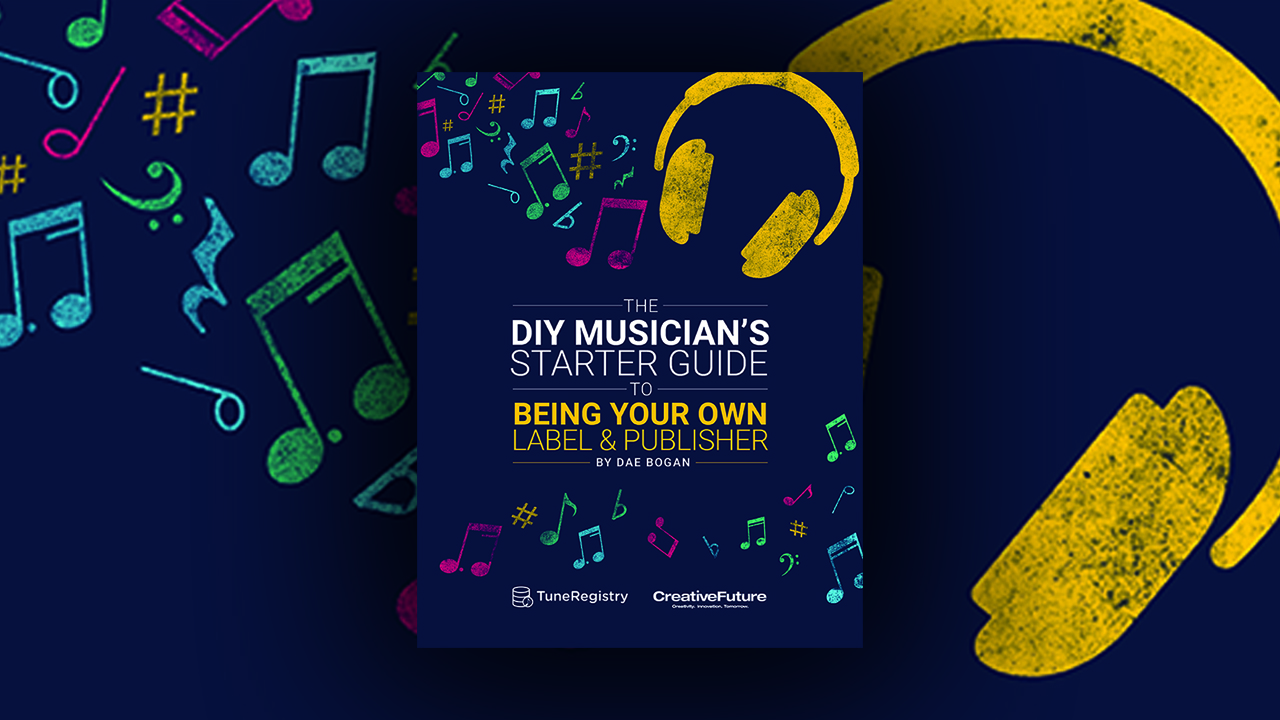
I am excited to present The DIY Musician’s Starter Guide to Being Your Own Label and Publisher
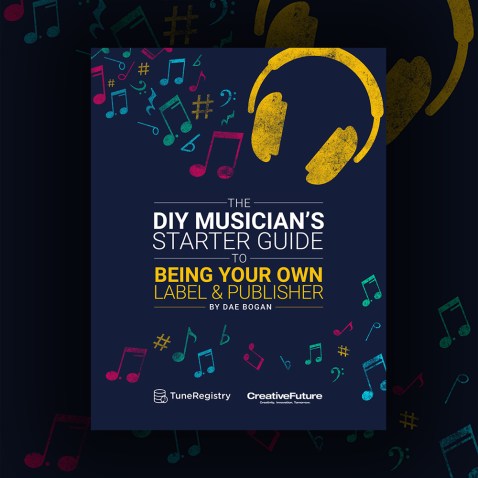
The DIY Musician’s Starter Guide to Being Your Own Label and Publisher was written to (1) help DIY musicians become better advocates for themselves by demystifying some of the confusing concepts behind how the digital music industry operates, (2) to address and offer solutions to many of the challenges that DIY musicians face in their careers, and (3) to educate DIY musicians on the processes with which they must become familiar to increase the possibility of being properly compensated for the
use of their music across the digital music ecosystem.
In this guide, you will learn about the basics of music copyrights and the business implications of the difference between compositions and sound recordings. You will learn what it means to be your own label and publisher and the four different hats you wear in the world of music royalties. You will also gain practical knowledge and steps
for asserting your rights and capturing the royalties that your music earns across the digital music industry.
Gt it FREE here.
The (Not Quite) Definitive Guide To The Exploitation Of Music Royalties

There’s been a lot of talk lately about music royalties; those pesky micro-pennies that add up to something worth fighting over after millions and billions of streams.
With the music industry seeing revenue growth powered by streaming, coupled with shrinking per-stream royalty rates caused by a combination of horrible statutory royalties, unsustainable subscription models, and more content than ever before splitting up the pie, music royalties have never been more scrutinized in modern music history, IMO.
In the United States alone, there are several legislative measures being proposed that directly address music royalties — Fair Play Fair Pay Act (artist royalties), Songwriter Equity Act (songwriter royalties), AMP Act (music producer royalties), CLASSICS Act (legacy artist royalties) — with powerful proponents (music rights organizations, music creators’ rights advocacy groups, and music industry trade associations) and even more power opponents (digital media and Internet company coalitions, broadcaster lobbying organizations, and in some cases, DSPs themselves) on both sides.
Nevertheless, this is an interesting time for music royalties.
Technologists and music licensing experts have come together to create a variety of offerings to music creators and rightsholders to help them exploit their music royalties. Whether you want to find unpaid royalties, get a loan against future royalties, sell your royalties or allow music fans to invest in your music royalties, there’s a platform for that.
Here’s a (not quite) definitive guide of music royalties tools and services (A-Z):
FIND & CLAIM UNPAID MUSIC ROYALTIES
- Paperchain (Revenue Share) – Enriching the music supply chain. Paperchain solves the problem of unpaid royalties in the music industry. Paperchain empowers music copyright owners with products and services to solve the problem of unpaid royalties.
- Royalty Claim (Free/Subscription) – Search, Find, and Claim Millions of Unclaimed Royalties and Music Licenses. The Royalty Claim Platform is powered by data made available through the ongoing research of the Royalty Claim Initiative, its researchers and data scientists, and valued music industry partners.
GET ADVANCES & LOANS AGAINST FUTURE MUSIC ROYALTIES
- Sound Royalties (Flexible Repayments Terms) – Next-generation royalty financing. Retain your music rights. Keep your royalties.
- Lyric Financial (Flexible Repayment Terms) – Advances, Loans, and Financial Solutions for the Music Industry
- Royalty Advance Funding (Interest Loan) – Royalty Advance Funding has funded hundreds of established music royalty earners including songwriters, composers, publishers, producers, and their successors.
SELL, BUY OR INVEST IN MUSIC ROYALTIES
- Royalty Exchange (Ownership & Dividends) – Your online marketplace for buying and selling royalties.
- SongVest (Dividends) – The Stock Market of Music. For the first time ever, both investors and fans can own and get paid by the music that they love.
- Perdiem (Dividends) – Investment platform for creatives. Start your own record label and build your brand in music.
Featured Photo by Fabian Blank on Unsplash
Ask Me Anything About The Music Business, With Dae Bogan
Ask me your music business question and I’ll attempt to provide you with an answer or direct you to a resource with a better answer or guidance. I cannot provide specific legal advice, but I can discuss general music business practices. Join the conversation on Facebook, Twitter, Linkedin, or DaeBoganMusic.com. Simply drop your question in the comments section wherever you see the above image.
Royalty Claim Announces Unclaimed Neighboring Rights Database – Launches With Nearly 1 Million Records
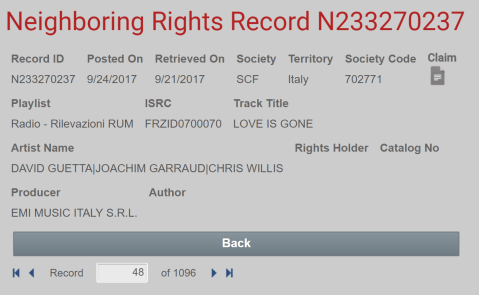
Neighboring rights is becoming a hot ticket music rights issue as download decline (and thus, mechanical royalties) and Internet streaming soars. However, the fact that US music creators and rights owners get the short end of the stick in terms of the global view of neighboring rights protections and financial reward, it is more important than ever of US stakeholders to see where and how their music is performing around the world. Neighboring Rights Agencies have boomed over the last several years to address this issue, but they’re still highly selective and most work with a few dozen performers, if any at all.

What I Read To Stay Current On Music Industry Affairs — For Better Or Worse

(UPDATED 10/15/17 – Added more outlets to the list)
Music industry professionals — especially consultants who work with a variety of clients across numerous sectors of the music industry — are behooved to stay up-to-date on the latest affairs and current events in the music industry. We do this a number of ways such as catching up with colleagues, attending conferences and networking events, and (the easiest) following and reading music industry trade publications and certain bloggers.
There are many publications and bloggers out there, and they range dramatically in terms of depth and breadth of coverage, level of objectivity, and overall value of insight.
Media analyst Mark Mulligan is known and respected for his in-depth and research-driven approach to offering deep dives into music industry trends via his work at MIDia Research and his blog Music Industry Blog while music attorney Chris Castle offers critical analysis of nuanced legal matters, especially those affecting copyright owners, on his blogs Music x Technology x Policy and Music Tech Solutions.
Then, there are some publications and some bloggers, while they offer interesting insight and news, can come off as “gossipy” from time to time (as one artist manager put it, when I shared this list in the Artist Manager’s Connect Facebook group); while others rant on about nothing of significance (said another).
Moreover, some publications are loaded with advertorial that is sometimes disguised as news (an “advertorial” is the term used to refer to an article that has been paid for (or commissioned in some way) by a brand and written (sometimes by the brand itself) for the purpose of advertising the brand without the content coming off as an advertisement — thus, advertisement + editorial = advertorial). Generally, you can recognize an advertorial and read through the advertisement to extrapolate what’s important to you (if anything). Advertorial falls into the wider spectrum of content marketing (content created by or for a brand to reach and engage target customers; including blogs, videos, advertorials).
Not all content marketing is inherently bad, though. Many articles written by or for brands offer enriching insight for its target audience, like this one that I wrote, which was published on Bandzoogle’s blog and RepostNetwork’s blog. While the article does promote my company TuneRegistry at the very end, the majority of the article details “5 Royalty Streams Every Indie Artist Should Know” and helps DIY musicians and artist managers wrap their heads around these issues.
So, whether you’re a seasoned music industry professional or an up-and-coming DIYer, if you want to stay up-to-date on what’s happening in the music industry, subscribing to a few outlets may be helpful.
Below is a select list of the music industry publications, blogs, and newsletters to which I am subscribed. Where applicable, I included the name of the primary curator/blogger and their personal Twitter handles. Follow them or connect with them up on LinkedIn.
—(A-Z)—
ArisTake (Ari Herstand | @aristake)
ASCAP Daily Brief (Dean Kay)
BillboardBiz
BMI The Weekly
CD Baby’s DIY Musician Blog (Christopher Robley | @chrisrobley)
Dae Bogan Musc (shameless self-promotion — Dae Bogan | @daeboganmusic)
Digital Music News (Paul Resnikoff)
Hypebot (Bruce Houghton)
Leftsetz Letter (Bob Leftsetz | @leftsetz)
Library of Congress Blog
MediaNet Blog
Motive Unknown (Darren Hemmings | @mr_trick)
Music Ally (Wesley A’Harrah | @adreadpirate & Anthony Churchman)
Music Business Worldwide
Music Industry Blog (Mark Mulligan | @mark_mulligan)
Music Tech Solutions (Chris Castle)
Music Think Tank (Bruce Houghton)
Music x Tech x Future (Bas Grasmayer | @basgras)
Music x Technology x Policy (Chris Castle)
SXSW Daily Chord
The Trichordist (David Lowery)
Added on 10/15/2017 from reader submission
- CMU Daily (Complete Music Update)
- ICMP Global Briefing (ICMP)
- Music World News (IMC – International Music Council)
- Music Week Morning Briefing (Music Week)
- Music REDEF (REDEF)
- Platform & Stream
- Synchtank Weekly (Synchtank)
There are several publications not listed here because they do not soley cover the music industry, but are still good sources of information when they periodically publish music industry related pieces (e.g. Wall Street Journal, The Hollywood Reporter, Variety, Forbes, Techcrunch).
QUICK TIP: Subscribing to many blogs and newsletters will result in many emails hitting your inbox. To keep your inbox free for your day-to-day business/personal email, create a new email address just for subscriptions (e.g. daesreadinglist@gmail.com). Then, all of the newsletters and new post announcements will go to that inbox and not clutter your primary inbox. Ok great, you now know how to keep your inbox clutter-free. But, what about keep up-to-date? Well, you can check the inbox once a week, twice a week, or whatever frequency that works for your schedule. I like to scan all emails on Monday. Some newsletters curate other stories, so they link to the same sources. Some publish original content. I like to read the headlines, choose what matters to me, and then read at my leisure.
My list is by no means exhaustive. And since I’ve already heard from some very passionate music industry folks about their support or disdain for some of the publications/blogs/bloggers listed, I’d like hear your thoughts.
Tell me in the comments what you read that isn’t on the list or feel free to share your opinion about any of the listed outlets.
Featured Photo by Muhammad Raufan Yusup on Unsplash
Ask Me Anything About The Music Business, With Dae Bogan
Ask me your music business question and I’ll attempt to provide you with an answer or direct you to a resource with a better answer or guidance. I cannot provide specific legal advice, but I can discuss general music business practices. Join the conversation on Facebook, Twitter, Linkedin, or DaeBoganMusic.com. Simply drop your question in the comments section wherever you see the above image.
[VIDEO] Full Video Of Royalty Claim Pre-launch Webinar
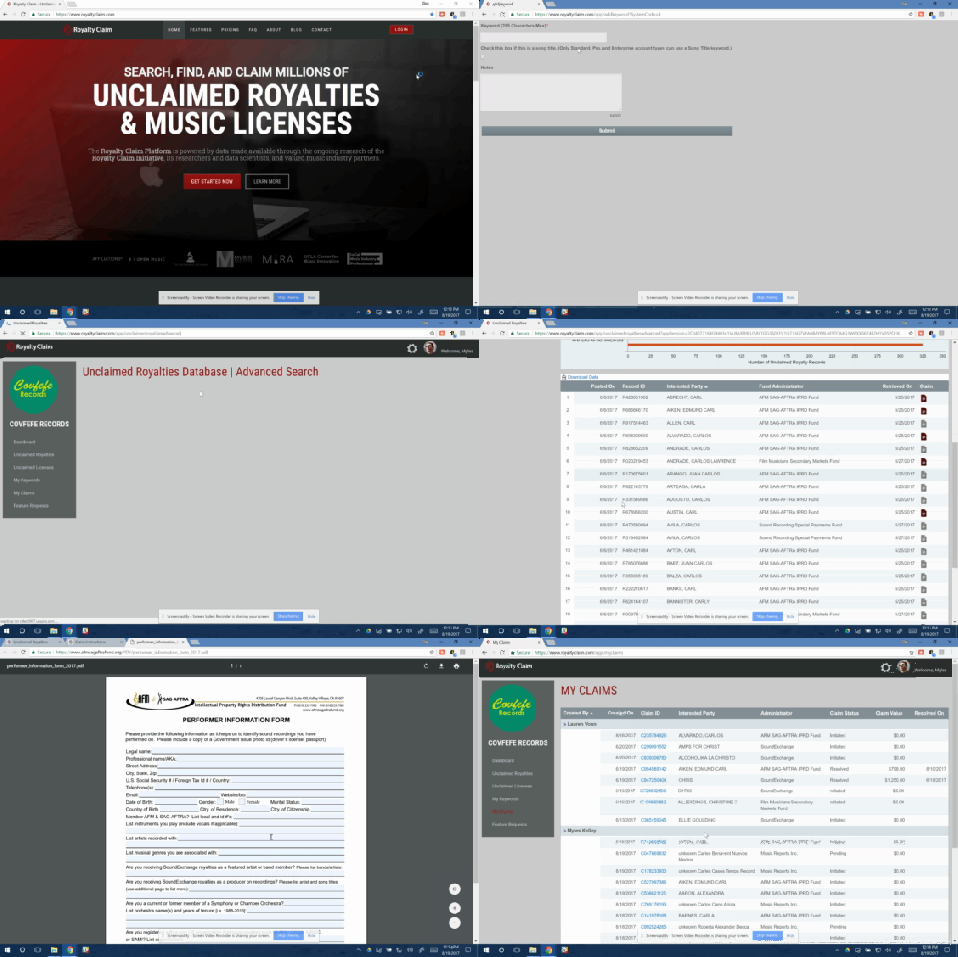
If you missed the Royalty Claim Pre-launch Webinar, watch the full recording here.
Free DIY eBook
CONNECT WITH ME


 Dae Bogan Music