
The MLC Has Distributed $3bn+ To Songwriters And Publishers To Date

“The MLC has become the largest single source of U.S. digital revenue for songwriters and publishers — distributing more than $3 billion in royalties since launching operations, at no cost to our Members.” – Alisa Coleman, The MLC
Music Business Worldwide reported that The MLC has “confirmed that it has exceeded $3 billion in royalties distributed to publishers and songwriters since launching full operations in 2021.”
I’m proud to work with a team of talented and passionate people at The MLC who care deeply about getting songwriters and music publishers paid. And I am also proud to support music rights and royalty tech founders who invest endless hours and limited resources to create a positive impact on the livelihoods of their customers — the world’s independent music creators.
Prior to joining The MLC, exactly 10 years ago this month in October 2015, I founded several startups to address the “black box” issue, including TuneRegistry (with co-founders Jesse Morris, Kara Lorraine McGehee, and Shane Zilinskas), which enabled music creators to, for the first time, fully control the administration of their songs and recordings in the United States, and a year later in October 2016, I founded RoyaltyClaim, which innovated the Section 115 NOI (compulsory mechanical license) lookup and rightsholder notification process and was the world’s first multi-territory search engine of unclaimed music royalties.
At the time, there were no society-backed public data feeds or relevant APIs that enabled music rights and royalty tech companies to access transparent data regarding song ownership, share claims, unmatched recordings, and unclaimed royalties making it nearly impossible for founders to build robust solutions to support songwriters and publishers with royalty forensics, catalog reconciliation, and identifying and resolving issues that lead to unclaimed royalties. And there were few societies with departments dedicated to engaging with tech founders who dared to invest in these pursuits.
Today, I am proud to say that The MLC has changed that. As an organization with a department dedicated to interacting with and supporting music rights and royalty tech companies, we have empowered hundreds of companies around the world with unprecedent access to data that has informed business decisions and fueled the creation of new features that help their customers get paid.
As a former music rights and royalty tech founder myself, I couldn’t be prouder to head that department, to manage data programs and strategic outreach efforts, and to interact with and support hundreds of founders around the world who’s collective efforts has contributed to The MLC reaching this breakthrough milestone of $3Bn in royalties distributed.
To all of the music rights and royalty tech founders out there who have called on my team, met with me, invited me to set in hundreds of hours of demos and strategy sessions over the past 5 years, this is a special shoutout and thank you to you for being the innovators effecting change on the ground!
Dae Bogan Joins Speaker Roster for Trends Brasil Conference in Rio de Janiero
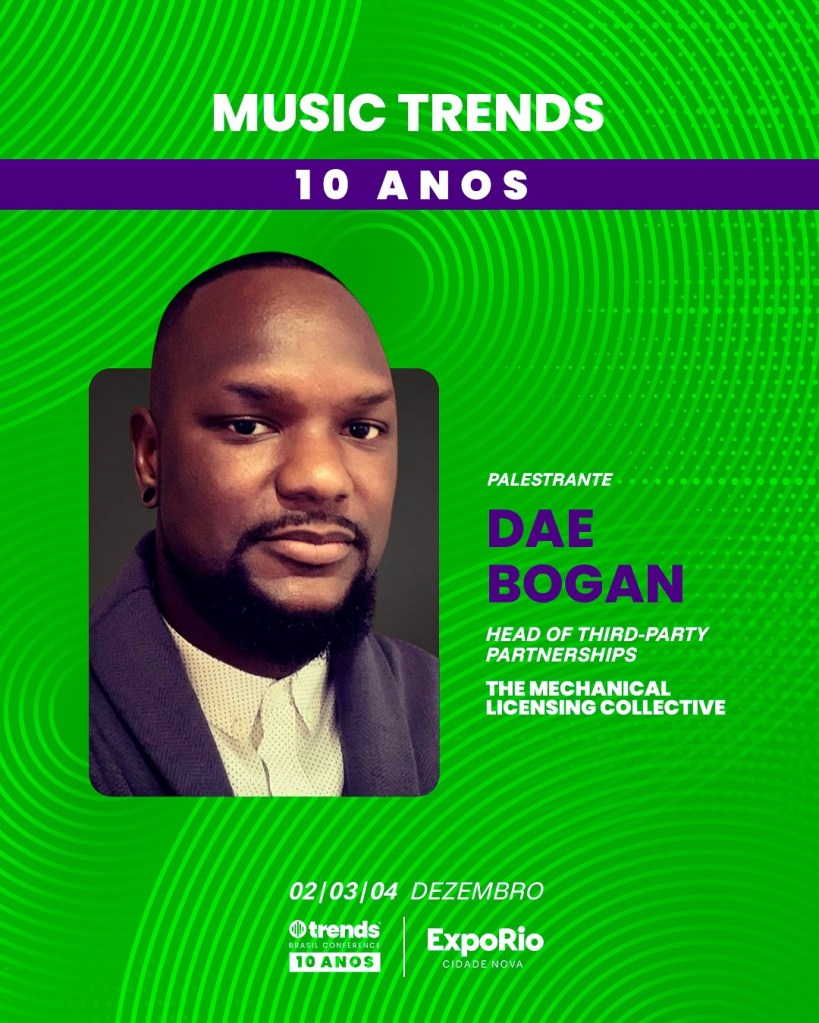
I’m looking forward to speaking at Trends Brasil Conference taking place two months from today in Rio de Janeiro.
Learn more at https://www.trendsbrasilconference.com.br/
IG @trendsbrasilconference
On Preparing for an AI Future
“A child born today will never be smarted than artificial intelligence (AI).” – Sam Altman, CEO of OpenAI and ChatGPT
A child born today will grow up surrounded by AI powered experiences. In fact, by the time a child born today reaches adulthood, he will likely take the existence of AI for granted; as normal and expected. Take for example electricity and plumbing, vehicles and aircraft, medicine and psychiatry (as opposed to witchcraft). The age of enlightenment and the industrial revolution changed the human experience and human expectations.
Time morphed magnificent inventions and discoveries into basic necessities and human rights. AI, too, will make discoveries and change how we do things, but at a faster speed of technological evolution than humanity has ever experienced before. The rate of change in 10 years will be equivalent to the rate of change of 100 years in the past. This means that the learning curve will be sharp and people will be left behind.
By the time a middle school student today graduates college, half of college-educated white collar skilled jobs may be replaced by AI software and blue collar skilled jobs will be replaced or reduced by AI robots.
Music 2020: The Next Era of Innovation in the Music Industry
Knowledge will boast ego more than it creates a competitive advantage. That is, with all the world’s knowledge about any given topic accurately and immediately available and accessible to anyone at anytime, the need for subject matter experts in some fields will greatly decline. Objective fields such as finance, mathematics, history, language, some sciences, contract law, and others are susceptible to delution by AI replacement faster than subjective fields requiring human discernment, emotion, and context. Although, the creative class—a subjective field—is an exception.
So, the question is: How are you preparing your child for an AI future and how do today’s adults maintain relevance as the nature of work and human interaction evolves?
I attended a luncheon and networking event in Medellin yesterday with AI developers and entrepreneurs from around the world. What many employees may not know is that CEOs are already thinking about what aspects of their business can be made more efficient by AI. In other words, who can be replaced by AI.
In 2018, I made predictions on how the music industry would evolve in the 2020’s. Nearly every prediction that I made has come to fruition, including the rise of AI in the music industry.
Have you begun thinking about your industry?
IG: https://www.instagram.com/reel/DJsZjuYyr5k/?igsh=MXJzbTB0MmJwYm0yZA==
Dae Bogan Celebrates 5 Years of Service at The Mechanical Licensing Collective

It has been an honor to work with a passionate group of professionals to do the seemingly impossible in such a short period of time. In just 5 years, we’ve conceptualized, built, launched and expanded The Mechanical Licensing Collective to fulfill the mandate of the Music Modernization Act of 2018 and have paid out more than $3 Billion in royalties to music creators and rights-holders around the world.
I’ve had the honor of collaborating with some of the smartest people in the music rights sector to blend my passion for problem-solving, innovation and technology, education and advocacy to develop initiatives and industry-leading resources to empower music creators and other stakeholders to unlock black box royalties. I am grateful to be able to work fully within my passion and skillsets every day to affect change that directly impacts the livelihoods of music creators around the world.
In my role as Head of Third-Party Partnerships, I lead the Distributor Unmatched Recordings Portal (DURP) initiative connecting 114 music distributors in over 20 countries with one of the most important music rights datasets related to US digital streaming royalties, oversee a team across Latin America through the Radar initiative to locate and educate self-published songwriters and composers about their rights and entitlements in the US, and provide strategic support and guidance to the more than 500 companies around the world that access The MLC’s data through our data programs.

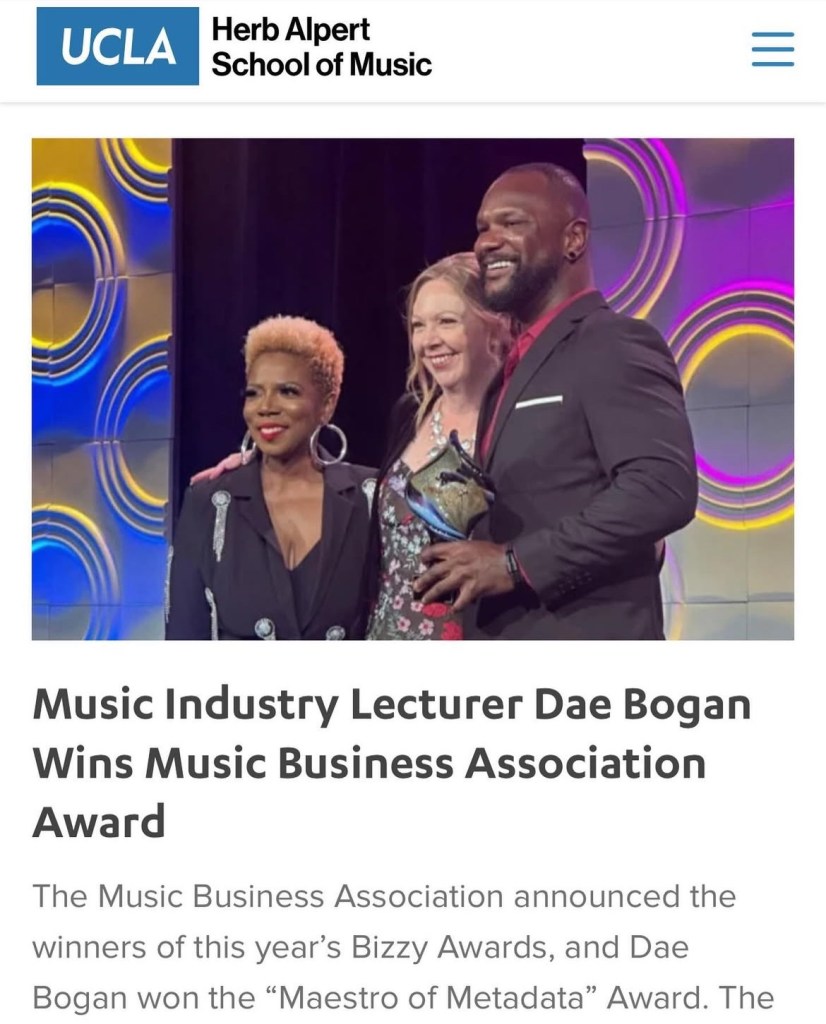
In 2020, The MLC was a developing concept. Today, we are a Music Business Association’s 2024 Impact Award for Technological Excellence recipient and a Fast Company’s 2025 Most Innovative Companies. And for my part, I was honored to be the recipient of a 2024 Bizzy Award for the Maestro of Metadata.
As I look ahead to the next 5 years of service, I’m looking forward to contributing to effect our mission to serve and pay our members the royalties they have earned.
Here’s to 5 years! 🥂
Are The People Who Are Creating AI Replacing Themselves With AI?
Microsoft just laid off 6,000 employees, including hundreds of software engineers and their Director of Artificial Intelligence. Microsoft also recently announced it will be investing further into AI development, which to me does not translate into an investment in humans.
This got me thinking.
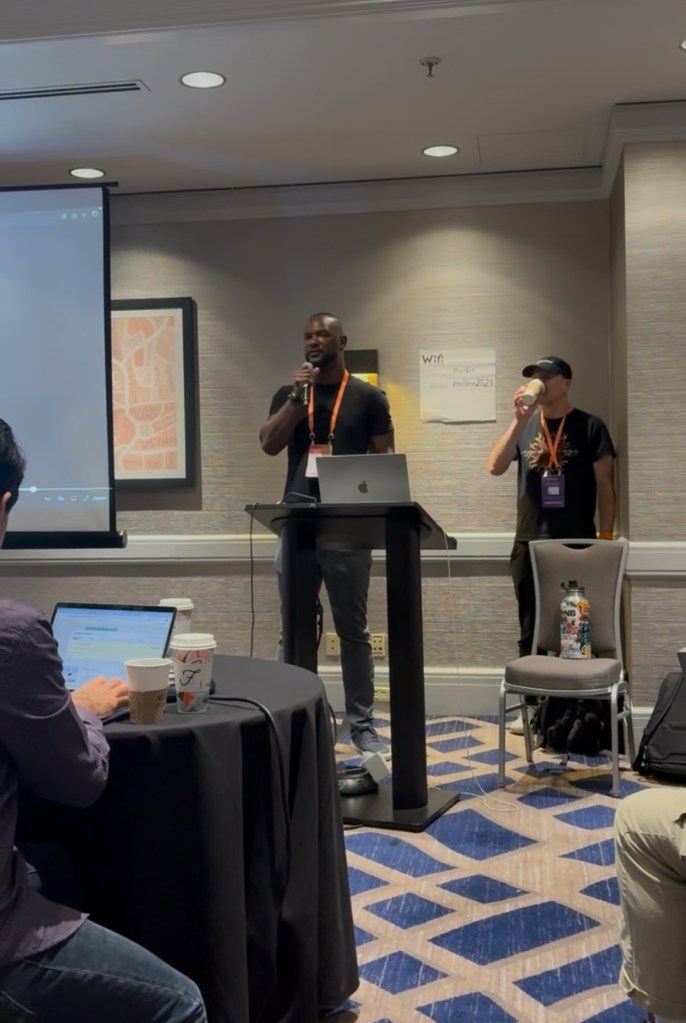
Last week, I mentored a hackathon in Atlanta. A hackathon is a fast-paced software development event where individuals and teams participate to build a web or mobile app to win a prize. Our company, among others, offered our API and data for use by the participants to build a web app based on music business use cases.
There were over 20 participants. Most of them were seasoned software developers, but a few had little to no experience.
Many of the participants engaged in vibe coding, which is a process by which AI writes the code, for the web app they submitted to be judged. They gave the AI prompts related to the use case that they were solutioning and the AI wrote the code.
There were three winners. The 2nd place winner were two individuals who are not software developers at all and cannot write code — a music business educator/lawyer and a product designer. They used AI to design a prototype based on the lawyer’s prompts surrounding sample licensing analysis.
The room was full of software developers, but many of them used AI to write most of the code to build their web apps. Effectively, AI built the apps.
Microsoft is laying off software developers to invest more into AI itself developing AI software to further improve AI development of AI software.
Are the people who are creating AI replacing themselves…with AI?
Dae Bogan to Bring ‘The Power of Indie’ Music Business Workshop to ONErpm in Miami

Attention Miami Independent Music Community:
The Mechanical Licensing Collective and ONErpm presents
The Power of Indie: A Music Rights & Royalties Workshop for Indie Music Creators
Workshop lead by The MLC’s Head of Third-Party Partnerships, Dae Bogan
Friday, May 30th
6pm-9pm
ONErpm
226 NE 29th Street
Miami, FL 33137
Learn about:
- Being your own music publisher.
- The U.S. digital music royalties landscape.
- Turning metadata into dollars.
- Collecting multiple income streams from one release.
- Joining The MLC and more…
RSVP Required. Limited capacity. Refreshments served.
10 Years Ago Dubset (And I) Wanted Rights-holders To Be Friendlier To DJs…10 Years Later Apple Music Is Making It Possible

Ten years ago, I wrote a piece for Hypebot (posted at the end) announcing the Mix Transparency Report by Dubset (acquired by Pex).
At the time, Dubset, a new startup, wanted to help DJs legally release, distribute, and monetize mixed music (i.e. remixes, mashups, mixes, etc.), and get artists, songwriters, and rights-holders paid. However, there was a ton of resistance amongst rights-holders to what I thought was a great idea. I was biased since I had once managed a roster of DJs who specialized in mash-ups.
The Mix Transparency Report set out a new standard for charting the consumption of mixed music while shinning a light on the commercial opportunities that existed for rights-holders and content creators of derivative works (e.g. DJs, producers, remixers).
(Side Note: Last year, I created the “Beats & Money: A Music Rights & Royalties Crash Course for Beatmakers” webinar for The Mechanical Licensing Collective with support by Chris McMurtry of Pex/RME which you can watch on YouTube https://youtu.be/8ZoPRmJFt-Q.)
Dubset wanted to locate the most popular mixed music in the world, thoroughly analyze it, and share its findings every month. The report would offer full transparency with regards to the “who” and “what” was being listened to (often royalty-free) by millions of music fans a day. Initially, the Dubset report included four charts: Dubset’s 25 Most Sampled Labels, Dubset’s 25 Most Streamed Mixes, Dubset’s 25 Most Sampled Artists, and Dubset’s 25 Most Sampled Tracks.
Recently, Apple announced it is opening its catalog to let users build mix sets by integrating the platform with a number of tools. These tools include Algoriddim’s djay Pro software, hardware platforms AlphaTheta, Serato, inMusic’s Engine DJ, Denon DJ, Numark, and RANE DJ.
(Fun Fact: I was once an advisor to a startup that built a software and hardware for DJs that would be installed between the controller and the sound system. If the controller experienced an outage during a live set, the device would kick in and algorithmically continue the DJ set until the controller was back up and running and the DJ could do his or her thing. Having been both a club promoter and DJ manager in Los Angeles in my early 20’s, I knew it was solution was to a real problem that I’ve witnessed many times, but of course they were “too early.”)
TechCrunch believes the integrations will possibly attract DJs to explore Apple Music’s catalog of over 100 million songs and also give aspiring DJs an opportunity to play around with some of these tools. It’s great to see DSPs engage more meaningfully with DJs. This has been a long time coming, only slowed by rights-holders inability to work with companies like Dubset to figure out the licensing splits.
That Hypebot piece: https://daeboganmusic.com/2015/11/11/hypebot-dubset-releases-inaugural-mix-transparency-report-atlantic-records-david-guetta-most-sampled/
The Socioeconomics of Globalization vs. Glocalization and Why Indie Artists in the Global South Have It Harder
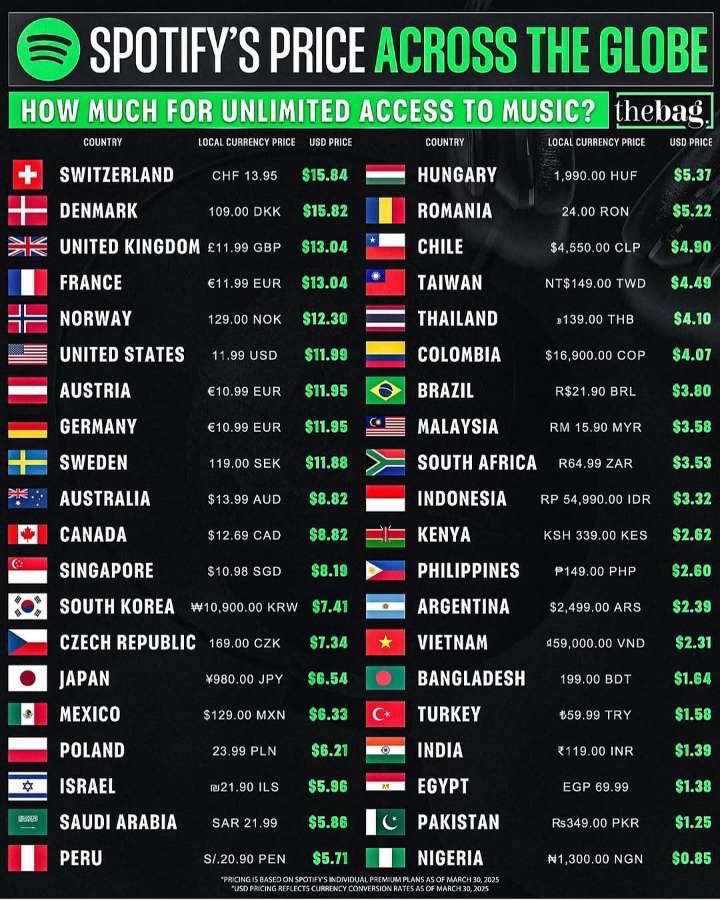
I have been having this very candid conversation about the digital music ecosystem and the socioeconomics (and sociocultural) factors at play in “globalization vs. glocalization” for years now.
Ever since I began exploring the “global south” in 2021, from South America to Southeast Asia to South Africa, and then subsequently moved to Latin America, I’ve observed challenges for local music creators and opportunities for Western music creators.
Artist earnings, in the digital space, are a factor of the socioeconomic health of the region in which artists receive most of their consumption. Two artists from two different countries with the same number of monthly listeners within their own country (glocalization) may not earn the same income due to the differences in the socioeconomic health of their respective countries.
The issue of socioeconomic health is exacerbated by poor copyright compliance and broken or insufficient licensing and royalty collection infrastructure.
Independent artists in lower socioeconomic markets could attempt to look for international collaborations with artists that can introduce them to listeners in more developed markets and they could leverage opportunities to exploit their music in ways that create discovery in new markets (e.g. synch, playlists, etc.). This will aid in exposing the music and eventually earning consumption in other foreign markets (globalization), possibly with better socioeconomic health (or at least higher royalty rates).
Additionally, indie artists should leverage communities like Vampr and BandLab Technologies and other such companies to connect and collaborate with artists, songwriters, and music producers to strive for cross-border appeal and opportunity.
Radar – Data-driven Grassroots Outreach In Latin America

I am thrilled to announce that after nearly 3 years of building relationships across Latin America, collaborating with local creator rights’ advocates, learning about some of the challenges affecting the flow of royalties in various regions, and educating songwriters, I am launching a dedicated team to support The Mechanical Licensing Collective’s mission to ensure songwriters, composers, lyricists, and music publishers in Latin America receive their mechanical royalties from streaming and download services in the U.S. accurately and on time.
RADAR is a data analytics and research platform that has already helped us identify songwriters who are self-published and potentially unaffiliated with their local CMO. Through culturally-relevant resources we are educating songwriters who may have royalties on hold at The MLC about their rights and their options for collecting their money such as joining their local CMO (an MLC member), hiring a publishing administrator (an MLC member), or, if it makes sense for their careers, to pursue direct membership. It is the songwriter’s choice within the framework of their local laws.
After a successful pilot in Colombia last year we are expanding across LATAM with team members in Argentina, Brazil, and Mexico.
Welcome Daniela Arévalo Fernández (Mexico), Maria Ramirez (Colombia), Matías Bagato (Argentina), Renato Martini Martins (Brazil), and continued support by Stephanie Santiago-Rolón (Florida/Puerto Rico, USA) who has been a great collaborator in US-based Latin music since 2021.
Latin America, which has seen Mexico and Brazil named to IFPI’s Top 10 music markets in the world in 2024, is a priority due to the explosion of consumption of Latin music in the US, primarily in the form of digital streaming. The RIAA reported that Latin recorded music earned $1.4B in 2024 (98% of is from streaming), a steady increase over the previous two years, which also boasted over $1B. More US music consumers are listening to Spanish-language music every year; and when they do, it is our mission, in accordance with the Music Modernization Act to identify and locate the copyright owners to whom these digital audio mechanical royalties are due.
The MLC already has an incredible array of solutions, initiatives and technologies enabling us to match and pay out 90% of royalties received, but engaging small, new, and emerging independent artists is a challenge that all collection societies face and ought to solve.
With RADAR, whether it is a salsa band in Cali, a raggaeton artist in Medellin, a funk rapper in São Paulo, a samba singer in Salvador, a Latin rock duo in Buenos Aires, or an urbano group in Guadalajara, The MLC aims to take all reasonable efforts, from engaging CMOs and publishers, to tapping disconnected networks of independent self-published songwriters and composers to pay out every US digital mechanical dollar!
Introducing RADAR “Putting the hardest to find songwriters on The MLC’s radar.”
Encuentro Especial de Compositores Latinoamericanos (Special Meeting of Latin American Songwriters)
Free DIY eBook
CONNECT WITH ME


 Dae Bogan Music